Understanding the cracks in basement walls meaning is the first step to protecting your home’s foundation, stopping water damage, and avoiding costly repairs. Not every crack signals a catastrophic problem, but distinguishing between harmless hairline lines and dangerous structural failures takes careful inspection and informed action.
Why basement wall cracks matter
Basement walls are the lowest visible part of your home’s structure and take a lot of pressure from soil, moisture, and temperature changes. A crack can be a symptom of simple shrinkage, normal settling, or more serious issues like soil movement, hydrostatic pressure, or foundation failure. Knowing the likely causes helps you decide whether you can handle the repair yourself, monitor the change, or call a professional.
Common types of basement wall cracks and what they mean
1. Hairline or shrinkage cracks
Description: Very thin, shallow lines often less than 1/16 inch wide and typically vertical or diagonal.
Meaning: These are usually caused by concrete curing and drying. They’re common in new homes and are generally non-structural. While they might allow minor water seepage, they rarely indicate major foundation problems.
2. Vertical cracks
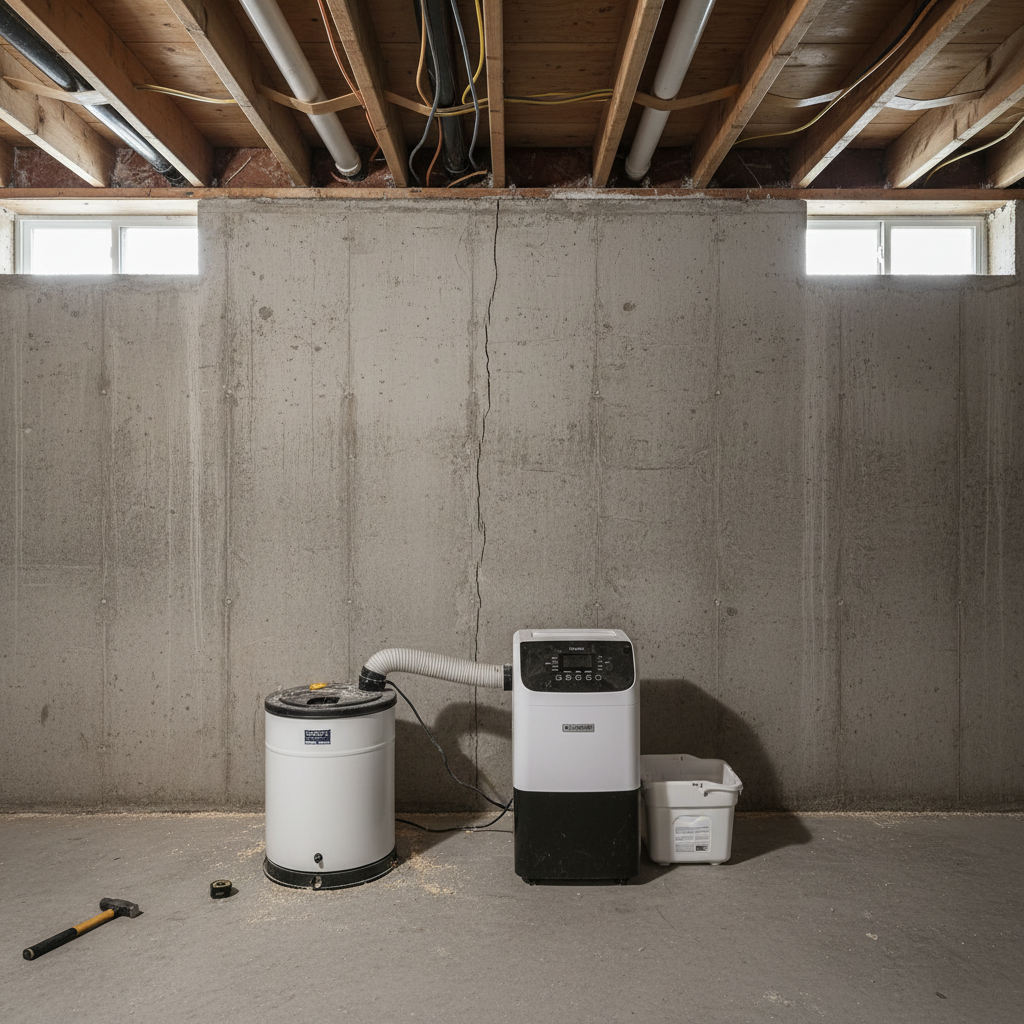
Description: Cracks that run up-and-down along the wall, often from floor to ceiling or near wall joints.
Meaning: Vertical cracks often result from normal settling. Small vertical cracks are frequently stable; however, if they widen over time or are accompanied by misaligned doors/windows, they may need evaluation.
3. Diagonal cracks
Description: Cracks that run at an angle, commonly occurring near corners of doors, windows, or wall joints.
Meaning: Diagonal cracks can indicate differential settlement—one part of the foundation settling more than another. They can be benign if small, but progressive widening warrants professional attention.
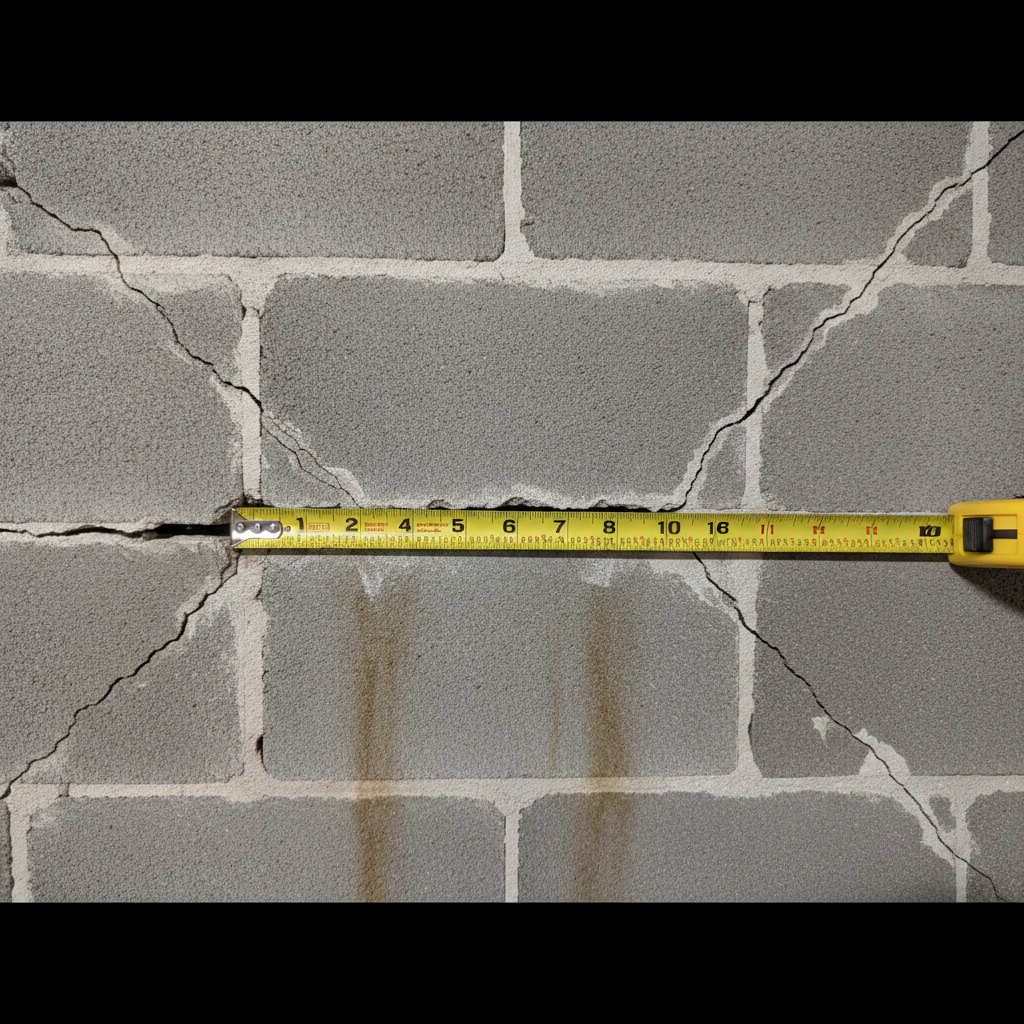
4. Stair-step cracks in block walls
Description: Cracks that follow mortar joints in a stair-step pattern across concrete block walls.
Meaning: This pattern suggests movement along the block units and can be a sign of settlement, soil shifting, or uneven loading. These often require more than a cosmetic patch.
5. Horizontal cracks and bowing walls
Description: Cracks that run parallel to the ground, sometimes accompanied by wall bulging or inward movement.
Meaning: Horizontal cracks and bowing walls are the most serious signs of pressure from saturated soil or frost heave and may indicate structural failure. They commonly need immediate professional repair such as wall reinforcement, carbon fiber straps, or even external underpinning.
6. Wide or growing cracks
Description: Any crack wider than 1/4 inch or that increases in size over weeks/months.
Meaning: Rapidly widening cracks are a red flag for active movement. Call a structural engineer or foundation specialist to assess load-bearing concerns and safe remediation options.
How to inspect cracks safely and effectively
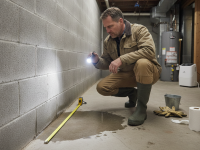
- Measure and document: Use a ruler or caliper to measure width and take photos with dates. Maintain a log for trend tracking.
- Look for other signs: Check for sticking doors, uneven floors, sloping foundation, water stains, efflorescence (white mineral deposits), and mold—these help indicate severity.
- Check exterior conditions: Inspect the soil grade near the foundation, downspouts, gutters, and nearby trees. Poor drainage and large roots can cause movement.
- Use simple markers: Tape or pencil marks can help detect tiny growth over time. If a crack crosses your mark, movement has occurred.
When a crack is likely cosmetic (DIY-friendly)
- Very thin hairline cracks caused by curing shrinkage.
- Small vertical cracks that do not change over time.
- Cosmetic spalling (surface flaking) with no active water intrusion or movement.
For these cases, homeowners can often seal the crack with masonry caulk, hydraulic cement, or epoxy injection kits and then monitor for change. Also consider addressing surface moisture sources like leaky gutters to reduce future problems.
When to call a professional
- Horizontal cracks, bulging or bowing walls.
- Stair-step cracks that are widening or accompanied by wall displacement.
- Cracks larger than 1/4 inch or rapidly growing splits.
- Significant water infiltration, foul odors, or mold growth.
- Cracks associated with interior structural movement—doors/ windows jamming, large floor slopes, or visible foundation separation.
In these situations, a structural engineer or experienced foundation contractor can assess the load-bearing integrity and recommend underpinning, wall anchors, steel reinforcement, or full foundation stabilization.
Common repair methods and what they do
1. Epoxy or polyurethane injection
Best for: Non-structural cracks and many active leaks. Epoxy restores structural integrity in concrete; polyurethane injects flexible foam that seals against water.
2. Hydraulic cement patching
Best for: Small leaks and hairline gaps. Hydraulic cement expands as it sets to block water, but it’s mostly a short-term waterproofing solution unless the underlying movement is addressed.
3. Exterior excavation and waterproofing
Best for: Persistent water infiltration and chronic drainage issues. Excavating and applying exterior waterproof membranes plus improved drainage (rock and drain tile) addresses hydrostatic pressure at the source.
4. Carbon fiber straps or steel reinforcement
Best for: Vertical/stabilizing reinforcement of bowed or cracked walls. Carbon fiber is low-profile and effective for moderate inward movement; steel I-beams or helical anchors are for heavier loads.
5. Underpinning and piers
Best for: Major settlement and load-bearing failure. Helical piers or push piers transfer load to deeper, stable soil strata and lift settled foundations back toward level.
Preventing basement wall cracks before they start
- Maintain proper grading around the house to slope water away from the foundation.
- Keep gutters and downspouts clean and extend downspouts at least 3–6 feet from the foundation.
- Avoid planting trees too close to the foundation; roots can desiccate soil or exert pressure.
- Manage moisture in the basement with a dehumidifier and interior drainage systems if needed.
- Monitor during seasonal freeze-thaw cycles; insulate and maintain consistent soil moisture where possible.
Costs: what to expect
Repair costs vary widely depending on crack type and necessary interventions. Simple DIY sealing can be under a few hundred dollars. Professional injections typically run from a few hundred to a couple of thousand dollars. Structural repairs—such as wall reinforcements, carbon fiber installations, or piering—often range from several thousand to tens of thousands. Because pricing depends on the severity and local labor rates, get multiple bids and consider consulting a structural engineer for major issues.
Insurance and warranty considerations
Most homeowners insurance policies exclude normal wear-and-tear, settling, and many foundation problems unless the cause is a covered peril (like sudden collapse or certain water events). Warranty coverage may apply for newer homes in the first years after construction. Keep detailed repair records and professional assessments for insurance claims or resale disclosure.
How to select a professional
- Choose a licensed structural engineer for diagnostics if the crack suggests structural risk.
- Hire contractors experienced in foundation repair; ask for references, proof of insurance, and warranty terms.
- Request a written plan that explains the cause, the recommended solution, lifespan of repairs, and monitoring strategy.
Further reading from experts
For practical repair tips and visual guides on foundation and basement maintenance, trusted home-improvement resources like Better Homes & Gardens provide helpful how-to articles and contractor advice: Better Homes & Gardens – Foundations.
Monitoring checklist for homeowners
- Take photos monthly to chart progress.
- Measure crack widths and log any change.
- Note seasonal patterns—do cracks appear/worsen during rainy seasons or freeze-thaw?
- Record interior signs like dampness, mold, or new odors.
- Mark areas of improvement after any repair so you can assess effectiveness.
How to talk to an expert (questions to ask)
- What is the likely cause of these cracks?
- Are they structural or cosmetic?
- What are immediate steps we should take to stop further damage?
- Do you recommend interior or exterior repair methods and why?
- What warranties, timeframes, and follow-up monitoring do you offer?
Common misconceptions
- “All cracks mean the house is unsafe.” False — many cracks are minor, but they should be monitored.
- “Sealing the crack solves the problem.” Sealing can stop leaks but won’t prevent ongoing movement if the root cause isn’t addressed.
- “Only old homes get foundation problems.” New construction can develop shrinkage or settlement cracks as it cures and settles.
FAQs
Are hairline cracks in basement walls dangerous?
No, hairline cracks are often cosmetic and caused by shrinkage. Still, document and monitor them to ensure they don’t widen or allow moisture in.
How quickly do I need to act on a horizontal crack?
Horizontal cracks can indicate serious lateral pressure and should be inspected by a professional promptly to prevent further movement or collapse risk.
Can I inject epoxy myself?
Yes, homeowner epoxy injection kits exist and can fix non-structural cracks, but correct application is crucial. For structural cracks or active movement, a professional is recommended.
Will waterproof paint stop leaks from cracks?
Waterproof paint may reduce minor seepage temporarily, but it won’t stop active leaks or fix underlying structural movement. Exterior drainage improvements and proper crack repair are more effective long-term.
How long will repairs last?
Longevity depends on the solution and the underlying cause. Fixes that address drainage and soil pressure tend to last longer than surface-only patches. Reputable contractors should offer warranties and maintenance guidance.
Understanding the cracks in basement walls meaning gives you the clarity to protect one of your home’s most critical systems. Regular monitoring, tackling moisture and drainage issues, and seeking professional guidance when cracks are wide, growing, horizontal, or accompanied by structural movement will help preserve your home’s foundation and value.
For more ideas on making practical upgrades and designing comfortable interior spaces, explore How to Design A Comfortable Modern Living Space.