Superhero themed kids bedroom ceiling ideas can transform an ordinary room into a nightly adventure zone where imagination takes flight. Whether you want a subtle nod to your child’s favorite hero or an immersive comic-book mural stretching across the entire ceiling, this guide covers creative concepts, safe materials, step-by-step DIY approaches, and pro tips to build a ceiling that delights kids and meets parents’ needs.
Why the Ceiling Matters in a Superhero Room
The ceiling is a large, underused surface that sets the mood for the entire space. A well-designed superhero ceiling can:
- Create an immersive atmosphere that makes bedtime exciting.
- Increase perceived room height with strategic use of color and lighting.
- Serve as a central design anchor so walls and bedding coordinate easily.
- Offer an opportunity for calm, sleep-promoting elements (soft lighting, star fields) alongside playful features.
Top Superhero Themed Kids Bedroom Ceiling Ideas
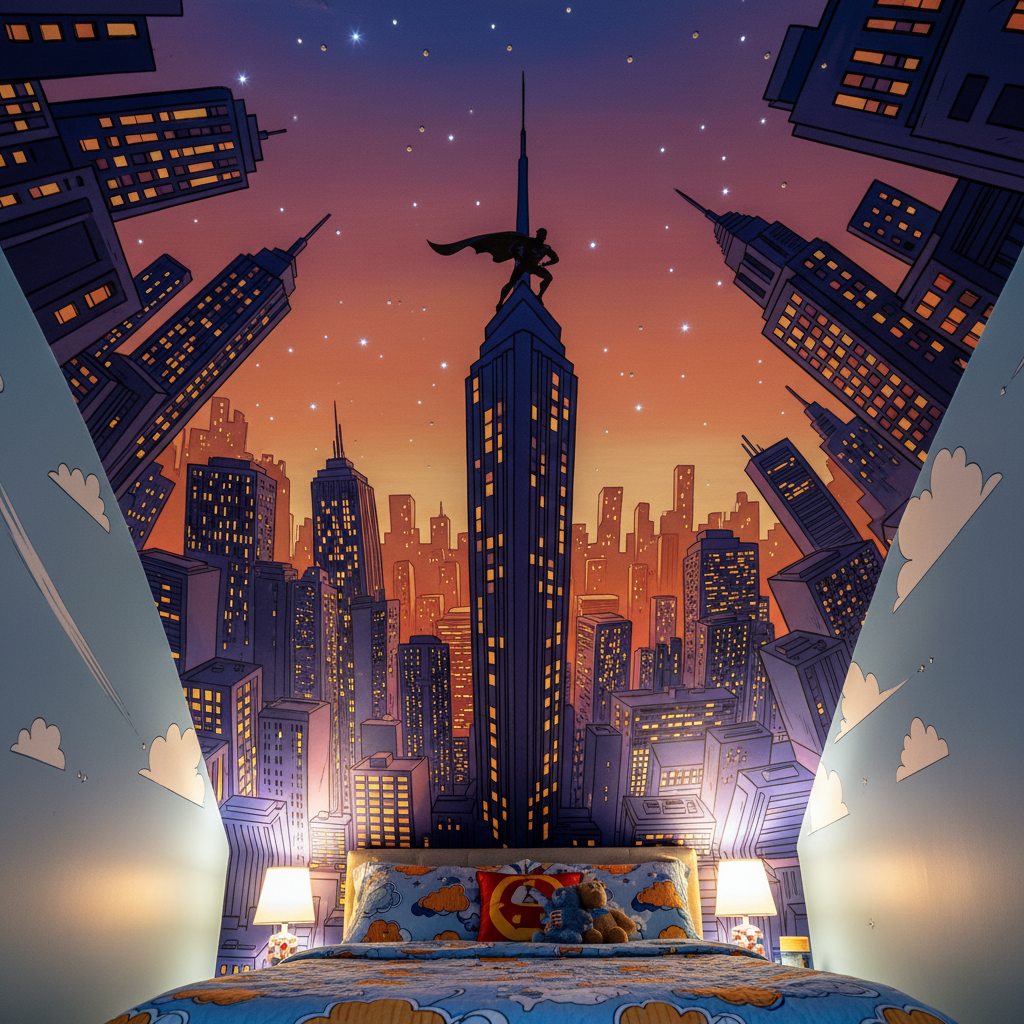
1. City Skyline Mural
Paint a stylized city skyline across the ceiling edge where it meets the walls and let a silhouetted superhero “patrol” the sky. Use darker colors for the skyline along the perimeter and a lighter, dusk-blue center to give depth. Add painted windows with tiny LED pinpoints to simulate lit buildings at night.
2. Comic Book Panel Ceiling
Create a ceiling divided into comic panels—action scenes, sound effects like “Pow!” and “Zap!”, and bold primary colors. This works especially well for kids who love classic comic art. Use stencils for sharp lines and removable wallpaper panels for a renter-friendly option.
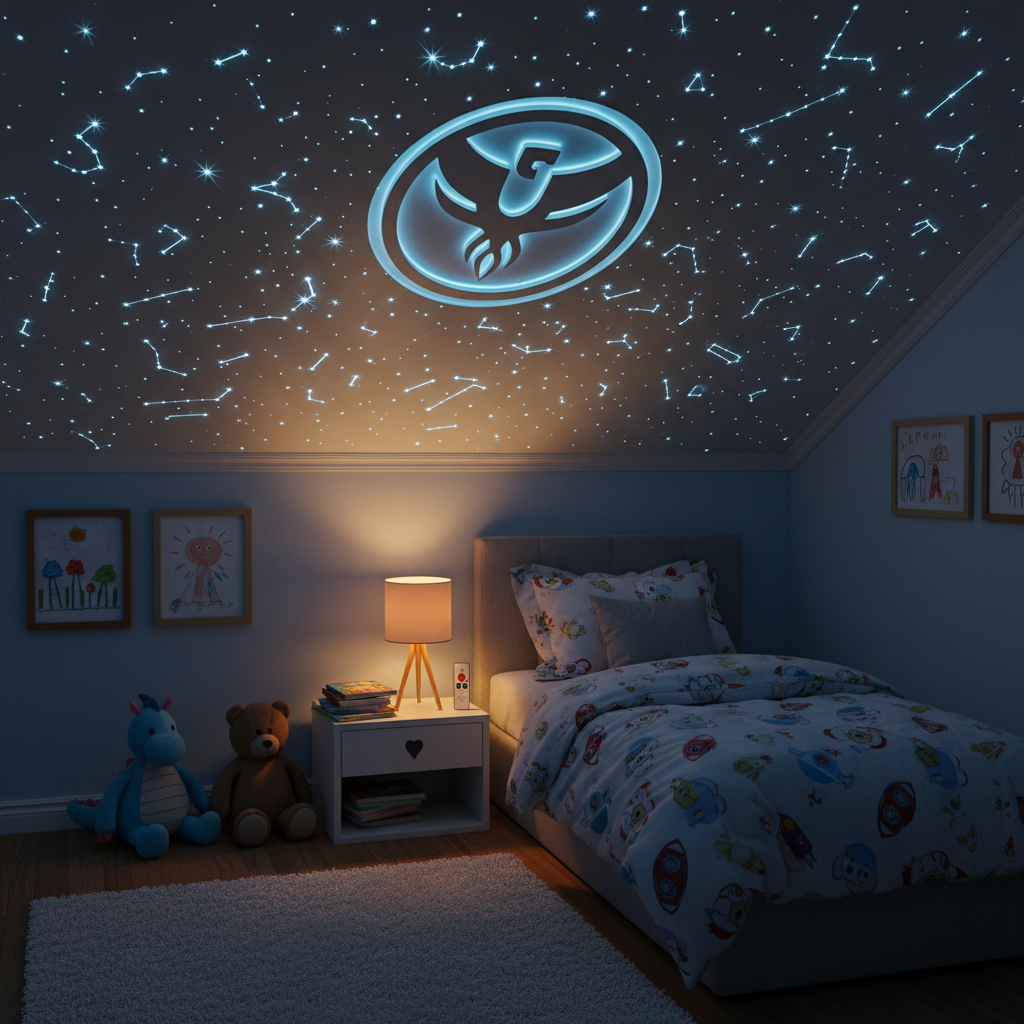
3. Glow-in-the-Dark Starfield with Hero Silhouette
For a calm, sleep-friendly option, a glow-in-the-dark starfield with the hero’s emblem or silhouette at the center offers wonder without overstimulation. Fiber-optic star kits or glow paint stars can mimic a night sky, and a soft dimmable LED around the emblem creates a subtle focal point.
4. Emblem or Logo Drop Ceiling
Create a large recessed or faux coffered section painted with the hero’s emblem. Use LED strip lighting in the recess to make the emblem stand out. This is a bold, modern look that reads cleanly from a distance and can be made removable with lightweight materials.
5. Suspended Capes and 3D Elements
Suspended fabric capes or lightweight, sculpted 3D clouds and buildings add movement and tactile interest. Hang capes from inconspicuous ceiling hooks (out of reach) or attach sculpted foam clouds for a whimsical sky. Ensure secure fastenings and use child-safe materials.
6. Night-Sky Projector and LED Effects
Combine a star projector with color-changing LED strips to switch between playtime and bedtime modes. Program warmer tones for winding down and cooler, vibrant colors for daytime imaginative play. Using smart lights gives you full control from a phone or smart speaker.
7. Peel-and-Stick Wallpaper or Decals
For renters or frequent redecorators, large peel-and-stick murals or decals of comic scenes, cityscapes, or superhero symbols are ideal. They’re easy to install, removable, and come in a wide variety of styles and scales.
Design Ideas by Age Group
Toddlers (2–4 years)
Keep designs bright, simple, and soft-edged. Consider soft cloud shapes, oversized emblems, or a few large stars. Use non-toxic, low-VOC paints and avoid small hanging parts that could present a hazard.
Young Children (5–9 years)
Introduce comic panels, simple mural scenes, and glow stars. Involve your child in color choices and let them pick one hero focal point to personalize the ceiling without overwhelming it.
Preteens (10–12 years)
Go more sophisticated with a skyline mural, subtle emblem lighting, or a minimalist emblem recessed into the ceiling. Use color palettes that mix their hero’s signature colors with complementary neutrals to create a mature look.
Hero-Specific Ceiling Concepts
- Batman: Night-sky palette, silhouette skyline, and a recessed bat emblem with warm LED backlighting.
- Superman: Bold blue ceiling, red accent coffer with the “S” emblem, and gold trim or star accents.
- Wonder Woman: Celestial motifs, gold star decals, and warm ambient lighting around a central emblem.
- Spider-Man: Web-stenciled corners and a city skyline pierced by a spider silhouette.
Materials, Tools, and Safe Products
Choosing the right materials makes installation easier and the finished ceiling safer and more durable. Here’s a checklist:
- Low- or zero-VOC paint (safer for kids and reduces odors).
- Removable peel-and-stick wallpaper or decals for renter-friendly options.
- LED strip lighting (low heat, energy efficient, dimmable).
- Fiber-optic star kits for realistic starfields without heat.
- Lightweight foam or fabric for suspended elements (avoid heavy or rigid materials).
- Secure fasteners and anchors rated for ceiling use—follow weight limits.
For safety and decorating best practices, browse inspiration and tips from Better Homes & Gardens: Better Homes & Gardens kids rooms ideas.
Step-by-Step: DIY Comic-Panel Mural for Beginners
This step-by-step assumes basic DIY skills and simple tools.
- Plan and sketch: Measure the ceiling and sketch panel layout on paper. Keep panels large and bold for visibility from the floor.
- Prep: Clean the ceiling, patch any holes, and prime if necessary. Use low-VOC primer or paint for a safer environment.
- Base coat: Paint the entire ceiling a neutral or base color suited to your design (bright white, light blue, or dusk blue).
- Mark panels: Use a laser level and painter’s tape to mark the comic panels on the ceiling.
- Paint panels: Apply base colors for each panel—primary colors work well for a comic look. Let dry between coats.
- Add details: Use stencils for sound-effect text, speech bubbles, and black outlines. A small roller and angled brush help produce clean lines.
- Seal (optional): Apply a clear, low-VOC protective coat if the room sees heavy use or sticky fingers.
Lighting Tips: Make the Ceiling Shine (Without Overstimulating)
Lighting can make or break the mood. Follow these rules:
- Use dimmable LEDs so you can reduce brightness at bedtime.
- Choose warm color temperatures (2700K–3000K) for sleep-friendly lighting; reserve cooler colors for playtime or accents.
- Consider layered lighting: a central fixture for general light, LED strips for accent, and a star projector or fiber optics for night ambiance.
- Avoid bright, flickering, or strobing lights—these can be overstimulating.
Rental-Friendly and Temporary Options
If you can’t make permanent changes, try these solutions:
- Peel-and-stick wallpaper or mural sheets that remove cleanly.
- Large removable ceiling decals or vinyl emblems attached with painter’s mounting putty.
- Suction-cup or adhesive-hung fabric capes that don’t require drilling.
- Plug-in projectors and LED strips that don’t need hardwiring.
Safety Checklist Before You Start
- Use non-toxic, low-VOC paints and adhesives—ventilate the room during and after application.
- Securely anchor any hanging items to joists or with anchor systems rated for the item’s weight.
- Keep cords and battery packs out of reach and properly concealed to prevent tripping or tampering.
- Avoid heavy overhead décor that could fall. Opt for lightweight foam or fabric instead.
- When hiring a pro, verify credentials, insurance, and references.
Budgeting: Cost Ranges and Where to Save
Costs vary widely depending on materials and whether you hire a professional.
- Small decal-based refresh: $30–$200
- Peel-and-stick mural install (DIY): $150–$500
- Custom painting or mural by a professional artist: $500–$2,500+
- LED and fiber-optic lighting add $50–$400 depending on complexity
Save money by combining DIY elements (decals and LEDs) with a pro’s finishing touches for complex murals.
Hiring a Pro vs. DIY
Choose a pro if you want a large-scale hand-painted mural, custom recessed lighting, or if the project requires scaffolding or electrical work. DIY is great for smaller projects—decals, accent paint, and LED strips. Always get multiple quotes and check portfolios and reviews for muralists and electricians.
Maintenance and Longevity
To keep a superhero ceiling looking great:
- Dust flat ceilings monthly with a microfiber mop or vacuum brush attachment.
- Spot-clean decals and painted surfaces with a damp cloth and mild soap.
- Check fixtures and hanging points twice a year for secure attachment.
- Touch up painted areas with leftover paint or small artist supplies.
Mixing Ceiling Design with Walls, Bedding, and Storage
Coordinate the ceiling with wall color and bedding to create a cohesive theme without becoming visually chaotic. If the ceiling is bold, keep walls simpler—a complementary neutral or single accent wall. Integrate open shelving or cubbies with the theme (crate-style city blocks, hero-themed labels) to keep toys and costumes organized and accessible.
Real-World Examples and Combinations
Consider these pairings:
- City skyline ceiling + muted wall color + blocky comic artwork on one wall.
- Glow star ceiling + soft blue walls + blackout curtains for sleep-friendly nights.
- Recessed emblem + neutral, industrial-style fixture + themed bedding for a modern loft feel.
FAQ
How do I choose the right paint for a kid’s ceiling?
Choose low- or zero-VOC paints specifically labeled as safe for indoor use. Flat or eggshell finishes work best on ceilings to hide imperfections. Always ventilate the room during painting and allow adequate drying time before letting children return.
Can I install LED strip lights myself?
Most plug-in LED strip lights are straightforward to install—clean the surface, measure and cut to size (if allowed by the manufacturer), and stick them in place. For hardwired or recessed installations, hire a licensed electrician for safety and code compliance.
Will glow-in-the-dark paint work on a ceiling?
Yes, glow-in-the-dark paint or phosphorescent stickers work well on flat ceilings. They need to be “charged” by ambient light during the day or with a well-placed light source before bedtime. Fiber-optic kits provide a more permanent star-like effect.
How can I avoid a ceiling that’s too stimulating at bedtime?
Use dimmable lights and warm color temperatures at night. Limit the number of bright or contrasting elements near the sleeping area. For highly detailed ceilings, position the most stimulating parts further from the bed or use removable elements that can be covered at night.
What if I want to change the theme in a few years?
Opt for removable solutions: peel-and-stick murals, decals, plug-in lighting, and suspended fabric elements. These allow a fast refresh without a full renovation.
Final Tips for a Successful Superhero Ceiling
- Plan with your child—but set boundaries for scale and permanence.
- Mix immersive design with restful elements so the room supports both play and sleep.
- Invest in good lighting controls; dimmers are a low-cost upgrade with high impact.
- Prioritize safe materials and secure mounts—appearance shouldn’t compromise safety.
If you want more ideas for modern, comfortable home spaces, explore How to Design A Comfortable Modern Living Space for guidance and inspiration.
Closing Section:
For more inspiration on creating comfortable, modern rooms for the whole family, consider exploring How to Design A Comfortable Modern Living Space.