If you have a draft coming from a window frame, you’re not alone—air leaks around windows are one of the most common sources of heat loss in homes. This guide explains how to find the leak, the materials and techniques to seal different types of window frames, and simple upgrades that can reduce energy bills and improve comfort year-round.
Why drafts from window frames happen
Understanding the cause helps you choose the right fix. Drafts from window frames can come from gaps between the window sash and frame, degraded weatherstripping, old or cracked caulk, warped frames (wood or vinyl), or poor installation. Multi-pane windows can also leak if seals fail, letting cold air and moisture creep in around the glass edges.

Common causes
- Worn or missing weatherstripping between the sash and frame
- Deteriorated or cracked caulk at the exterior trim
- Loose glazing putty or failing window seals (for older single-pane windows)
- Warped frames or sashes that no longer close tightly
- Gaps where the window meets the wall due to settling or poor installation
How to diagnose a draft coming from a window frame
Before spending time or money, confirm where the draft is coming from and how severe it is. Here are easy ways to pinpoint the leak.
Visual inspection
- Look for gaps, cracked caulk, or loose trim around the window.
- Check the condition of weatherstripping and glazing putty.
- Inspect from the outside for gaps between trim and siding.
Simple at-home tests
- Hold a lit candle, incense stick, or vape pen near the edges of the closed window—moving smoke or a flicker indicates air movement.
- On a windy day, pass your hand slowly around the frame to feel for cold spots.
- Use a thermal leak detector or infrared thermometer (inexpensive models are available) to detect temperature differences along the frame.
Quick fixes you can do today
These inexpensive repairs frequently stop drafts immediately and require minimal tools.
1. Replace or add weatherstripping
Weatherstripping is one of the most effective fixes for leaking sash windows. Choose a weatherstripping type that matches the window style: adhesive foam for uneven gaps, V-strip (tension seal) for sash contact points, or silicone bulb weatherstripping for larger gaps. Clean the surface thoroughly before applying and follow manufacturer instructions for best adhesion.
2. Recaulk interior and exterior seams
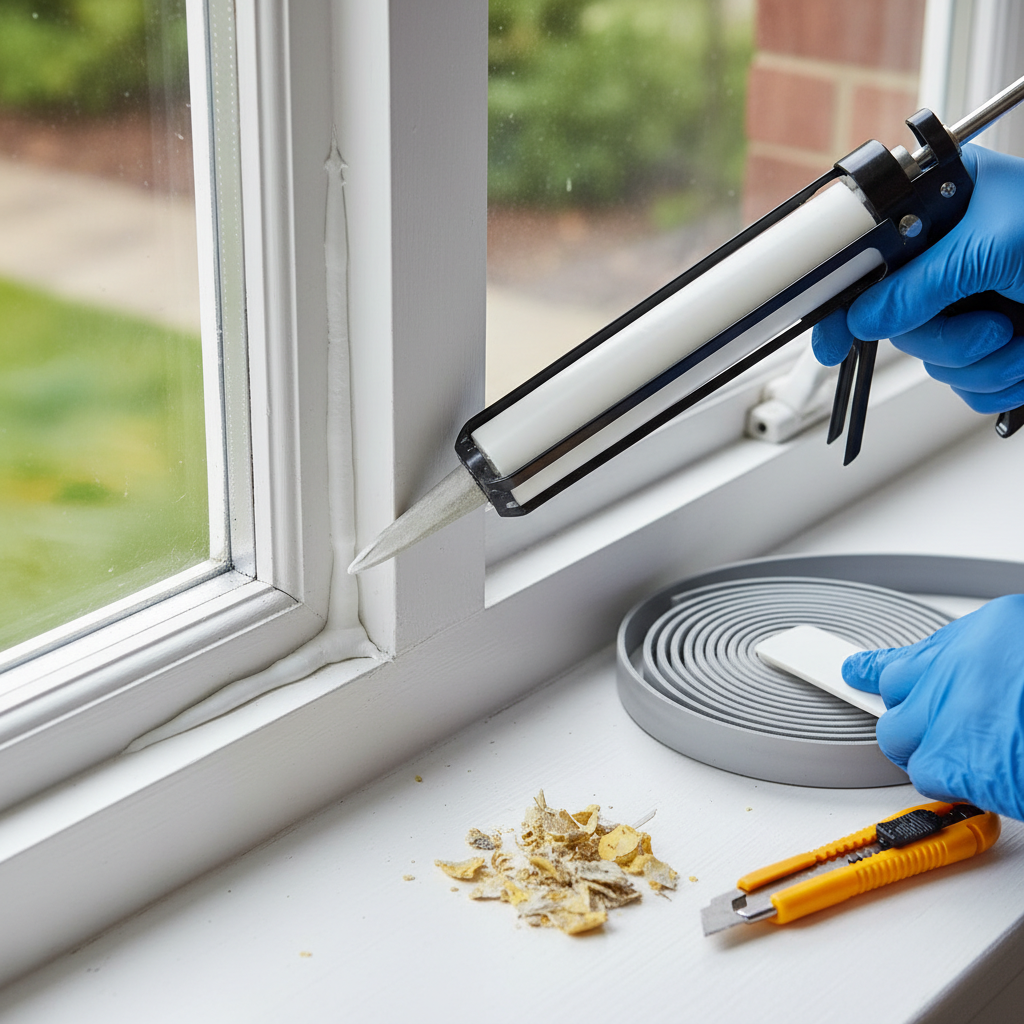
Remove old, cracked caulk and apply a fresh bead of paintable silicone or acrylic-latex caulk. Exterior joints and trim should use a quality exterior-grade silicone or hybrid caulk for flexibility and weather resistance. Proper caulking seals small gaps where air and moisture enter.
3. Apply window film for temporary insulation
Shrink-film kits (plastic film applied to the interior trim and heated with a hairdryer) create an insulating air pocket and are a good short-term solution for cold weather. They’re inexpensive and easy to remove in warmer months.
4. Use rope caulk or draft snake
For a fast, temporary fix, press rope caulk into gaps around the frame or place a fabric draft snake along the window sill. These solutions are low-cost and reversible.
Longer-term repairs and upgrades
If quick fixes aren’t enough or the window is old and heavily damaged, consider these more durable solutions.
5. Reglaze or replace glazing putty
For single-pane windows with loose panes, remove deteriorated glazing putty and re-glaze the pane with a fresh application. This keeps air and moisture out and helps the window seat tightly in the frame.
6. Replace damaged or decayed frames
Wood frames exposed to moisture may rot and warp, preventing a proper seal. Repairing or replacing the frame or sill may be necessary. Small rotten areas can sometimes be cut out and filled with epoxy wood filler; extensive damage often requires new framing.
7. Install storm windows
Exterior or interior storm windows add a second barrier, improving insulation and reducing draft. They are especially effective for older single-pane windows and can extend the useful life of original windows.
8. Upgrade to energy-efficient replacement windows
When windows are beyond repair, replacing them with ENERGY STAR-rated models with proper installation will eliminate most draft issues and reduce long-term energy costs. Consider double- or triple-pane windows with low-E coatings and inert-gas fills for best performance.
Materials and tools you’ll commonly need
Most DIY fixes require only basic tools. Here’s a starter list:
- Weatherstripping (foam, V-strip, or bulb)
- Caulk and caulking gun (exterior-grade silicone or latex)
- Utility knife and putty knife
- Rubbing alcohol or cleaner for surface prep
- Heat shrink window insulation kits (optional)
- Rope caulk or draft stopper
- Glazing compound and glazing points (for old single-pane windows)
- Infrared thermometer or smoke source for diagnostics (optional)
How to weatherstrip a typical sash window—step-by-step
This simple sequence covers most double-hung windows.
- Open the window and clean the contact surfaces with rubbing alcohol.
- Measure the length of the sash where the weatherstripping will go.
- Cut the weatherstripping to size and dry-fit to ensure alignment.
- Peel adhesive backing (if present) and press into place, sealing the contact area where the sash closes.
- Close and open the window a few times to seat the strip; trim or adjust if it causes sticking.
When to call a professional
If you’ve tried basic sealing and still have a draft, or if you notice significant frame rot, fogged insulated glass panes, structural issues, or complex installation problems, it’s time to call a window professional or a licensed contractor. Professionals can perform a blower-door test to measure overall house leakage and identify stubborn leaks hidden behind trim.
Situations that call for expert help
- Persistent drafts after weatherstripping and caulking
- Rot or water damage in the frame or sill
- Fogged double or triple-pane windows indicating seal failure
- Windows that are difficult to operate or that won’t close properly
- Large gaps between the window frame and wall framing
Expected costs and energy savings
Costs vary widely by repair type. Quick fixes—weatherstripping, caulk, and film—typically cost $10–$100 per window. Storm windows run $100–$300 each, while professional window replacement can range from $300 to $1,000+ per window depending on materials and installation. Investing in proper sealing and upgrades pays back over time through lower heating and cooling bills; even small air leaks can cost you up to 10–25% of your home’s heating energy, depending on climate and house tightness.
Seasonal tips to keep drafts away year-round
- Inspect and refresh caulk and weatherstripping every 1–3 years.
- Use draft stoppers on sills in winter and remove window film in summer to avoid trapping moisture.
- Keep gutters and flashing in good repair to prevent water intrusion that leads to frame rot.
- Consider interior insulating curtains or cellular shades for added thermal performance.
Safety and best practices
Always follow manufacturer instructions for materials and use personal protective equipment when cutting or handling caulk and glazing compounds. For projects involving structural work, rot repair, or replacement windows, verify contractor licensing and check references. For general guidance on insulating windows and energy-efficient improvements, reputable resources such as Better Homes & Gardens offer useful tips and product recommendations: Better Homes & Gardens: How to Insulate Windows.
Common mistakes to avoid
- Applying weatherstripping without cleaning surfaces—adhesive won’t stick well to dirt or old caulk.
- Over-tightening weatherstripping so windows jam—allow smooth operation while sealing gaps.
- Using the wrong caulk outdoors—non-weather-rated caulk won’t last on exterior trim.
- Ignoring the root cause—cosmetic fixes won’t solve frame rot or structural misalignment.
FAQ
How can I tell if the draft is from the frame or the glass?
Use a candle or smoke source and pass it around the edges of the glass and the frame. If smoke moves near the seams where sash meets frame or where trim meets wall, the leak is at the frame. If air moves through the center of the pane, the insulated glass unit may have failed.
Is it worth fixing old windows or should I replace them?
If frames and sashes are in good structural shape, reglazing, new weatherstripping, and storm windows often restore functionality at a lower cost. Replace windows when seals fail, frames are extensively rotted, or you want significant energy-performance gains.
Can I use spray foam to fill gaps around window frames?
Expanding spray foam can be used cautiously for larger gaps between framing and window units, but use low-expanding window and door foam to avoid bowing frames. For small gaps, caulk and backer rod are better choices.
How long does new weatherstripping typically last?
High-quality weatherstripping can last 5–10 years depending on material and exposure. Inspect annually and replace when it becomes compressed or brittle.
Will sealing window drafts reduce noise?
Yes—sealing gaps reduces outdoor noise because much sound travels through openings. However, upgrading to thicker glazing or adding storm windows will have a more measurable impact on sound reduction.
Final checklist before you start
- Identify the exact source of the draft with smoke or thermal methods
- Choose the correct sealing material (weatherstripping, caulk, glazing compound)
- Prepare surfaces by cleaning and removing old caulk or peeling weatherstripping
- Test the window operation after installation to ensure it opens and closes smoothly
- Plan for seasonal maintenance to extend the life of your repairs
Fixing a draft coming from a window frame is among the quickest, most cost-effective ways to improve comfort and reduce energy bills. Many homeowners can solve the problem with basic tools and materials, but when in doubt consult a professional to assess structural or seal failures.
If you’d like design inspiration while you plan upgrades, explore tips for creating comfortable, efficient living areas at How to Design A Comfortable Modern Living Space.