If you’ve noticed a draft coming from window frame in your home, you’re not alone—drafty windows are a common source of heat loss, higher energy bills, and chilly rooms. This guide walks you through how to identify where the airflow is entering, quick temporary fixes to reduce the cold now, durable DIY repairs, and when it makes sense to call in a professional or replace the window entirely.
Why a Draft Coming from Window Frame Matters
Air leaking through a window frame affects comfort and energy efficiency. Even small gaps let warm air escape in winter and let hot air and humidity in during summer. Over time, persistent drafts can contribute to moisture problems, rot in wooden frames, and increased utility costs. Tackling the issue can improve indoor comfort immediately and pay back through lower energy bills.
How to Find Where the Draft Is Coming From
Before you start sealing, locate the exact source of the draft. Common leak points include the sash-to-frame gap, cracked caulk, deteriorated weatherstripping, gaps at the corners, and failed seals between glass and frame.
- Visual inspection: Look for missing caulk, cracked paint, warped wood, or gaps around the frame.
- Touch test: On a cold day, pass your hand slowly around the edges of the sash and frame—cold spots usually indicate airflow.
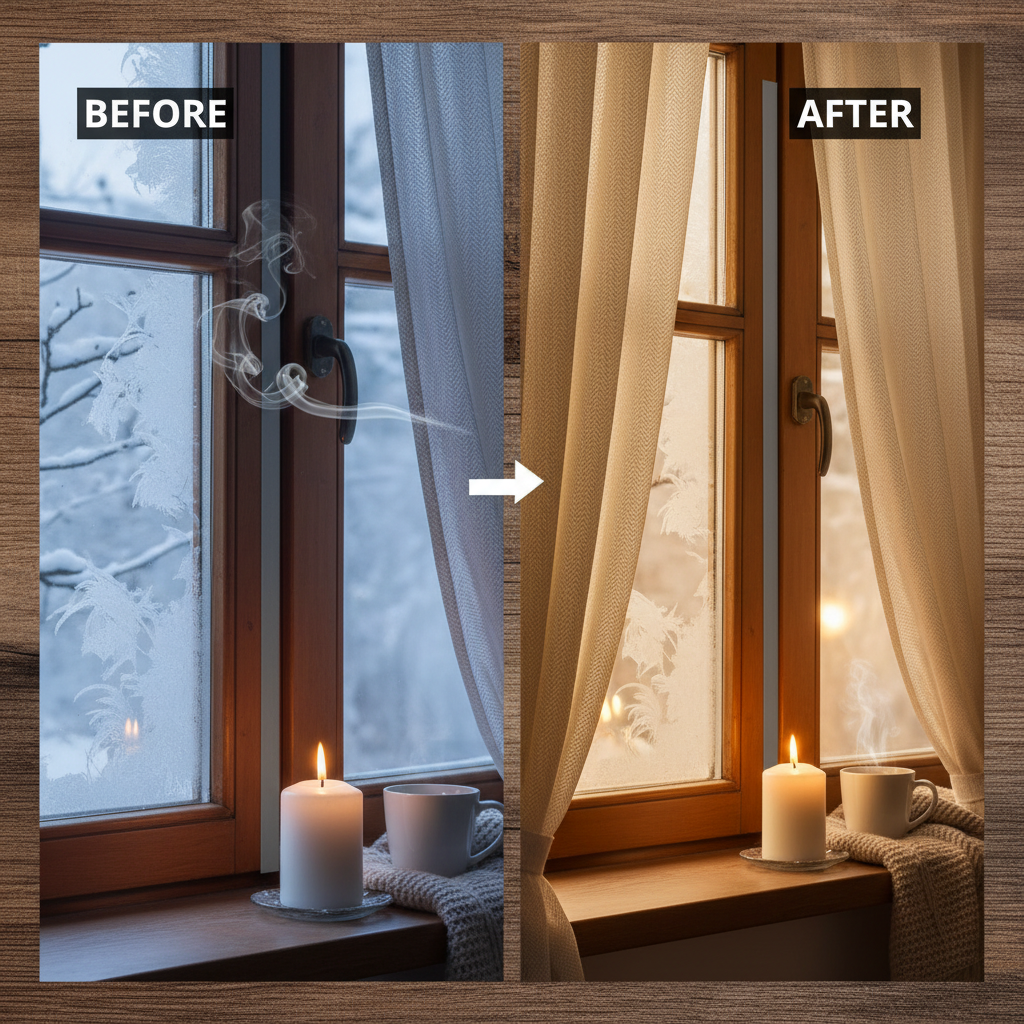
- Candle or incense test: Slowly move a lit candle or stick of incense along the frame; the flame or smoke will flicker toward the leak.
- Thermal leak detector or infrared thermometer: These tools quickly highlight temperature differences along the frame and sash.
- Check for condensation or rot: Moisture on or behind trim can point to long-term leaks that need repair.
Quick, Temporary Fixes (For Immediate Relief)
If you need to reduce the draft right away—perhaps during a cold snap—try these short-term solutions until you can do a more permanent repair:
- Use a draft stopper (fabric tube or rolled towel) along the sill to block incoming air.
- Apply removable window insulation film; it’s inexpensive and reduces heat loss.
- Hang thermal curtains or cellular shades to add an insulating barrier at night.
- Place weatherproof tape or adhesive-backed foam around the sash as a temporary seal.
- Close storm windows if you have them; they often cut drafts significantly.
Tools and Materials You’ll Likely Need
For most DIY window frame repairs, gather these items:
- Caulk gun and caulk (exterior-grade silicone or silicone-latex hybrid)
- Backer rod for large gaps
- Weatherstripping (foam tape, V-strip, or bulb seals depending on the sash type)
- Putty knife and utility knife
- Rubbing alcohol or mineral spirits for cleaning old caulk and dirt
- Paintable exterior caulk if you plan to paint after sealing
- Expanding spray foam (low-expansion) for large voids—use sparingly
- Replacement glazing or glazing compound for broken seals
Step-by-Step: How to Seal a Draft from Window Frame (DIY)
Follow these steps for a reliable, durable seal that addresses the most common causes of drafts.
1. Clean and Inspect
Open the window and remove loose paint, dirt, and old caulk. Use a putty knife and then wipe clean with a cloth and rubbing alcohol. Inspect for rot, warping, or major structural damage—if you find significant rot, repair the wood before sealing.
2. Replace or Add Weatherstripping
Weatherstripping is often the quickest effective fix. Select a type that matches the sash style:
- Foam tape for simple sash gaps
- V-strip or tension seals for sliding sashes
- Bulb or kerf seals for older wood windows
Measure carefully and install according to the manufacturer’s directions—press firmly and test the window operation to ensure it still closes smoothly.
3. Re-Caulk Exterior Joints
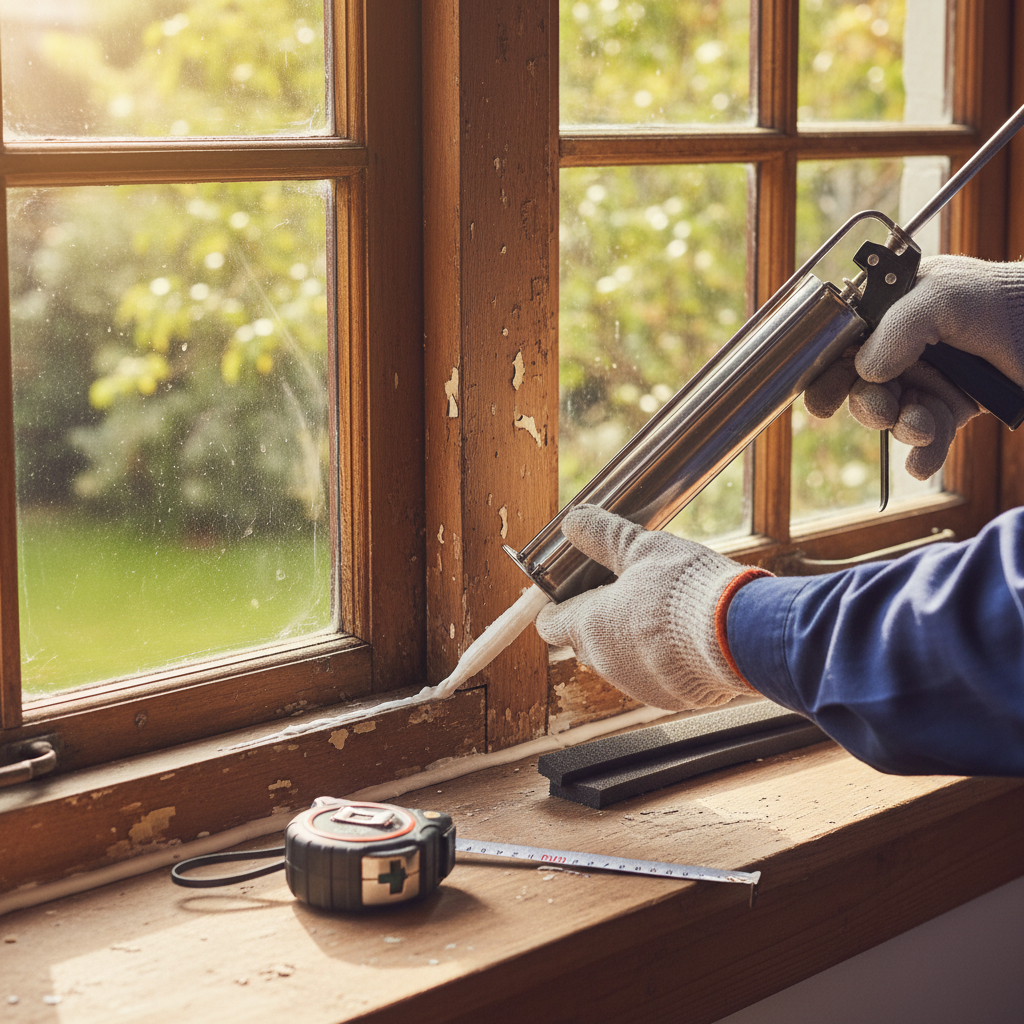
Apply exterior-grade caulk where the frame meets the siding or trim, and where stationary frame pieces meet. For vertical or large gaps use backer rod first, then caulk over it. Smooth the bead with a caulking tool or finger (dipped in soapy water) for a neat finish.
4. Fix the Sash-to-Frame Gap
If the sash doesn’t close flush, you may need to plane a warped sash, tighten sash cords (in older double-hung windows), or add thin weatherstripping to the meeting rails. Small adjustments can eliminate many drafts.
5. Repair Failed Glazing or Replace Panes
Condensation between panes or a broken seal means the insulated glass unit (IGU) has failed. While you can temporarily cover with film, the long-term fix is replacing the glass unit or the entire window.
Common Causes and How to Address Them
- Worn or missing weatherstripping: Replace with a durable type matched to the sash design.
- Cracked or missing caulk: Remove old caulk, clean, and reapply exterior-grade caulk.
- Rot or warped wood: Repair or replace damaged wood before sealing; painting exterior wood prolongs life.
- Failed insulated glass: Replace the IGU or the entire window for energy efficiency.
- Loose or misaligned sash: Adjust hinges, screws, or sash balances so the window closes tightly.
When to Call a Professional
For structural issues or when DIY fixes don’t stop the draft, call a professional. Situations that usually require pro help include:
- Extensive wood rot or frame damage
- Failed insulated glass units (many glass shops can replace IGUs)
- Older historic windows needing careful restoration
- Complex replacement of entire window units
- Persistent condensation or mold indicating deeper moisture problems
Costs and Energy Savings
Costs vary widely based on the fix:
- Weatherstripping and caulk: $10–$50 for materials per window
- Window repair labor (minor): $50–$200 per window
- IGU replacement: $150–$400 per pane depending on size and glass type
- Window replacement: $300–$1,200+ per window depending on style and efficiency
Sealing a drafty window can reduce heat loss and typically pays for itself over time in lower energy bills. The U.S. Department of Energy provides helpful guidance on air sealing and weatherization for more on improving your home’s efficiency: Energy Saver: Air Sealing Your Home.
Seasonal Maintenance Checklist
Preventative maintenance reduces the chance of new drafts forming:
- Inspect caulk and weatherstripping every spring and fall
- Repaint or seal exposed wood annually or as needed
- Clean tracks and lubricate hardware for smooth operation
- Check for condensation between panes each winter
- Replace torn or compressed weatherstripping promptly
Window Replacement and Upgrades (Long-Term Solutions)
If your windows are old, single-pane, or repeatedly problematic, consider upgrading:
- Double- or triple-pane windows with low-E coatings reduce heat transfer and UV exposure.
- Argon or krypton gas fills between panes improve insulation.
- Composite or vinyl frames resist rot and require less maintenance.
- Storm windows added to existing frames can be a cost-effective energy upgrade.
When choosing replacements, weigh upfront cost against expected energy savings and comfort improvements. Professional installers can advise on U-factor and Solar Heat Gain Coefficient (SHGC) ratings appropriate for your climate.
Noise Reduction and Draft Fixing
Many draft-fixing measures also reduce outside noise. Sealing gaps, replacing failed IGUs, and installing thicker curtains or cellular shades all help improve acoustic insulation.
Health and Safety Considerations
Air leaks can bring outdoor pollutants, pollen, and dust inside. Proper sealing reduces infiltration and can improve indoor air quality. When using chemical products like expanding foam or solvent-based caulk, ensure good ventilation and follow manufacturer safety instructions.
Frequently Asked Questions (FAQs)
Q: Can I use expanding foam for small cracks around a window frame?
A: Use low-expansion spray foam only for larger gaps; it expands and can warp sash if overused. For small gaps, use backer rod plus caulk or weatherstripping instead.
Q: Will new weatherstripping make it hard to close my window?
A: If the weatherstripping is too thick, it can interfere with sash operation. Choose the appropriate thickness and type and test the window as you install. In some cases you may need to plane the sash slightly for a proper fit.
Q: Is it better to repair or replace drafty windows?
A: If drafts are caused by simple issues (worn weatherstripping, cracked caulk, minor rot), repair is cost-effective. If multiple symptoms persist—failed seals, significant rot, single-pane glass—replacement may be the better long-term investment.
Q: How much can sealing windows save on energy bills?
A: Savings depend on climate, window condition, and heating/cooling costs. Proper air sealing and insulating measures can reduce overall heating/cooling expenses noticeably, with payback times that vary by region.
Q: Are historic windows worth repairing instead of replacing?
A: Many older wood windows can be restored successfully—repair preserves character and is often more sustainable. Consult a restoration specialist for major projects, especially on historically significant homes.
Stopping a draft coming from window frame doesn’t always require expensive replacements. With a combination of accurate diagnosis, timely repairs, and seasonal maintenance, most homeowners can restore comfort and energy efficiency quickly. For a broader look at improving home comfort and modern living spaces, consider reading How to Design A Comfortable Modern Living Space (https://mdasid.org/). It’s a helpful next step if you’re planning larger updates or want design-forward solutions to complement your repairs.