Superhero playground obstacle ideas for kids are a fantastic way to turn ordinary playtime into an imaginative training course where little heroes build strength, balance, and confidence. Whether you’re planning a backyard birthday bash, a neighborhood playdate, or a permanent mini-training course, these themed obstacles combine physical challenges with creative storytelling for hours of active fun.
Why a Superhero Obstacle Course Works for Kids
Obstacle courses capture children’s attention by mixing movement, problem solving, and role play. A superhero theme amplifies that engagement: capes, masks, and missions make every station a story beat. Beyond the fun, courses develop gross motor skills, coordination, spatial awareness, and social cooperation. Plus, courses are scalable — you can craft simple low-impact challenges for toddlers and ramp up complexity for older kids.
Design Principles: How to Plan Your Superhero Playground
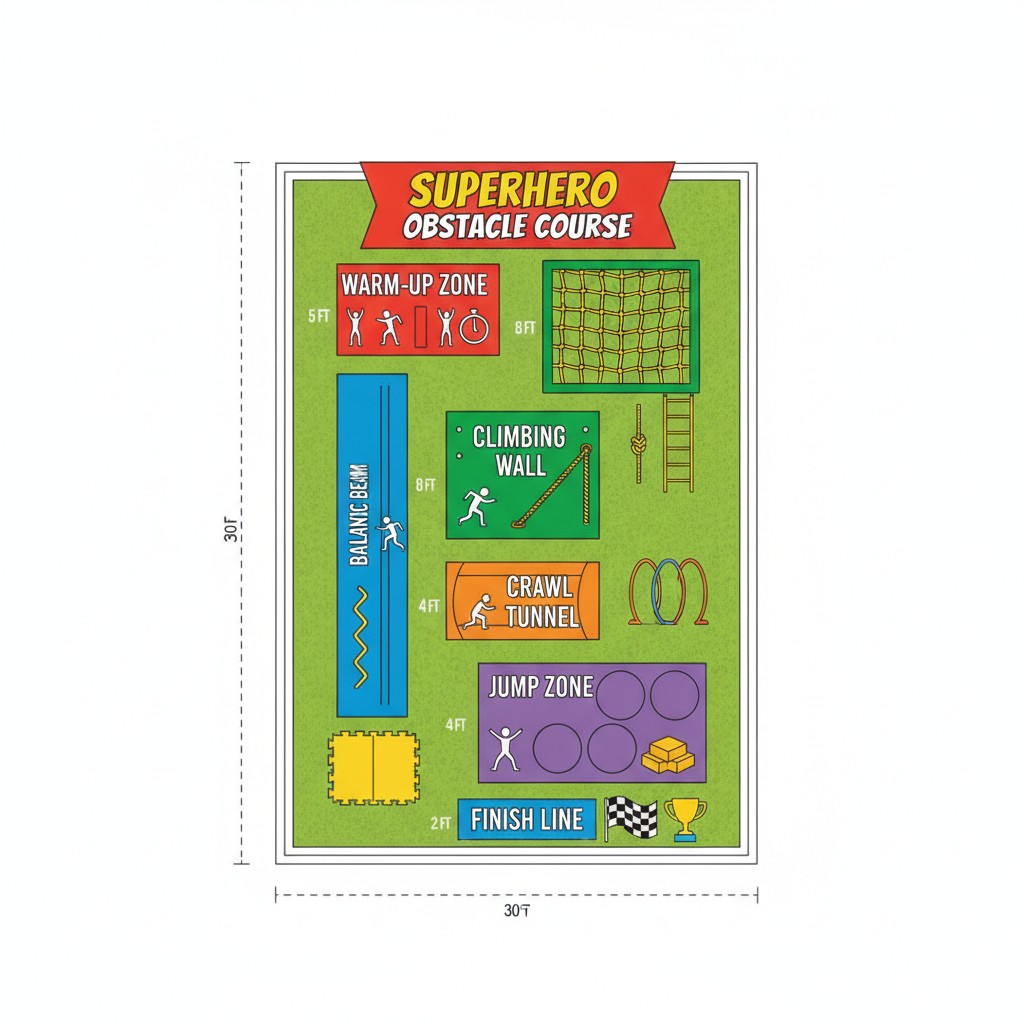
- Define your space: Measure your available area (backyard, driveway, park patch, or living room) and sketch a simple layout to determine how many stations fit safely.
- Choose a flow: Design the course so kids move progressively — warm-up (stretch), agility/balance, climb, crawl, jump, and finish (victory pose/photo station).
- Age-appropriate difficulty: Keep elements lower and softer for toddlers; add height, timed challenges, or precision goals for elementary-aged kids.
- Safety-first surfacing: Plan for impact-absorbing surfaces (rubber tiles, playground mulch, grass) and maintain clear landing zones free of hazards.
- Theme and story: Give the course a narrative (Rescue the Plush, Recover the Super Crystal) so each obstacle has purpose and keeps momentum.
20 Superhero Obstacle Ideas Kids Will Love
Below are creative, practical obstacles categorized by skill type. Each idea includes a quick note on materials and difficulty.
Balance & Agility
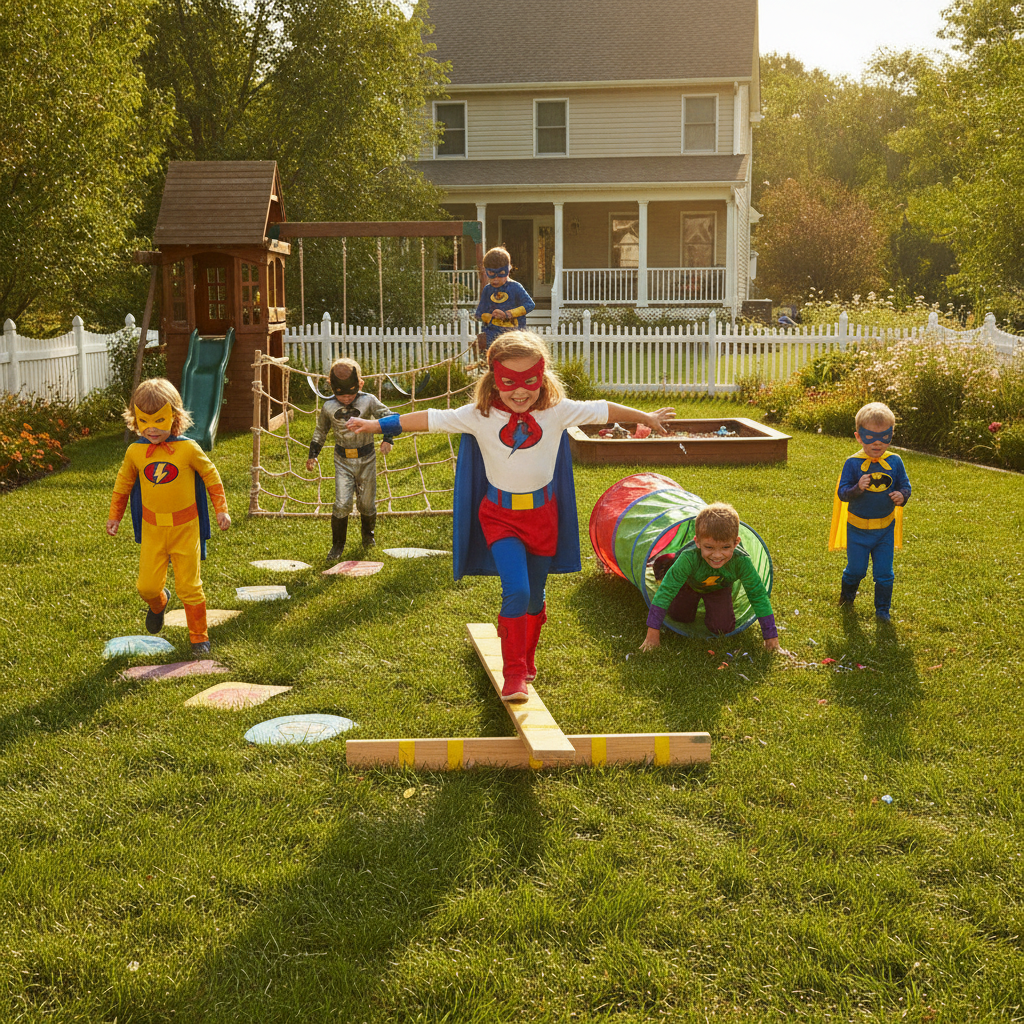
- Balance Beam Alley — Use wooden planks or commercial balance beams on the ground. (Materials: 2×4 planks or foam beams; Difficulty: easy-medium)
- Stepping Stone Path — Arrange foam pads or painted stones at varying distances for long jumps. (Materials: foam stepping pads or painted wooden discs; Difficulty: easy-medium)
- Laser-Web Maze — Stretch red yarn or crepe paper between posts to create a web kids must navigate without touching. (Materials: yarn, stakes; Difficulty: medium)
Climb & Upper-Body
- Rooftop Rescue Wall — Small climbing wall panel or cargo net for kids to climb up and over. (Materials: cargo net, plywood panel with holds; Difficulty: medium-hard)
- Hero Ladder — Horizontal monkey bars or ladder hung low for short traverses. (Materials: playground monkey bars or homemade parallel rungs; Difficulty: medium)
- Telescoping Swing Climb — Use a low rope ladder to climb up and ring a victory bell. (Materials: rope ladder, bell; Difficulty: medium-hard)
Crawl & Low Obstacles
- Subway Tunnel Crawl — Pop-up tunnels or cardboard boxes taped together for secret passage. (Materials: play tunnels or large boxes; Difficulty: easy)
- Underground Pipes — Lay PVC pipes on the ground for kids to crawl through. (Materials: wide-diameter PVC; Difficulty: easy)
- Villain Net Crawl — Low net over soft turf to crawl beneath without touching. (Materials: garden netting; Difficulty: medium)
Jump & Launch
- Super Leap Pit — Mark a takeoff and landing zone with foam mats or a pit of soft pellets. (Materials: foam mats or play pit filler; Difficulty: medium)
- Power-Up Hopscotch — Giant hopscotch with superhero icons to land on. (Materials: chalk or painted stones; Difficulty: easy)
- Rocket Pad Launch — Trampoline or springboard-style jump to access the next level (adult supervision required). (Materials: small trampoline; Difficulty: medium-hard)
Precision & Challenge Stations
- Target Throw — Throw foam discs at villain targets or knock down cardboard henchmen. (Materials: foam discs, cardboard targets; Difficulty: easy)
- Beam Rescue — Carry a “rescue doll” on a balance course without dropping it. (Materials: stuffed toy; Difficulty: medium)
- Puzzle Gate — Solve a simple puzzle or unlock a combination to proceed. (Materials: laminated cards, simple lockbox; Difficulty: easy-medium)
Finish Line Fun
- Hero Photo Station — Decorate a backdrop for capes and medals once the course is complete. (Materials: fabric backdrop, props; Difficulty: easy)
- Victory Ribbon Swing — A celebratory ribbon pull or confetti launcher (age-appropriate). (Materials: ribbon, safe party popper; Difficulty: easy)
Sample Course Layouts (By Space & Age)
Small Backyard (Under 20 ft)
- Station 1: Balance Beam Alley (ground-level beam)
- Station 2: Stepping Stone Path (3 foam pads)
- Station 3: Tunnel Crawl (single pop-up tunnel)
- Finish: Photo Station
Medium Yard (20–40 ft)
- Warm-up: Power-Up Hopscotch
- 1: Laser-Web Maze
- 2: Hero Ladder (low monkey bars)
- 3: Subterranean Pipe Crawl
- 4: Target Throw
- Finish: Victory Ribbon Swing
Indoor Version (Rainy Day)
- Balance pathways using yoga mats
- Use couch cushions for stepping stones
- Construct tunnels with chairs and blankets
- Finish with a costume parade down a hallway
DIY Materials List & Where to Source
Many obstacles can be crafted from affordable items. Here’s a quick shopping list and alternatives:
- Foam mats and gym tiles — for safe landings
- Pop-up play tunnels — foldable and portable
- Rope ladders, cargo nets, and monkey bars — available from playground suppliers
- PVC pipes and connectors — for crawl tubes or balance rails
- Cardboard, paint, and duct tape — for targets and villain cutouts
- Stuffed toys, bells, and inexpensive medals — for mission objectives and rewards
Local hardware stores, sporting goods shops, and online marketplaces carry most of these items. For inspiration on building safe backyard play structures and equipment placement, reputable home-lifestyle sources like Better Homes & Gardens offer helpful guides and layout ideas: Better Homes & Gardens — Backyard Playground Ideas.
Safety Guidelines Every Parent Should Follow
Safety is essential. Follow these best practices to keep play high-energy but low-risk:
- Surface cushioning: Use rubber playground tiles, pea gravel, engineered wood fiber, or thick grass. Avoid concrete near landing zones.
- Anchor equipment: Secure freestanding items to prevent tipping. Use ground stakes for tunnels and reinforce rope elements.
- Age-appropriate design: Ensure heights and gaps match participants’ developmental levels. Avoid high climbs for toddlers.
- Supervision: A responsible adult should watch younger children and step in for risky behavior.
- Inspect regularly: Check for loose screws, splinters, tears in nets, and waterlogged wood.
- Soft edges: Pad sharp corners with foam or pool noodles and remove tripping hazards.
- Weather awareness: Avoid wet equipment and slippery rocks; move indoor if surfaces are slick.
Inclusive & Accessible Modifications
Make your superhero playground welcoming for children with different abilities:
- Lower ramps instead of stairs for wheelchair access
- Wider pathways and clear sightlines for mobility devices
- Sensory stations: textured panels, sound chimes, and visual targets
- Time-based options: allow longer time limits for tasks so all kids can participate
- Partnered tasks: pair kids so those with mobility limits can join cooperative challenges
Maintenance, Storage & Seasonal Care
- Store soft items indoors when not in use to prevent mildew and sun damage.
- Cover wooden elements with sealant each season to extend life and reduce splintering.
- Check ropes and nets for fraying and replace worn parts immediately.
- Clean plastic and fabric pieces with mild soap and water; disinfect during cold/flu season.
Superhero Party Ideas Using the Course
Turn the obstacle course into a themed party event:
- Mission cards — Give kids a card at each station describing the mini-mission.
- Cape decorating station — Let guests personalize capes before running the course.
- Medal ceremony — Finish with a small award ceremony and photos.
- Timed heats — Run age-grouped heats to keep things fair and exciting.
- Snack pit station — Healthy hero fuel like fruit skewers and mini sandwiches at the midpoint.
Troubleshooting Common Problems
Kids lose interest quickly
Rotate stations every few weeks and change the story or “villain” to keep the course fresh. Introduce time trials or team relays to add competition.
Too many kids, not enough space
Create a rotation system with clearly defined lanes and small group heats. Use a scoreboard or token system so children know when it’s their turn.
Weather or mud makes course unusable
Plan indoor alternatives: yoga-mat pathways, taped floor targets, and couch-cushion climbs. Keep a pop-up tent for quick shelter and lay down tarps if needed.
Photo & Memory Tips
Set up a simple backdrop near the finish line with props for memorable photos. Consider a small waterproof signboard that lists the mission name and date — kids love seeing their name on a mission plaque.
Frequently Asked Questions
What age is best for a superhero obstacle course?
Courses can be adapted for nearly all ages. Toddlers (2–4 years) need low, soft obstacles and close supervision. School-age kids (5–12 years) can handle more complex elements like low climbing nets and timed challenges. Always adjust risk and height by age.
How much space do I need to build a meaningful course?
You can create a mini course in under 20 feet for simple balance and crawl stations. For a more varied course with climbing and jumping, aim for 30–40 feet. Public parks and community centers often provide larger spaces if you need room.
Are there any recommended safety certifications for home-built structures?
For permanent structures, consult local building codes and consider products that meet ASTM playground safety standards. For simple portable obstacles, follow manufacturer instructions and prioritize cushioned surfaces and proper anchoring.
How do I keep the course fresh over time?
Rotate obstacles, change narratives, add seasonal themes (ice missions in winter, jungle rescues in summer), and incorporate new challenges like balance games or sensory stations.
Final Checklist Before First Run
- Measure and mark obstacle spacing and clear landing zones
- Test each station yourself to ensure stability
- Place safety surfacing under and around fall zones
- Prepare a first-aid kit and water station
- Brief kids on rules and boundaries before starting
Creating a superhero playground obstacle course for kids is a rewarding blend of creativity, movement, and storytelling. With thoughtful planning, durable materials, and safety-minded design, you can give children a space to play boldly, learn new physical skills, and make lasting memories.
If you’d like more ideas on crafting comfortable and playful spaces at home, consider exploring How to Design A Comfortable Modern Living Space (https://mdasid.org/), which includes tips on layout and materials that work well for family activity areas.