If you’ve discovered dead outlets in garage, the frustration is immediate—power tools won’t run, the freezer can’t stay cold, and charging stations are useless. Before calling an electrician, there are several safe, step-by-step checks and simple repairs most homeowners can perform. This guide walks you through diagnosing the root cause, safe testing, common fixes, cost expectations, and when to bring in a pro.
Why garage outlets go dead: common causes
Understanding why an outlet is dead makes diagnosing easier. Common reasons include:
- Tripped circuit breakers or a tripped GFCI (Ground-Fault Circuit Interrupter)
- Tripped AFCI (Arc-Fault Circuit Interrupter) in newer panels
- Loose or damaged wiring at the outlet or junction box
- Weather-related corrosion on exterior outlets or connections
- Outlet controlled by a wall switch that’s off
- Faulty outlet receptacle worn out from age
- Overloaded circuits from heavy tools, refrigerators, or heaters
Safety first: essential precautions
Electricity is dangerous. Take these safety steps before you touch anything:
- Always turn off the circuit breaker before removing an outlet cover or working on wiring.
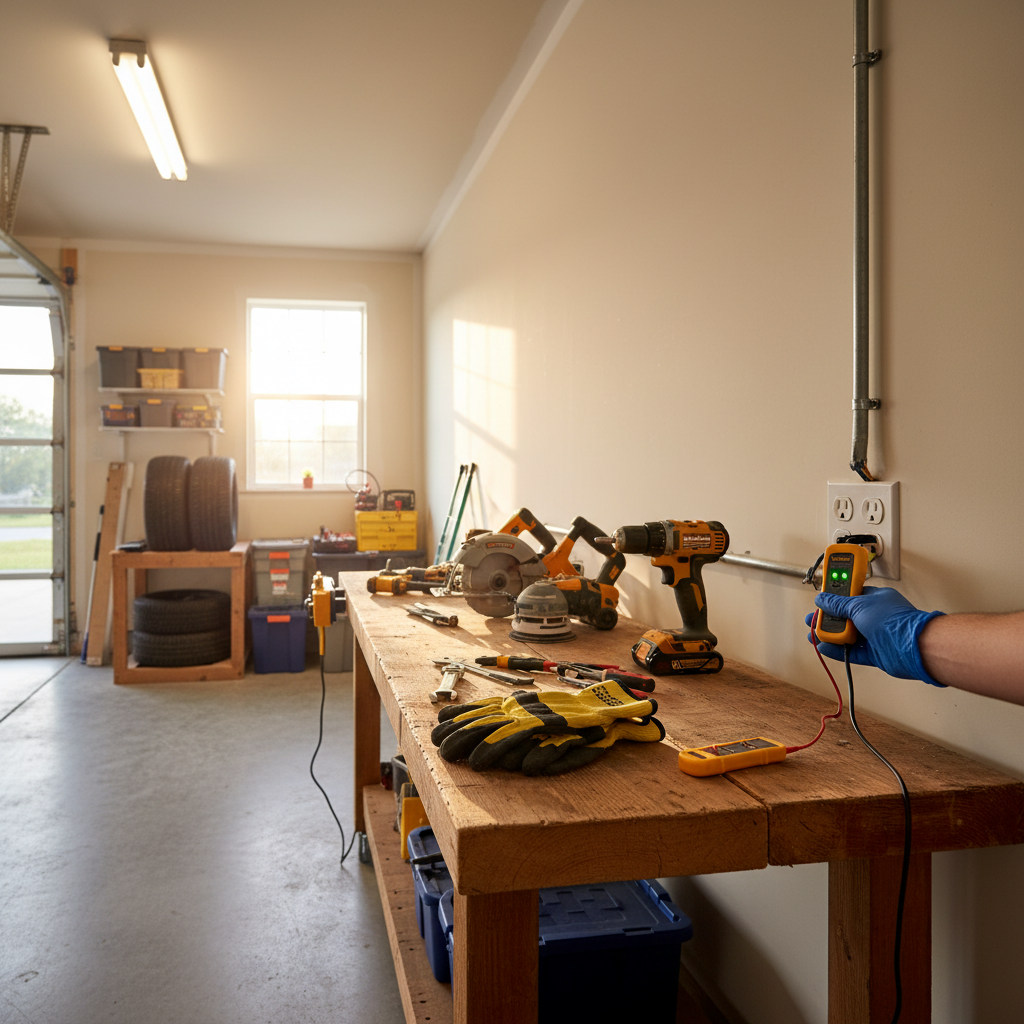
- Use a non-contact voltage tester to confirm power is off.
- Wear insulated gloves and safety glasses when inspecting wiring.
- If you see melted insulation, charring, or smell burning, stop immediately and call a licensed electrician.
- When in doubt, hire a pro—don’t risk unsafe repairs.
Quick troubleshooting checklist (10 minutes)
Start with this fast checklist to eliminate the easiest causes:
- Test the outlet with a lamp or phone charger to confirm it’s dead.
- Check the main electrical panel for tripped breakers or blown fuses. Reset any tripped breaker.
- Look for GFCI outlets in the garage and nearby areas (sinks, utility rooms, exterior walls). Press the reset button.
- Check if a wall switch controls the outlet and make sure it’s in the ON position.
- Try other outlets on the same wall or circuit to see if multiple outlets are affected.
Step-by-step diagnostic process
1. Confirm it’s not an appliance or cord
Test the outlet with two different devices and cords. A single defective appliance or extension cord can make an outlet appear dead.
2. Inspect the breaker panel
Open your breaker panel and look for tripped breakers. A tripped breaker will usually sit between ON and OFF or show a red/amber indicator. Turn the breaker fully to OFF, then back ON to reset it. If the breaker immediately trips again when you plug something in, there’s an overload or a short somewhere on that circuit.
3. Find and reset all GFCI outlets
GFCIs are common in garages and protect against ground faults. A GFCI trip can kill power to downstream outlets that don’t look like GFCI devices. Check all possible GFCI locations: the garage, exterior walls, basement, and utility rooms. Push the “Reset” button and retest your dead outlet. For guidance on GFCI safety and uses, refer to Better Homes & Gardens for basic household electrical safety ideas: Better Homes & Gardens.
4. Test the outlet with a receptacle tester and multimeter
A cheap receptacle tester (two- or three-light tester) tells you if a hot, neutral, or ground is open or reversed. For more detailed diagnostics, use a multimeter:
- Set multimeter to AC volts and test between hot and neutral (should be ~120V in North America).
- If there is no voltage, test between hot and ground and neutral and ground to locate the missing conductor.
If you detect voltage where you shouldn’t or inconsistent readings, stop and call an electrician.
5. Inspect the outlet and wiring
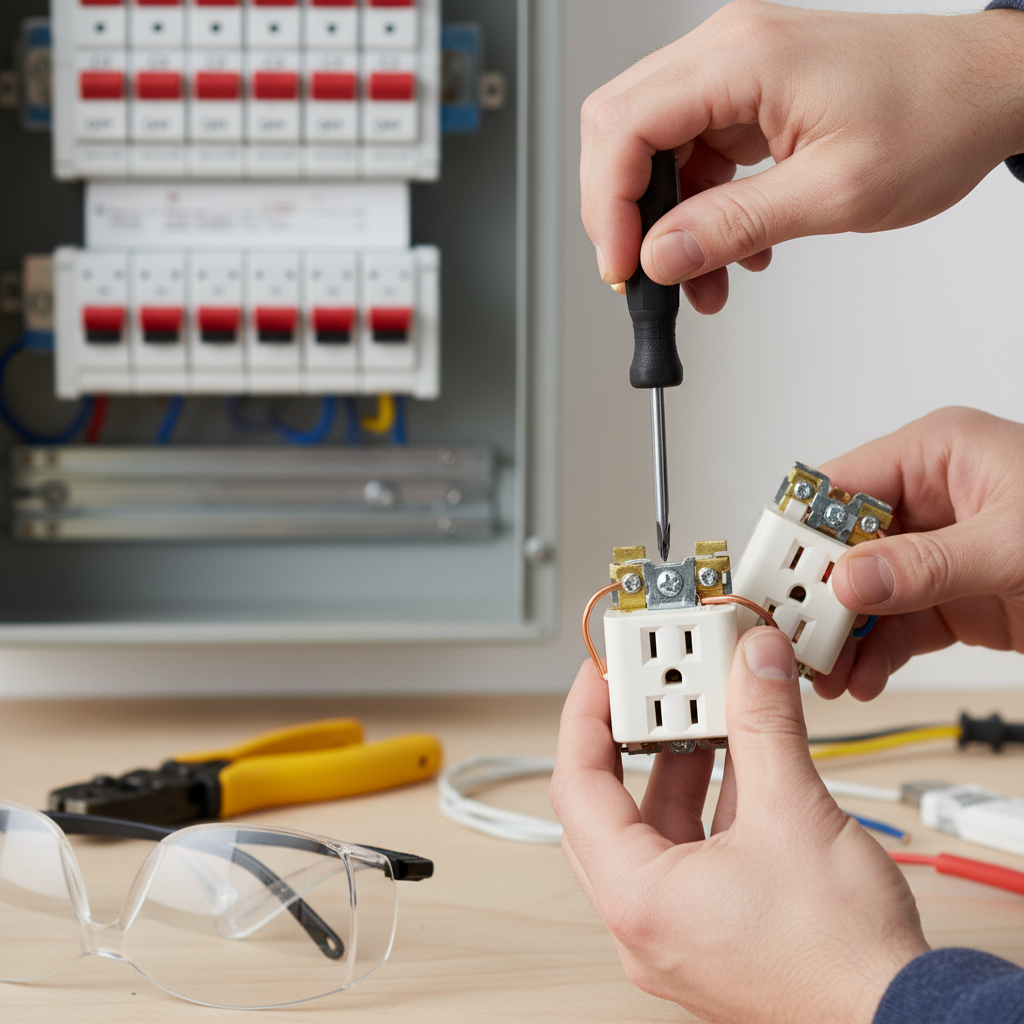
With the breaker off, remove the outlet cover and unscrew the receptacle. Look for loose wires, burnt contacts, or backstabbed connections (wires pushed into the back of the outlet). Backstabbed outlets can become unreliable over time—reconnecting wires to the screw terminals is more secure. Tighten wire screws to the manufacturer’s specifications and replace any damaged outlet.
6. Check for upstream junction boxes and switched outlets
Sometimes a dead outlet is caused by a loose wire in a junction box above the outlet or by a switched outlet where the switch controls half the receptacle. Inspect the switch wiring and any accessible junctions for loose wire nuts or disconnected conductors.
Common faults and simple repairs
Tripped GFCI
Press the reset button on the GFCI. If it won’t reset or trips repeatedly, the outlet or circuit has a ground fault and needs further investigation.
Loose connections
Tighten wire terminal screws and re-seat wires on the screw terminals. Replace outlets with broken or corroded contacts. Replace any wire that shows damaged insulation.
Faulty outlet
Outlets wear out. Replacing a receptacle is a straightforward DIY if you are comfortable with electrical safety: turn off the breaker, verify no power, swap the old outlet for a new one, and reattach wiring to the correct terminals (hot to brass, neutral to silver, ground to green).
Tripped breaker or overloaded circuit
If a circuit trips due to overload, redistribute high-draw appliances (compressors, heaters, shop vacs) onto different circuits. If the breaker trips repeatedly even without heavy loads, it may be failing and should be replaced by a licensed electrician.
Corrosion or moisture
Garages are susceptible to moisture and temperature swings. Replace corroded outdoor-rated outlets and use weatherproof covers for exterior receptacles. For safety, replace any outlet with evidence of water intrusion.
When to call an electrician
Hire a licensed electrician if you encounter any of the following:
- Evidence of burning, charring, or melted insulation
- Repeated breaker trips that aren’t because of obvious overload
- Exposed or DIY wiring you don’t understand
- Loose neutral or hot that you can’t safely secure
- Replacing or upgrading a circuit, installing a dedicated line, or adding GFCI/AFCI protection to meet code
Licensed electricians also handle tasks that require a permit or when adding capacity (e.g., installing a new 240V outlet for large machinery).
Costs you can expect
Repair and replacement costs vary by region and complexity:
- Replacing a single outlet: $50–$150 if hiring a pro (parts + labor).
- Replacing multiple outlets or correcting wiring: $150–$500 depending on accessibility.
- Replacing a breaker or adding a dedicated circuit: $150–$800 or more depending on service panel work.
- Full rewiring or major panel upgrades: $1,500–$5,000+.
DIY parts are inexpensive: a new duplex outlet costs $2–$10, and a GFCI receptacle costs $10–$30, but only undertake DIY work if you have the know-how and take proper safety precautions.
Preventing dead outlets in the future
Preventative steps reduce the chance of outlets failing:
- Use GFCI-protected outlets in garages and near water sources.
- Avoid backstabbing receptacles; use screw terminals for better connections.
- Install dedicated circuits for heavy equipment (compressors, welders) to reduce overloads.
- Use outdoor-rated, weatherproof outlets and covers for exterior garage walls.
- Label garage breakers clearly so anyone can find and reset them quickly.
- Inspect outlets yearly and replace any that show wear or loose fit.
Upgrades to consider
When repairing outlets, consider practical upgrades that add convenience and safety:
- Install extra outlets to reduce reliance on extension cords.
- Add USB-integrated outlets for charging phones and small devices.
- Install GFCI or AFCI protection at the panel for whole-circuit safety.
- Upgrade to tamper-resistant receptacles if children occasionally enter the garage.
- Consider smart outlets or switched outlets for scheduled lighting and tool control.
Garage outlet layout and best practices
Good outlet placement makes the garage safer and more functional:
- Place outlets every 6–8 feet along workbench areas for convenient tool use.
- Mount outlets higher for chest freezers or refrigerators to avoid bending cords.
- Provide dedicated 20A circuits for workshop tools that draw more current.
- Keep extension cords temporary—don’t use them as permanent wiring.
Tools and materials you may need
For safe troubleshooting and basic repairs:
- Non-contact voltage tester
- Receptacle tester (three-light)
- Digital multimeter
- Screwdrivers and nut drivers
- Wire strippers and needle-nose pliers
- Replacement outlets (duplex, GFCI) and outlet covers
- Wire nuts and electrical tape
FAQ — Quick answers to common questions
Q: Why are multiple outlets in the garage dead at once?
A: They’re likely on the same circuit and dependent on one upstream device—often a tripped GFCI, a common junction box with a loose wire, or a tripped breaker.
Q: Can a GFCI in the house trip an outlet in the garage?
A: Yes. If the garage outlet is wired downstream from another GFCI (e.g., in the kitchen or exterior), a trip at that device will cut power to the garage outlet.
Q: My breaker won’t reset. What should I do?
A: If a breaker trips and won’t reset, leave it off and call an electrician. That behavior often indicates a short or serious electrical fault.
Q: Is it safe to replace an outlet myself?
A: If you’re comfortable turning off power at the panel and following wiring conventions (hot to brass, neutral to silver, ground to green), replacing a worn outlet is a common DIY job. If wiring looks damaged, corroded, or unclear, hire a pro.
Q: Why does my outlet work sometimes and not others?
A: Intermittent power usually points to a loose connection, worn contacts inside the outlet, or a failing breaker. These conditions can be hazardous and should be addressed promptly.
Final checklist before you finish
- Confirm the outlet is working under load by plugging in a device after repairs.
- Secure all outlet covers and restore the panel labeling if you moved anything.
- Note the date of repair and any parts replaced for future reference.
- Consider a professional inspection if you fixed wiring or replaced panels.
Summary
Dead outlets in garage are usually caused by tripped breakers, GFCI protection, loose connections, or faulty outlets. Many of these issues can be diagnosed and repaired safely with the right tools and precautions; others require a licensed electrician. Regular inspection, proper outlet placement, and using GFCI/AFCI protection will keep your garage power reliable and safe.
For more on improving living areas, layouts, and practical upgrades for home comfort, explore How to Design A Comfortable Modern Living Space at this link: How to Design A Comfortable Modern Living Space.
Frequently referenced safety resource
For general home improvement inspiration and basic electrical safety ideas, you can consult Better Homes & Gardens: Better Homes & Gardens.