If you’re looking to refresh an open-plan living area, artificial grass room divider ideas for open spaces bring instant greenery, texture, and privacy without the upkeep of live plants. These synthetic turf partitions can define zones, soften acoustics, and add a playful or sophisticated botanical touch to living rooms, studios, lofts, and shared workspaces.
Why choose artificial grass as a room divider?
Artificial grass offers several advantages when used as a room divider in open-plan homes:
- Low maintenance: no watering, trimming, or soil required.
- Year-round green aesthetic that works in low-light interiors.
- Versatility: can be installed in panels, screens, hanging paths, or combined with shelving.
- Durable and pet-friendly options for busy households.
- Acoustic benefits: the textured surface helps dampen reverberation in open spaces.
Design considerations before you begin
Before investing time and money, take a moment to plan. Thoughtful prep saves frustration and ensures your divider complements your space.
- Purpose: privacy, visual separation, sound reduction, or purely decorative?
- Scale: measure ceiling height and sightlines. Will a partial divider be enough, or do you need floor-to-ceiling coverage?
- Access and flow: consider how people move through the space—leave clear walkways.
- Light and ventilation: solid turf panels may block light; plan placement accordingly or use slatted frames to allow airflow and brightness.
- Budget: prefab turf panels cost more than DIY solutions like turf-wrapped frames or pallet walls.
- Material quality: look for UV-rated, drainable turf with realistic texture if it will be in a sunlight-exposed or high-traffic area.
Top 12 artificial grass room divider ideas for open spaces
1. Freestanding turf-panel screens
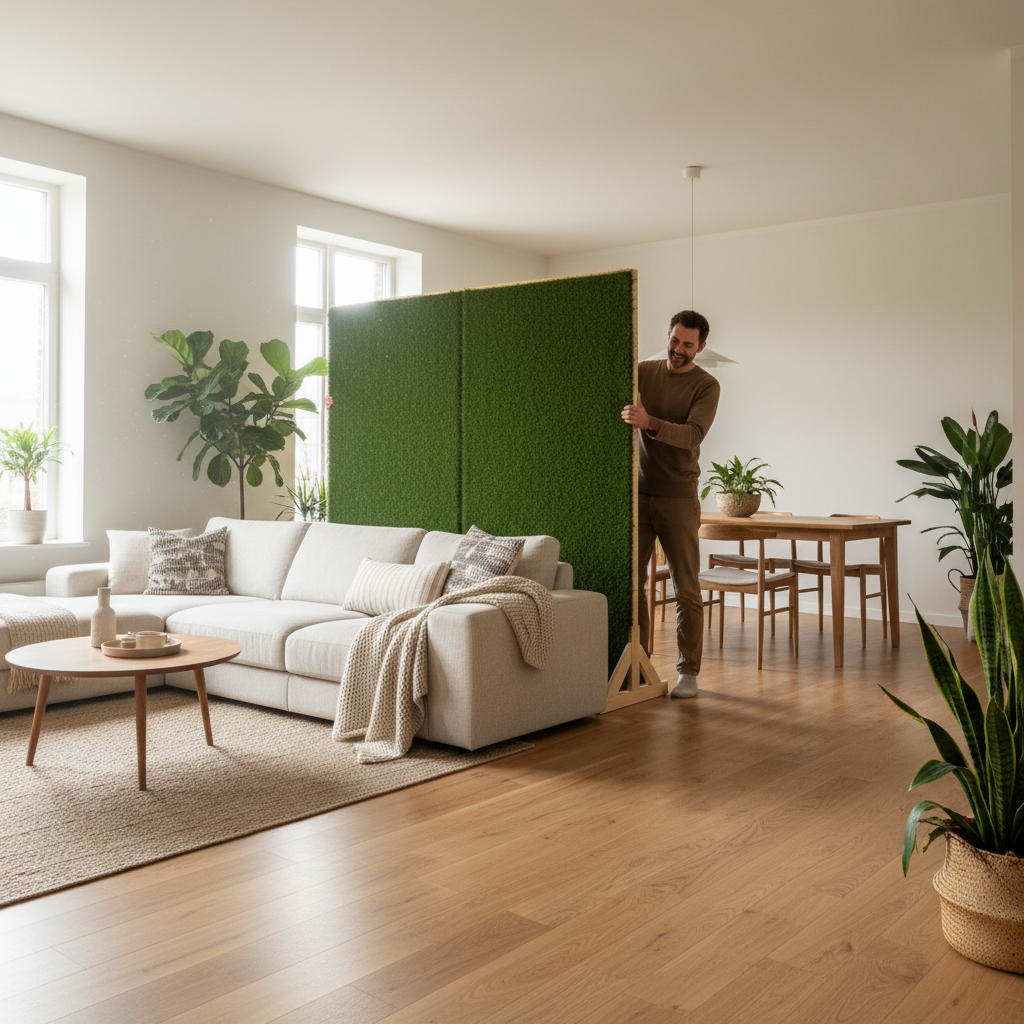
A modular, freestanding screen made from lightweight frames (aluminum or wood) wrapped in artificial grass is one of the most flexible options. Panels can be hinged, linked with decorative clips, or left as separate pieces to be moved as needed.
- Best for renters or those who like to change layouts often.
- Tip: add rubber feet or casters for stability and mobility.
2. Sliding turf doors or track panels
Mount artificial grass panels on a ceiling track to create sliding partitions that tuck away when not in use. This is ideal for multi-purpose rooms that sometimes need to open up completely.
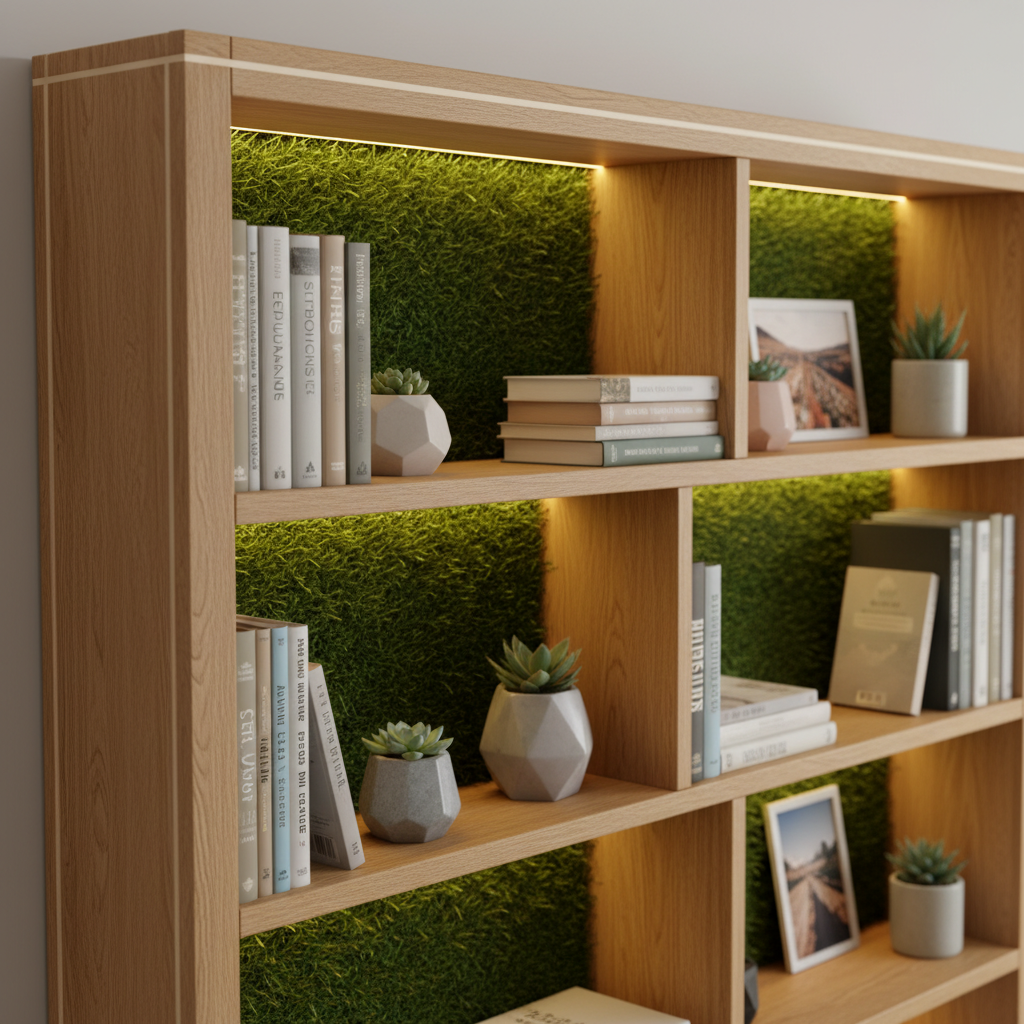
3. Turf-wrapped bookshelf divider
Combine function with greenery by wrapping the back panels of an open bookshelf with turf. It provides separation while keeping storage and display space accessible on both sides.
4. Vertical turf planter wall (hybrid)
Pair artificial turf with shallow planter shelves along the top or bottom to mix faux grass with real potted plants. This hybrid approach adds dimension and a more curated look.
5. Hanging turf panels (ceiling-mounted)
Suspend lightweight turf panels from ceiling hooks to create floating partitions that subtly define zones without creating heavy visual barriers. This approach keeps sightlines open and allows light to flow underneath.
6. Turf-and-slatted wood partition
Alternate vertical wood slats with turf panels for a modern, textured screen that allows light and air through while still feeling verdant. Stain the slats to match existing woodwork for a cohesive style.
7. DIY turf-on-pallet divider
Repurpose shipping pallets or wooden crates by fastening turf to the faces. Sand and seal the wood for a polished finish, then anchor the pallet divider to the floor or wall for safety.
8. Rolling turf panel on industrial casters
Attach turf to a framed panel and add heavy-duty casters to create a mobile partition—great for flexible studios, classrooms, or photo sets.
9. Turf cube screens (modular blocks)
Build small turf-covered cubes or boxes that stack in different arrangements. These create a sculptural, playful divider that doubles as seating or display platforms when topped with cushions or trays.
10. Turf-lined window frame as a partial screen
Turn an open frame (an old door or window sash) into a green vignette by lining the inner frame with turf. Hang it mid-room for a charming, rustic partition that doesn’t feel heavy.
11. Acoustic turf wall with insulation backing
For rooms where noise control matters, mount turf over a layer of acoustic foam or recycled felt. You’ll get the visual appeal of turf plus measurable sound absorption—useful for open-plan offices and shared living spaces.
12. Turf-and-mirror duo for depth
Alternate strips of artificial grass with mirrored panels. Mirrors reflect light and make the area feel larger, while turf adds warmth and softness. This is an upscale approach that works well in narrow spaces or hallways connecting open areas.
Materials and tools you’ll likely need
Most projects use similar materials—buy or rent what fits your chosen idea.
- Artificial turf rolls or panels (choose pile height and UV rating)
- Plywood, MDF, slats, or metal frames
- Staple gun, construction adhesive, washers and screws
- Hinges and brackets for folding panels
- Casters if you want mobility
- Optional: acoustic foam, lighting strips, planters, sealant
Step-by-step: Build a simple freestanding turf screen
Estimated time: 2–4 hours
- Measure the height and width you want. Cut a plywood sheet to size (common: 6 ft × 3 ft panels).
- Attach wooden battens to the back for rigidity and feet if desired.
- Lay the artificial turf face down. Apply construction adhesive to the panel edges and staple the turf to the back, pulling taut to avoid wrinkles.
- Trim excess turf around the edges for a neat finish. Add trim or beading to conceal staples if you want a polished look.
- Finish with rubber feet, attach hinges to link multiple panels, or mount casters for mobility.
Styling tips: Making turf dividers feel intentional
- Contrast textures: pair turf with metal, glass, or natural wood to avoid a novelty look and achieve a balanced aesthetic.
- Layer lighting: add LED strips along the top or side to highlight the turf and create ambiance in the evening.
- Incorporate decor: hang small planters, art, or woven baskets on the turf to personalize the divider.
- Keep scale in mind: in small rooms, use lower or partial-height dividers so they don’t overwhelm the space.
- Maintain color harmony: choose turf tones (cool vs. warm greens) that complement your upholstery and finishes.
Maintenance and longevity
Although artificial grass is low-maintenance, a little care keeps it looking fresh:
- Vacuum or sweep regularly to remove dust and pet hair.
- Spot clean stains with mild detergent and water; rinse thoroughly.
- Brush pile fibers with a stiff broom occasionally to keep them upright in high-traffic areas.
- Check seams and adhesives annually; repair any lifting with outdoor-grade adhesive or additional staples.
For a deeper dive into synthetic turf care and product selection for indoor and outdoor projects, trusted decorating and gardening resources can help you choose the right material for longevity and appearance. For general design inspiration and product tips, see Better Homes & Gardens.
Safety and practical considerations
When installing artificial grass partitions, prioritize safety and building requirements:
- Anchor tall freestanding panels to a wall or ceiling to prevent tipping, especially in homes with children or pets.
- Choose fire-retardant materials if local codes require them for interior installations—check product specifications.
- If your divider blocks ventilation or HVAC vents, consult an HVAC professional to avoid affecting airflow or fire safety systems.
- Use non-toxic adhesives and UV-rated turf to prevent premature fading or off-gassing in enclosed spaces.
Budget-friendly vs. high-end approaches
Your budget will guide choices in materials and complexity:
- Budget-friendly: thrifted frames, pallet bases, or simple turf-on-plywood panels. These can be assembled with household tools.
- Mid-range: premade screens with higher-quality turf and finishing trim, or DIY frames with stained wood and integrated shelving.
- High-end: custom built-in turf walls with integrated lighting, acoustic backing, and professional finishing for a seamless look.
Where to buy materials
Look for artificial turf suppliers that provide UV-stable, indoor-rated products. Many home improvement stores and specialty online retailers sell turf by the roll. When shopping, request samples and compare pile density, backing quality, and warranty information.
Frequently asked questions (FAQs)
Will artificial grass smell or off-gas indoors?
Quality artificial turf designed for indoor use has minimal odor and low VOCs. Always check product specifications and consider ventilating the room during installation. If sensitive to smells, allow the turf to air out outdoors for a day before installing.
Can I use turf in a high-traffic indoor area?
Yes—choose a dense, commercial-grade turf with a strong backing and shorter pile height for durability. Reinforce seams and edges to withstand frequent contact.
Is artificial grass fire-resistant?
Not all turf is fire-rated. If fire resistance is a concern, especially in apartments or commercial spaces, request fire-rating information from the manufacturer and follow local building codes.
How do I attach turf to metal frames?
Use a combination of outdoor-grade adhesive and staples or screw-fastened battens. Be sure to pre-drill holes if screwing into metal and use washers to distribute pressure and avoid tearing the turf backing.
Can I hide cords or lighting in a turf divider?
Yes—use recessed channels in the frame or run cables behind the turf’s backing. Use low-voltage LED strips and secure cables with clips to keep everything tidy and safe.
Final styling ideas and inspiration
Artificial grass dividers are versatile—pair them with rattan furniture for a boho look, with black metal and concrete for industrial chic, or with natural wood and linen for Scandinavian calm. Consider seasonal swaps: add string lights or ornaments during holidays, and change attached planters for a fresh vibe each season.
Whether you want a quick DIY partition or a custom-built living-room feature, artificial grass room divider ideas for open spaces offer creative ways to shape your home while adding texture and verdant character. Experiment with scale and materials until you find a solution that feels both functional and beautiful.
If you’d like more ideas on arranging furniture, choosing finishes, or planning a modern, comfortable living area, explore How to Design A Comfortable Modern Living Space for practical guidance and inspiration: How to Design A Comfortable Modern Living Space.
References and further reading
For additional tips on design and material selection, visit Better Homes & Gardens: https://www.bhg.com.
Questions?
If you have a specific open-plan layout or want feedback on which turf divider would fit your home, feel free to share measurements or photos and I’ll suggest tailored ideas.