If you’ve noticed a draft coming from window frame seams, it can make a room feel chilly, raise your energy bills, and reduce comfort. Identifying where cold air is sneaking in and choosing the right fix—whether a quick DIY patch or a long-term replacement—will restore comfort and efficiency without unnecessary expense.
Why drafts around window frames happen
Understanding the causes helps you pick the most effective solution. Air leaks at window frames commonly occur because of:

- Age and settling: Houses shift over time, which can open gaps around the frame.
- Worn weatherstripping: Foam, felt, and rubber seals shrink or compress with use.
- Poor installation: Improper flashing, gaps under sills, or insufficient insulation during installation.
- Rot or damage: Wood frames that have rotted or warped create irregular gaps.
- Single-pane windows and poor glazing: Old glass and failing putty let air move around the sash.
How to locate the exact source of a window draft
Before sealing anything, pinpoint the leak to avoid wasting time. These methods are quick and effective:
- Visual inspection: Look for visible gaps, cracks, water stains, or soft wood around the frame.
- Touch test: On a cold, windy day, slowly move your hand around the frame and sash to feel for moving air.
- Incense or candle test: Light a candle or incense stick and carefully move it near the frame. If the flame or smoke shifts, you’ve found a leak (do this safely).
- Thermal camera or infrared thermometer: These tools show cold spots around windows if you have access to them or a professional can help.
Quick DIY fixes to stop a draft coming from a window frame
These inexpensive, fast methods are ideal for renters, temporary solutions, or cold snaps.
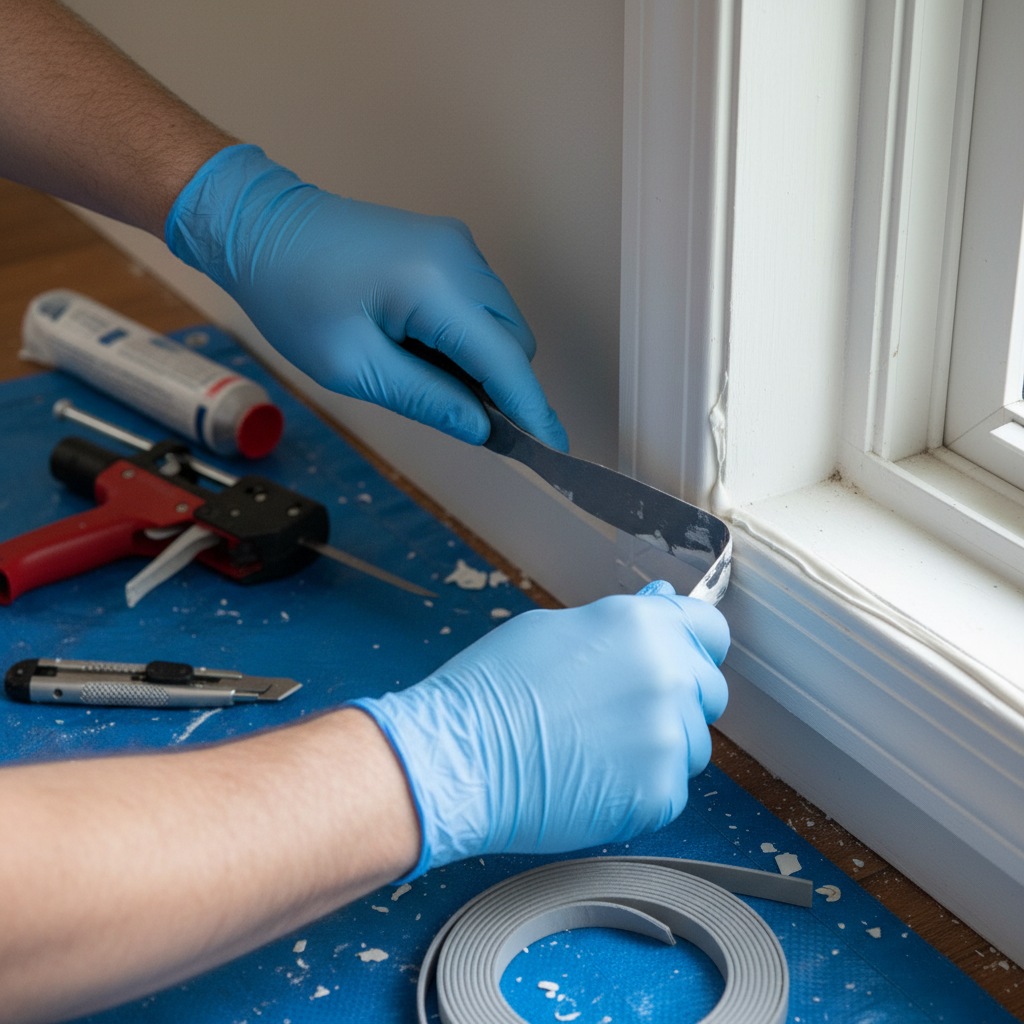
1. Reapply or add weatherstripping
Materials: adhesive-backed foam tape, V-strip (tension seal), or tubular rubber weatherstripping.
How-to: Clean the frame, measure and cut the strip, then press into place on the sash meeting points. Choose foam for small gaps and V-strip for sash edges. Durable rubber or silicone works best for long-term use.
2. Use caulk for stationary gaps
Materials: acrylic-latex caulk for interior trim, or silicone-latex hybrid for durability.
How-to: Run a bead along the seam where the frame meets the wall or trim. Smooth with a wet finger or tool and allow recommended cure time. Avoid caulking moving parts like operable sashes.
3. Apply window insulation film
Materials: clear plastic film kits with double-sided tape and a heat gun.
How-to: Stick the tape to the window frame, attach the film, then shrink it with heat for a tight, invisible barrier. This reduces drafts and adds an insulating air layer—ideal for colder months.
4. Install a draft stopper or sash pillow
Materials: fabric draft snakes, inflatable sash seal, weatherproof foam pillows.
How-to: Place at the bottom of the sash or tuck into gaps where the sash meets the sill. These are inexpensive and removable for seasonal use.
5. Tighten locks and adjust sash fit
Over time, window hardware can loosen and let sashes sit unevenly. Tightening screws or adjusting the locking mechanism can pull the sash tighter into the frame and reduce air movement.
Long-term and professional solutions
For chronic drafts, structural problems, or when you want a more permanent fix, consider these options.
1. Replace weatherstripping and sash seals professionally
Pros can install high-quality silicone or wool pile weatherstripping that lasts longer and provides better air sealing than inexpensive foam.
2. Reglaze or replace failing window panes
Single-pane windows or broken glazing compound can be replaced with insulated double- or triple-pane units. Reglazing old sash windows with new putty and proper seals can also significantly reduce drafts.
3. Add storm windows
Storm windows create a second barrier of glass, improving thermal performance and blocking drafts. They’re a cost-effective upgrade if full window replacement isn’t in the budget.
4. Reframe or replace the window
If the frame is rotten, warped, or the house has major settlement issues, replacing the window and properly installing flashing and insulation is the most durable fix. Look for windows with low-E glass and proper installation details to get the best energy savings.
Materials and tools you’ll likely need
Basic toolkit for most repairs:
- Weatherstripping (foam, V-strip, rubber)
- Exterior/interior caulk and caulk gun
- Putty knife and glazing compound (for sash windows)
- Double-sided tape and window insulation film
- Screwdrivers, drill, and replacement screws
- Utility knife, measuring tape, and cleaning supplies
- Safety gloves and eye protection
Estimated costs
Costs vary widely by solution and region, but here are ballpark figures to help you plan:
- Weatherstripping: $5–$30 per window
- Caulk and tape: $5–$20
- Window insulation kit: $10–$30 per window
- Storm windows: $50–$400 per window depending on material and size
- Professional reglazing: $100–$300 per window
- Window replacement: $300–$1,200+ per window installed, depending on quality and specs
Seasonal timing and energy savings
The best time to address drafts is before extreme weather: late summer or early fall for winter prep, and spring for summer cooling prep. Sealing drafts can reduce heating costs by up to 10–20% in some homes, depending on the original level of air leakage and the efficiency of your heating system.
Health and safety considerations
While drafts alone aren’t typically dangerous, they can create cold spots that encourage mold growth if moisture accumulates. Also, if you have fuel-burning appliances, proper ventilation is essential; sealing a home too tightly without adequate combustion air can be hazardous. Install and maintain carbon monoxide detectors and consult an HVAC professional if you’re concerned about ventilation balance.
Energy-efficient upgrades and incentives
Look for local utility rebates or energy-efficiency programs that may help offset the cost of window upgrades, insulation, or professional air sealing. Upgrading to ENERGY STAR-rated windows or adding storm windows can sometimes qualify for incentives—check with your local utility or state energy office.
Step-by-step: sealing a drafty window frame (DIY guide)
Follow these steps for a practical, methodical repair:
- Inspect and identify the leak using the candle or hand test.
- Clean the area: remove dirt, old caulk, and peeling paint to ensure adhesion.
- For stationary gaps, apply an appropriate bead of caulk where the frame meets the wall or trim. Smooth and let cure.
- For sash gaps, apply weatherstripping along the sash perimeter where it meets the frame. Trim to fit.
- Consider adding a clear window film to create an insulating air barrier during the coldest months.
- Test the result by repeating the smoke or candle test; adjust as needed.
When to call a professional
Contact a pro if you notice:
- Rotting or structurally compromised frames
- Excessive condensation between panes (failed seals)
- Persistent drafts after DIY fixes
- Complex flashing or siding work required
- Need for window replacement or significant reframing
Common mistakes to avoid
- Caulking moving parts: Don’t seal operable sashes shut—this prevents use and can cause damage.
- Using the wrong caulk: Use exterior-grade on outside seams and appropriate interior caulk inside.
- Ignoring the root cause: Patching a symptom without addressing structural or water issues can lead to bigger problems.
- Over-tightening hardware: This can warp frames or prevent proper sealing.
Further reading and trusted resources
For step-by-step guides and more detailed tutorials about window repairs and winterizing, reputable home-living resources are helpful. Better Homes & Gardens offers clear tips on identifying and stopping drafts around windows and doors: Better Homes & Gardens – Stop Drafty Windows.
Frequently Asked Questions (FAQs)
Q: Can I use silicone caulk on interior window trim?
A: While silicone is flexible and durable, it can be difficult to paint. For interior trim where paint is desired, use paintable acrylic-latex caulk. Use silicone or exterior-grade hybrids for outdoor areas exposed to weather.
Q: How long does window insulation film last?
A: Window film is a seasonal solution typically applied for winter months. Properly installed film is removed in spring and may be reused if stored carefully.
Q: Will replacing windows eliminate all drafts?
A: Properly installed high-quality windows greatly reduce drafts, but the installation matters. Even new windows can leak if flashing and insulation are not installed correctly. Choose experienced installers and verify sealing details.
Q: Is it safe to seal every draft to make my house airtight?
A: Sealing drafts is good for energy efficiency, but homes still need adequate ventilation—especially if you have gas appliances. Maintain proper ventilation and carbon monoxide detectors when tightening the building envelope.
Q: What’s the difference between caulking and weatherstripping?
A: Caulk seals fixed gaps between stationary surfaces (frame to wall), while weatherstripping seals moving parts like sashes and doors. Both are often used together for effective air sealing.
Addressing a draft coming from window frame doesn’t have to be complicated. With a combination of careful inspection, appropriate materials, and the right approach—temporary fixes when needed and long-term solutions when warranted—you can improve comfort and lower energy costs.
If you’d like more ideas on creating a comfortable, energy-efficient home, consider exploring further guidance on how to design a cozy living environment: How to Design A Comfortable Modern Living Space