If you’ve noticed a draft coming from window frame, you’re not alone — air leaks around windows are one of the most common sources of cold spots, energy waste, and uncomfortable rooms. This guide walks you through why drafts happen, how to find them, quick temporary fixes, long-term repairs, and when to call a professional so you can stop cold air (or hot air in summer) from sneaking into your home.
Why a draft coming from window frame happens
Understanding the cause helps you choose the right repair. Common reasons include:

- Worn or missing weatherstripping between the sash and frame.
- Cracked or missing exterior or interior caulking where the frame meets the wall.
- Gaps from seasonal wood shrinkage or swelling in older wooden frames.
- Damaged glazing putty or gaps around single-pane glass.
- Poorly installed windows or deteriorated framing and structural movement.
- Loose or broken sash locks and hardware that prevent a tight seal.
How to detect the exact source of the draft
Before you start repairs, locate the leak precisely so you don’t waste time sealing the wrong place.
Simple tests you can do right now
- Feel test: Move your hand slowly around the window frame, between the sash, and along the sill to feel for cold air.
- Candle or incense test: With the room still, hold a lit candle or incense stick near the edges of the frame. The flame or smoke will flicker where air is moving.
- Light test at night: On a dark night, have someone shine a flashlight around the exterior trim while you inspect inside for light leaks.
More accurate detection
- Infrared camera: A thermal camera (even affordable smartphone attachments) reveals temperature differences and shows leak paths.
- Blower door test (professional): Measures and maps all the air leaks in a home; useful if you suspect multiple problematic areas.
Quick, low-cost fixes (under an hour)
These are perfect for renters, seasonal relief, or when you need fast results.
1. Draft snakes and window insulation film
Place a draft snake (a fabric tube filled with rice or foam) on the sill or inside the lower sash. For a more visual fix, apply window insulation film kits — plastic film that adheres to the frame and shrinks tight with a hair dryer. Cost: low. Time: 10–30 minutes.
2. Removable weatherstrips
Foam tape or felt weatherstripping is inexpensive and easy to apply to the sash or frame. Choose the right thickness so the window still closes easily. Cost: low. Time: 10–30 minutes.
3. Rope caulk and sealant strips
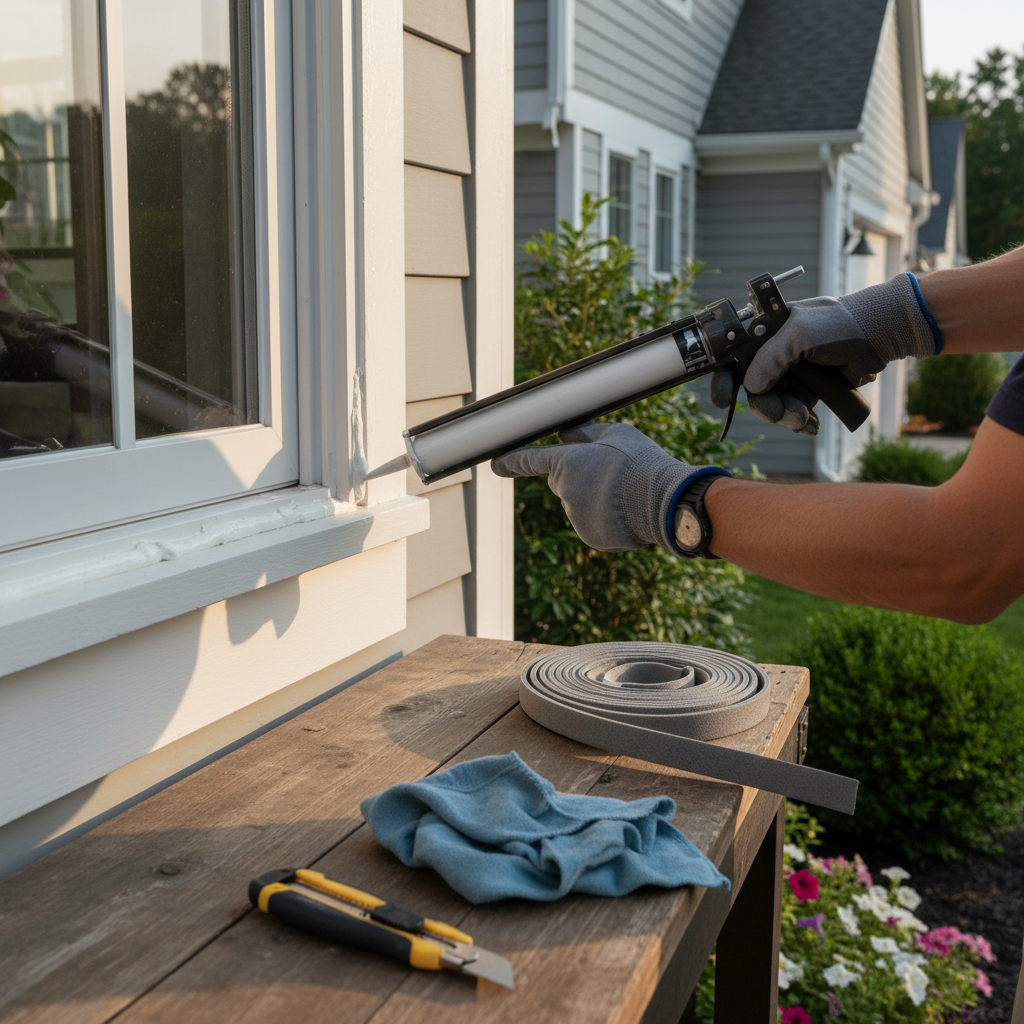
Temporary rope caulk or rubber adhesive strips press into gaps and are easily removed later. Good for older homes where you want to avoid permanent work. Cost: low. Time: 10–20 minutes.
Durable DIY repairs (1–3 hours)
These steps offer long-term performance and keep heat in and cold out more reliably.
1. Replace weatherstripping
Materials: vinyl or silicone weatherstripping, scissors, measuring tape.
- Remove old weatherstripping and clean channels.
- Measure and cut new strips to length.
- Install into the sash or frame; test the window operation and adjust thickness if needed.
2. Re-caulk interior and exterior joints
Materials: exterior-grade caulk (silicone or polyurethane for outside), interior acrylic-latex caulk for interior gaps, caulk gun, utility knife, rags.
- Remove cracked or missing old caulk using a utility knife or caulk remover.
- Clean the joint and allow to dry.
- Apply new caulk in a steady bead and smooth with a caulk tool or finger for a tight seal.
3. Repair glazing putty or replace glazing bead (for single-pane or old windows)
If the putty that holds the glass is cracked, remove the loose putty and reapply glazing compound or replace glazing beads. This is especially relevant in historic windows where replacing glass is undesirable.
Professional or long-term solutions
When a draft coming from window frame is the symptom of a bigger problem, consider these upgrades.
1. Install storm windows
Storm windows add a second layer of protection and can significantly reduce drafts without replacing primary historic windows.
2. Replace windows
Modern double- or triple-glazed windows with proper frame installation eliminate most frame-related drafts. Choose ENERGY STAR-rated windows for measurable energy savings. Discuss with a reputable installer about frame flashing and exterior trim details to prevent long-term leaks.
3. Upgrade to low-e glass or argon-filled units
These options improve insulating performance and can be included when replacing sash or full windows.
Special considerations for historic or wooden windows
Older wooden windows often have heritage value. Treat them sensitively:
- Use reversible, non-destructive methods first — weatherstripping, storm windows, and sash locks.
- Repair rot and refinish frames rather than replacing them when possible.
- Consult preservation guidance for your area if windows are architecturally significant.
Tools, materials, and cost estimates
Here’s a quick shopping list with typical costs (USD):
- Foam or vinyl weatherstripping: $5–$15 per window
- Caulk (exterior grade): $5–$15 per tube
- Rope caulk or sealant strips: $5–$10
- Window insulation film kit: $5–$20 per window
- Thermal camera attachment: $100–$300 (optional)
- Window replacement: $300–$1,000+ per window depending on size and performance
Energy, comfort, and health benefits of fixing window drafts
Sealing window frame drafts improves comfort immediately — fewer cold spots and more even temperatures. It also reduces heating and cooling costs and limits humidity and dust infiltration, which can help with indoor air quality and respiratory comfort.
When to call a professional
Consider professional help if:
- The frame is rotten, warped, or has structural damage.
- Multiple windows have persistent leaks despite attempts to seal them.
- You want a permanent window replacement or storm window installation.
- You suspect moisture intrusion that could cause mold or structural problems.
Maintenance tips to keep drafts away season after season
- Inspect and reapply caulk every few years, or sooner if you notice cracking.
- Check weatherstripping annually and replace any compressed or brittle strips.
- Use storm windows or insulating treatments during winter and remove in warmer months if condensation or ventilation becomes a concern.
- Operate locks and sash hardware periodically to ensure windows seat tightly.
Resources and further reading
For practical step-by-step weatherproofing projects and product recommendations, this guide from Better Homes & Gardens offers useful visual tips and materials suggestions: How to Stop Drafts Around Windows.
Frequently asked questions (FAQs)
How much can sealing window frame drafts save on energy bills?
Savings vary with home size, climate, and severity of leaks. Sealing major drafts can save anywhere from 5% to 20% on heating or cooling costs, especially in older, leaky homes.
Is caulking a permanent solution?
Caulking is a long-lasting solution but not necessarily permanent. Exterior caulks degrade over time because of sun and weather exposure. Inspect and renew as needed every few years.
Can I use silicone caulk indoors?
Silicone caulk is durable but harder to paint and less forgiving to smooth. For interior seams where you may want to paint, acrylic-latex caulk is often recommended. For exterior joints, high-quality silicone or polyurethane caulk stands up better to weather.
Will adding storm windows make my single-pane windows as efficient as double-pane windows?
Storm windows significantly improve performance by creating an insulating air gap, and in some cases they can approach the comfort level of double-pane units, especially when combined with good weatherstripping. However, modern double- or triple-glazed windows with low-e coatings and inert gas fills will typically perform better overall.
What’s the best weatherstripping for sliding windows?
For sliding windows, consider V-strip (tension seal) or pile weatherstripping designed for sliding sashes. Properly installed felt or foam can also work but choose durable materials that won’t compress excessively.
Final checklist before calling a pro
- Have you identified the main leak locations with a candle or thermal scan?
- Have you tried replacing weatherstripping and re-caulking obvious gaps?
- Is there visible rot or damaged framing that needs structural repair?
If you’ve done the quick fixes and the draft persists, a professional assessment will ensure the right long-term solution.
Ready to make your home more comfortable and efficient? For more ideas on arranging, insulating, and designing cozy living spaces, explore How to Design A Comfortable Modern Living Space at https://mdasid.org/.
Note: If you’d like, I can provide a printable step-by-step checklist or a shopping list formatted for mobile that you can take to the hardware store.