cracks in basement walls meaning is a question every homeowner asks when they spot a line in their concrete or block foundation. Some cracks are cosmetic and harmless; others are warning signs of structural trouble or water intrusion. Knowing how to identify the type of crack, what likely caused it, and which repairs are appropriate can save you money and protect your home.
Why basement wall cracks matter
Basement wall cracks matter because the foundation supports your entire house. Left unchecked, certain cracks can let moisture in, accelerate deterioration, or indicate movement that affects doors, windows, and structural alignment upstairs. Not every crack warrants an emergency call, but understanding their meaning helps you prioritize monitoring, DIY fixes, or professional intervention.
Common types of basement wall cracks and what they mean
Not all cracks are the same. Below are the most common styles and the typical causes behind them.
Hairline and shrinkage cracks
Appearance: Very thin, usually less than 1/16 inch wide, often vertical or random surface lines.
Meaning: These are commonly due to shrinkage as concrete cures. They tend to be cosmetic and rarely indicate structural failure unless they widen over time.
Vertical cracks
Appearance: Cracks that run straight up and down, often starting at a joint or cold seam in poured concrete or through blocks.
Meaning: Vertical cracks commonly form from minor settling or the natural drying and shrinkage of the foundation. Many vertical cracks are repairable and not immediately dangerous, but if they widen, shift, or appear alongside other signs of movement, further evaluation is needed.
Stair-step cracks (in block foundations)
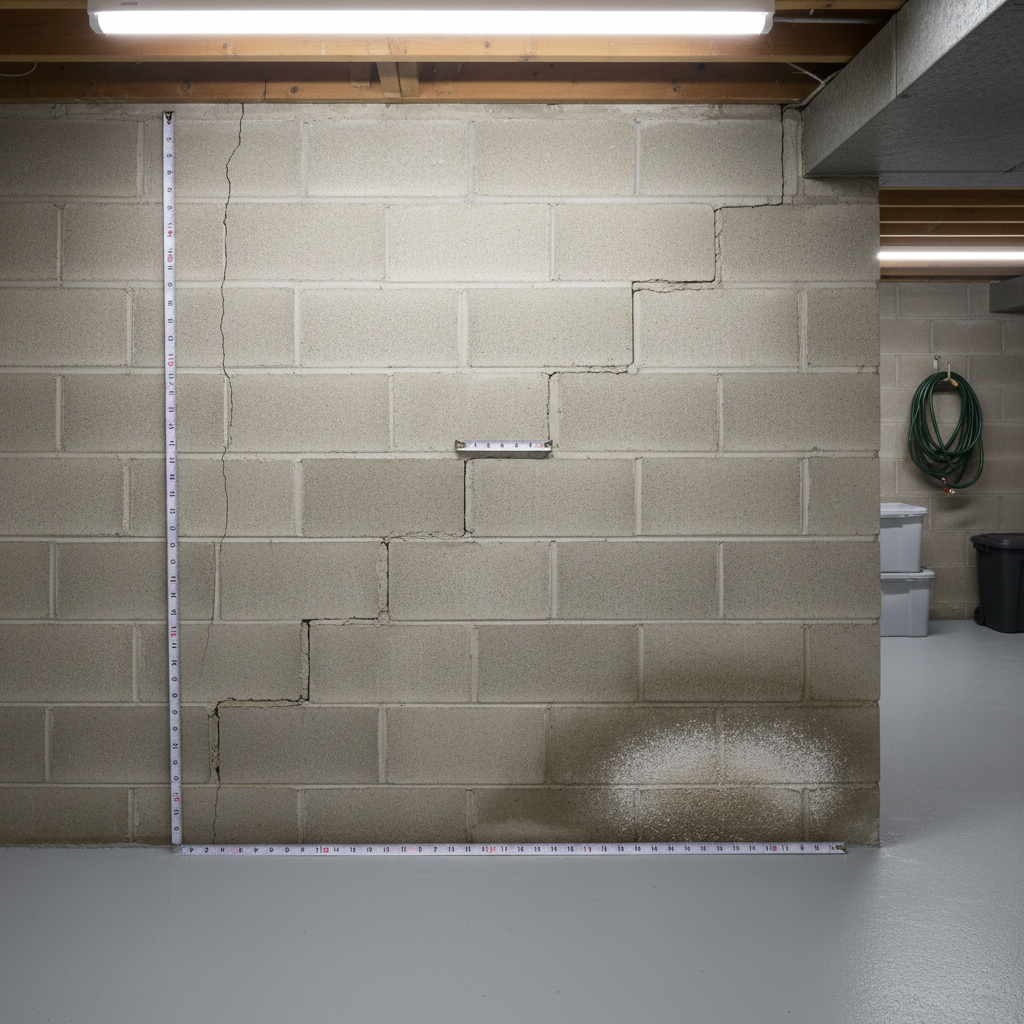
Appearance: Zig-zag pattern following mortar joints in concrete block walls.
Meaning: Stair-step cracks can be caused by differential settlement or lateral soil pressure. Their significance depends on width, length, and whether the wall bows. They can allow water entry and signal soil movement; monitoring or repair is often recommended.
Horizontal cracks
Appearance: Cracks that run parallel to the ground, across poured concrete or through block courses.
Meaning: Horizontal cracks are a common sign of lateral earth pressure pushing against the wall. They are more serious than vertical cracks because they can indicate that the wall is bowing or at risk of collapse. These should be inspected by a professional quickly.
Bowed or bulging walls
Appearance: Walls curving inward or bulging along a length.
Meaning: Bowing indicates significant lateral pressure, often from saturated soil or frost. This is a structural problem that requires a prompt engineering assessment and likely underpinning, wall anchors, or interior bracing.
Quick checklist to evaluate a basement crack
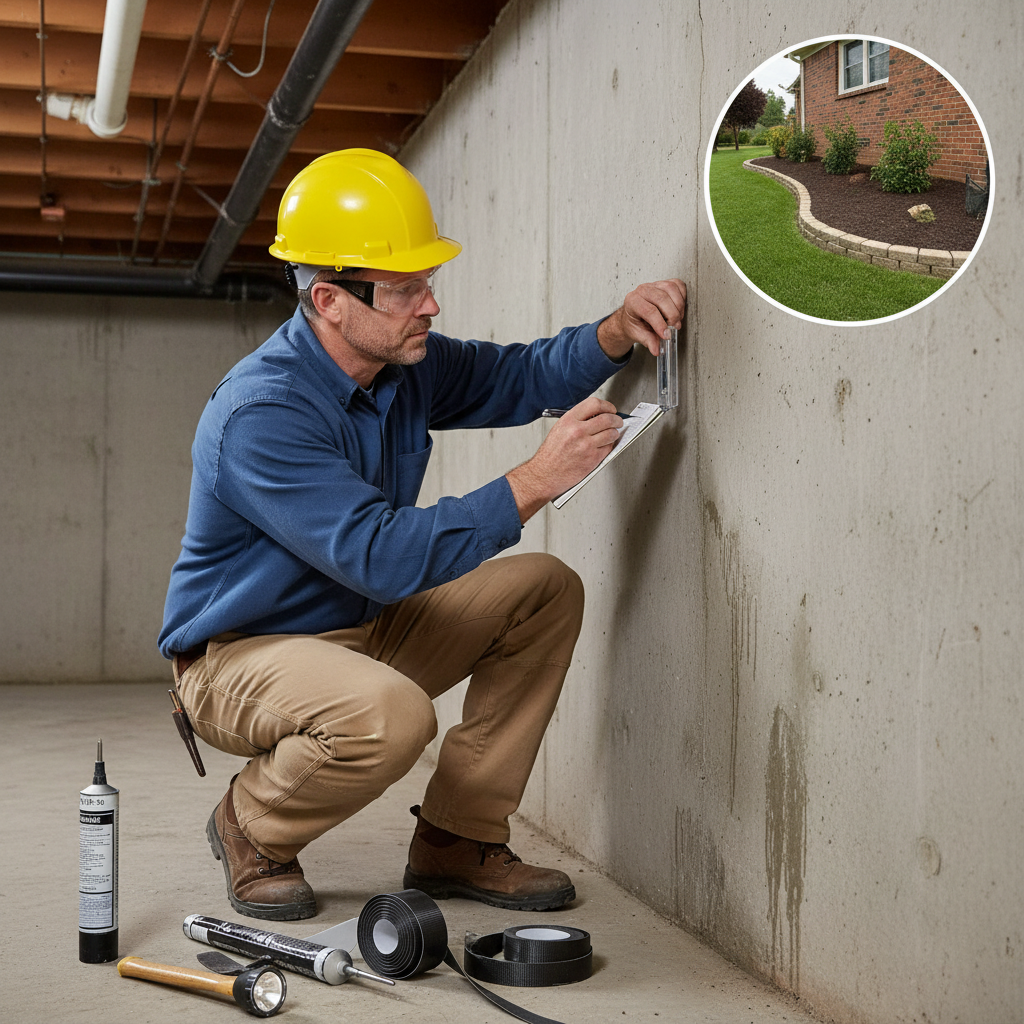
- Measure width: Use a ruler or crack gauge. Less than 1/8 inch is usually minor; over 1/4 inch is more concerning.
- Check length and direction: Long horizontal or stair-step cracks are higher risk than isolated vertical hairline cracks.
- Look for movement: Are cracks widening over weeks or months? Mark ends and date them or use tape and check periodically.
- Inspect for water: Staining, dampness, efflorescence (white powder), or active leaks mean you also have a moisture problem.
- Note other symptoms: Doors that stick, uneven floors, or new gaps at trim suggest foundation movement.
When to monitor vs when to call a professional
Many minor vertical or hairline cracks can be monitored. If the crack is small, static, dry, and not affecting the structure, schedule simple repairs and keep an eye on it. However, call a structural engineer or experienced foundation contractor if you notice any of the following:
- Horizontal or large stair-step cracks
- Cracks wider than 1/4 inch or that continue to widen
- Bowing, bulging, or severe leaning walls
- Cracks associated with significant water intrusion or mold
- New cracks that appear after an earthquake or major ground disturbance
Common causes of basement wall cracks
Understanding causes helps prevent future problems.
Soil settlement
When the soil beneath part of a foundation compresses or shifts, the foundation can settle unevenly and crack. Poor compaction at build time or changes in moisture can trigger settlement.
Hydrostatic pressure
Saturated soil exerts pressure against basement walls. Over time, this lateral force can cause cracks, bowing, and leaks. Proper drainage and grading reduce hydrostatic pressure.
Freeze-thaw cycles
In climates with freezing winters, water in small cracks can freeze and expand, gradually widening cracks and worsening damage.
Poor construction
Insufficient control joints, weak mortar, inadequate footings, or improperly reinforced walls can make foundations more prone to cracking.
Expansive or reactive soils
Clays that swell when wet and shrink when dry can move foundations seasonally, leading to cracking, especially on shallow foundations without proper mitigation.
How professionals diagnose the cause
A thorough diagnosis may include:
- Visual inspection of both interior and exterior for crack patterns and water stains
- Measurement and monitoring over time (crack gauges, photos)
- Soil evaluation and grading assessment
- Structural inspection of footings, beams, and load-bearing elements
- Use of engineering calculations when movement suggests structural risk
Repair options: DIY vs professional
Repair choice depends on crack type, cause, and desired outcome (cosmetic vs structural).
DIY repairs for minor cracks
- Concrete patching: For hairline and small vertical cracks, epoxy or cement-based patch compounds can seal cracks and keep water out.
- Hydraulic cement: Expands as it cures; good for active water leaks but brittle for structural movement.
- Interior sealant or masonry caulk: Works for cosmetic sealing and minor dampness control.
- Exterior cleaning and repointing: Replacing old mortar in block joints may stop leaks and prevent further erosion.
Professional fixes for serious cracks
- Epoxy injection: High-strength repair for structural cracks in poured concrete when the crack is dry and not moving.
- Polyurethane injection: Flexible, water-resistant fix for active water leaks; it expands to fill water-bearing cracks.
- Carbon fiber straps: High-strength interior reinforcement to stop further inward movement for bowed walls.
- Wall anchors and helical tiebacks: Exterior anchors tie the wall back to stable soil to correct and stop movement.
- Underpinning and pier systems: Screw piles or concrete piers transfer load to deeper stable soils when settlement is ongoing.
- Full waterproofing: Exterior excavation, membrane application, and drainage installation are the long-term fix for hydrostatic problems.
Waterproofing and moisture control
Even if a crack is not structurally serious, water intrusion can cause mold, rot, and interior damage. Steps to reduce moisture include:
- Improving exterior grading so the ground slopes away from the foundation
- Extending downspouts at least 6 feet from the foundation
- Installing or repairing gutters to prevent roof-runoff pooling near the foundation
- Interior dehumidification and proper ventilation
- Exterior waterproof membranes and foundation drains for persistent groundwater issues
Estimated repair costs
Costs vary widely by severity and method:
- Minor crack sealing and patching: $100–$600
- Epoxy or polyurethane injection: $300–$1,200 per crack (depending on access and length)
- Carbon fiber reinforcement: $500–$3,000 per wall
- Wall anchors or tiebacks: $800–$4,000+ per anchor system
- Underpinning with piers: $1,000–$2,500 per pier; total projects often run $5,000–$30,000+
- Full exterior excavation and waterproofing: $10,000–$25,000 or more depending on home size and soil
Prices fluctuate by region and site complexity. Obtain multiple estimates and ask for references and written warranties.
Prevention: how to reduce future cracking
- Grade your yard properly and maintain consistent surface drainage
- Control irrigation and avoid overwatering near the foundation
- Keep gutters clean and ensure downspouts direct water away
- Use moisture-stable landscaping and avoid planting large trees too near the foundation
- When building or renovating, insist on proper footings, reinforcement, and control joints
- Monitor and manage seasonal moisture changes in reactive-soil regions (soil moisture regulation)
When to call a structural engineer
Bring in a licensed structural engineer if you have horizontal cracks, significant wall bowing, wide or rapidly changing cracks, or visible structural distress such as sagging floors. An engineer provides a written evaluation and recommended remediation plan you can use to get competitive contractor bids.
What homeowners often overlook
- Exterior signs: Landscaping and grading issues are often the root cause of interior cracks.
- Small leaks become big problems: Even minor damp spots foster mold and decay over time.
- Temporary fixes are just that: Tuckpointing or interior epoxy without addressing water or soil pressure is a short-term measure.
- Seasonal changes: Cracks may expand and contract with moisture cycles—monitor over a full year before ruling out active movement.
Helpful resources
For practical waterproofing tips and common repair strategies, reputable home-lifestyle outlets offer clear, homeowner-friendly guides. For example, Better Homes & Gardens provides reliable advice on basement moisture control and repair approaches you can consider when planning work on your foundation.
External resource: Better Homes & Gardens — Fix Basement
Frequently asked questions (FAQs)
Are basement cracks always a sign of a failing foundation?
No. Many cracks are cosmetic or the result of normal shrinkage and settling. However, certain patterns (horizontal cracks, stair-step cracks in block walls, or bowing) can indicate structural issues and deserve prompt attention.
Can I seal a leaking crack myself?
Yes, for small leaks you can use hydraulic cement or polyurethane sealants. For active, high-pressure water intrusion or structural cracks, hire a professional who can recommend durable solutions.
How long should I monitor a crack before deciding on professional help?
Monitor for changes over a few months, marking ends and tracking width. If a crack widens, new cracks appear, or you see associated structural symptoms, consult a professional right away.
Will fixing cracks increase my home’s resale value?
Repairing visible cracks and addressing underlying issues not only improves curb appeal but also reduces buyer concerns about structural risk. Provide records of professional inspections and repairs to reassure potential buyers.
Is foundation repair covered by homeowners insurance?
Typically, insurance covers sudden damage from specific perils (like a sewer backup or collapse) but not gradual problems from poor maintenance or soil movement. Review your policy or speak with your provider for details.
Concluding guidance
Understanding the meaning of cracks in basement walls helps you respond appropriately: monitor small, static cracks; address moisture and drainage issues; and call professionals for horizontal cracks, bowing walls, or widening fissures. Early detection and informed decisions often keep repairs manageable and protect your home from escalating damage.
If you want to explore broader ideas for making your home comfortable and resilient, you might find helpful design and living tips in this guide: How to Design A Comfortable Modern Living Space. Consider consulting a qualified structural professional if you’re unsure about a crack’s severity—an expert assessment can provide clarity and peace of mind.