If your furnace blowing cold air has you shivering indoors, you’re not alone — this is one of the most common home heating problems homeowners face each winter. Before you panic, there are several simple checks and DIY fixes that can restore warmth quickly, and there are also safety steps to take if you suspect a gas or carbon monoxide issue. This guide walks through practical troubleshooting, likely causes, estimated repair costs, and when it’s time to call a qualified technician.
Quick safety checklist (read first)
Before troubleshooting, keep safety top of mind:
- If you smell gas, leave the home immediately and call your gas company or emergency services from a safe location.
- If you suspect carbon monoxide (headache, nausea, dizziness) get fresh air and call emergency services.
- Turn off the furnace power switch or the circuit breaker if you’re inspecting electrical components and you are comfortable doing so.
Common reasons your furnace is blowing cold air
Understanding the likely causes makes diagnosis faster. Here are the most frequent reasons a furnace or heater blows cold air:
1. Thermostat settings or failure
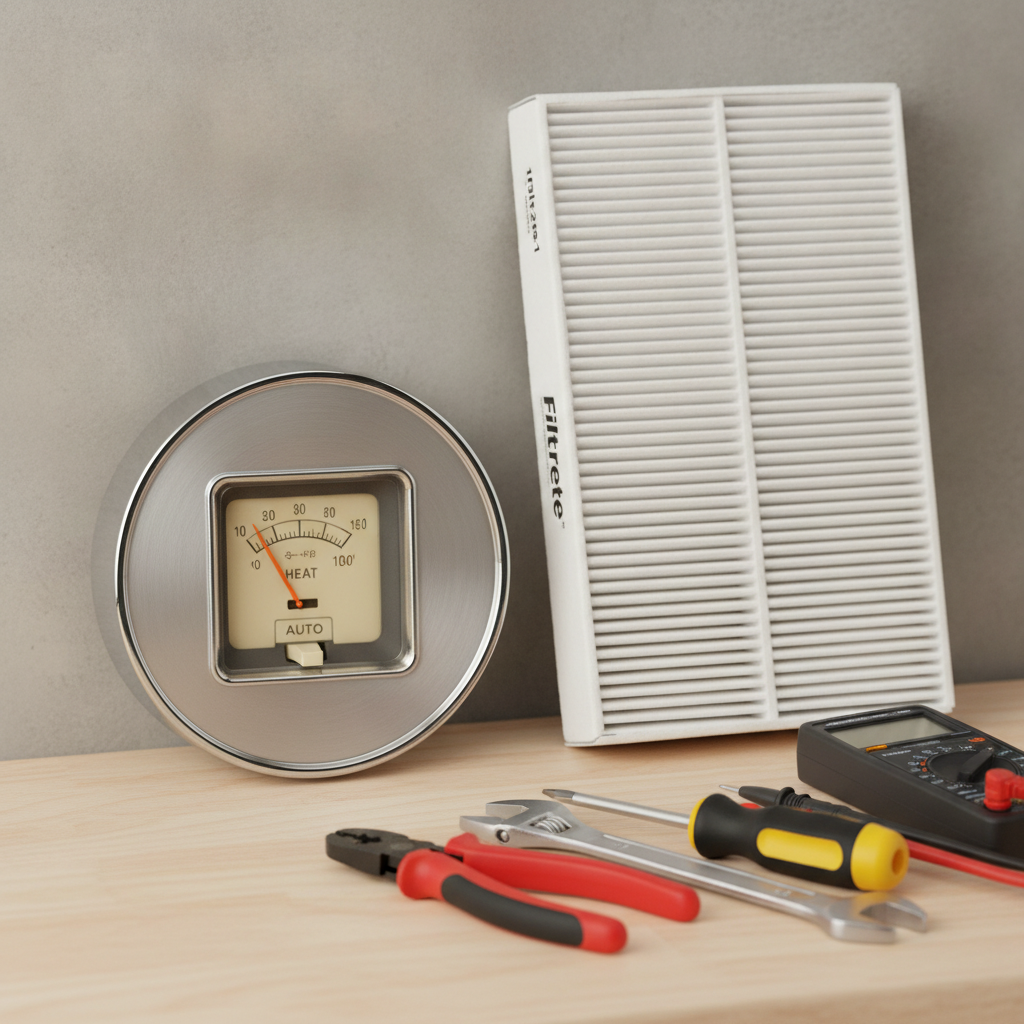
Start simple. If the thermostat is set to “ON” instead of “AUTO,” the fan might run continuously, circulating cold air between heat cycles. Incorrect temperature settings, dead batteries, or a failing thermostat can also prevent the heating cycle from starting.
2. Tripped circuit breaker or switch off
Furnaces use electrical power for blowers, controls, and igniters. A tripped breaker or a switch near the unit that’s turned off will prevent ignition while allowing the fan to run if set to ON. Check the furnace switch (looks like a light switch near the unit) and your electrical panel.
3. Dirty or clogged air filter
Restricted airflow causes heat exchanger issues and can make the system cycle improperly. A heavily clogged filter often reduces output, causing colder air or short cycling. Filters should be checked monthly and replaced as needed.
4. Ignition problems (pilot light, electronic igniter)
Older furnaces have pilot lights that can go out; modern units use electronic igniters that can fail. If the igniter doesn’t light the burners, the furnace won’t produce heat — but the blower might still run, sending unheated air through ducts.
5. Gas supply issues
If you have a gas furnace and the line or valve is closed, or the gas supply is interrupted, the burners won’t light. Never attempt gas repairs yourself; if you suspect a gas problem, leave and call your gas company.
6. Faulty flame sensor or dirty burners
A failing flame sensor may shut the burners off shortly after ignition to protect the system, so you’ll get only cold air. Burners clogged with dust or debris can also prevent consistent combustion.
7. Limit switch or safety sensor activation
The limit switch prevents overheating by shutting off the burner if temperatures become too high. If it’s stuck, faulty, or triggered by poor airflow, it may not allow the burners to stay on even though the fan runs.
8. Heat exchanger or blower motor problems
A failing blower motor or damaged heat exchanger can prevent the unit from producing or distributing heat effectively. Heat exchanger issues are a safety concern and require professional inspection.
9. Incorrectly sized or closed ductwork and vents
Partially closed vents or disconnected/ poorly insulated ducts can route warm air away from living spaces, making supply registers feel cold. Check for closed dampers and blocked vents.
10. Heat pump vs. furnace confusion
If you have a heat pump rather than a true furnace, it can blow cool air in defrost mode or if it’s set to the wrong mode. Heat pumps behave differently than gas or electric furnaces.
Step-by-step troubleshooting guide
Use this ordered checklist to diagnose the problem safely and efficiently. Perform only tasks you are comfortable with; for anything involving gas or complex electrical components, contact a professional.
Step 1 — Check the thermostat
- Set the thermostat to HEAT and raise the set temperature above room temperature.
- Switch fan from ON to AUTO so the blower runs only during heating cycles.
- Replace thermostat batteries and double-check wiring if you recently replaced the unit.
Step 2 — Inspect power and switches
- Confirm the furnace power switch is in the ON position.
- Check the breaker panel for a tripped breaker and reset if necessary.
- Look for any visible safety switches (air-handler door switch) that might be disengaged.
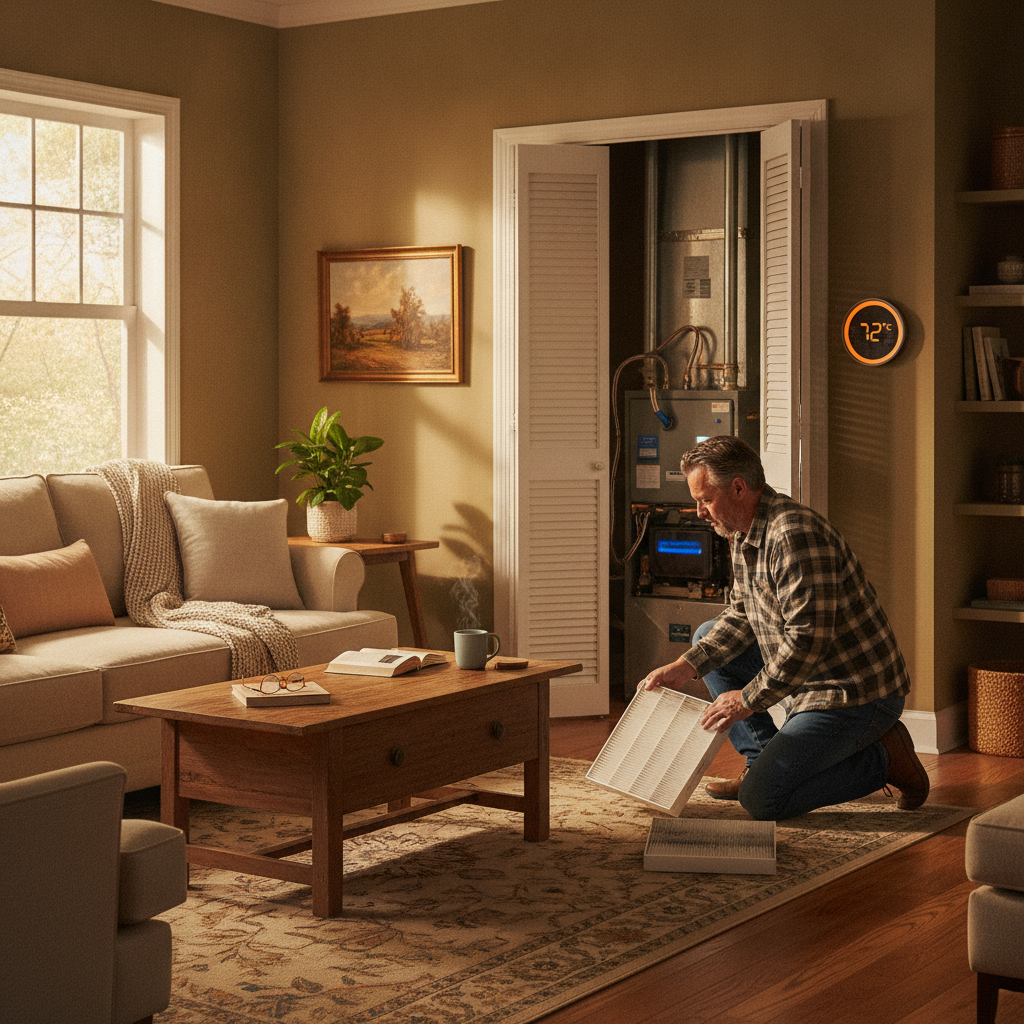
Step 3 — Replace or clean the air filter
- Turn off the furnace and replace a dirty filter with a new one of the correct size and MERV rating recommended by the manufacturer.
- Note how long the old filter had been in place — most disposable filters should be changed every 1–3 months.
Step 4 — Observe ignition and burner operation
- Listen for the ignition sequence: blower off, ignition, burners light, then blower resumes. If you don’t hear ignition, it may be an issue with the pilot or electronic igniter.
- For pilot light systems, if comfortable doing so, relight the pilot per the manufacturer manual. If you smell gas or are uncomfortable, stop and call a professional.
Step 5 — Check vents and ducts
- Feel supply registers while the system is running. Warm near the furnace but cold in rooms may indicate duct leaks or closed dampers.
- Remove vents and inspect ducts for disconnected sections if accessible.
Step 6 — Reset and monitor
- Some furnaces have a reset button — consult the owner’s manual for location and instructions. Use sparingly; repeated resets indicate an underlying issue.
- After changes, let the system run for a full heating cycle (10–20 minutes) to observe results.
When to call a professional
DIY checks catch many issues, but call a licensed HVAC technician if any of the following apply:
- You smell natural gas or suspect a leak.
- There are signs of carbon monoxide or anyone feels sick near the unit.
- Igniter or pilot relighting fails repeatedly.
- Blower motor humming but not running, unusual noises, or visible damage to the heat exchanger.
- The furnace cycles on and off rapidly (short cycling) or cannot maintain temperature despite normal controls.
Estimated repair costs and timelines
Costs vary widely by region, unit age, and specific issue. Use these ballpark figures as a guide:
- New air filter: $5–$60 (DIY, immediate)
- Thermostat battery or minor adjustment: free–$100 (DIY or technician visit, same day)
- Igniter replacement: $150–$400 (technician, 1–2 hours)
- Flame sensor cleaning or replacement: $80–$250 (technician, 1 hour)
- Blower motor replacement: $400–$1,200 (technician, 2–4 hours)
- Heat exchanger replacement: often not cost-effective; many homeowners replace the furnace instead — $2,500–$7,000+
Preventative maintenance tips
Routine upkeep reduces the likelihood of cold-air problems and extends furnace life:
- Change or clean filters every 1–3 months depending on use and pets.
- Schedule an annual HVAC tune-up in the fall — technicians inspect ignition, burners, heat exchanger, and safety controls.
- Keep the area around the furnace clear and the cabinet sealed to prevent dust buildup.
- Upgrade to a programmable or smart thermostat for better temperature control and fewer unnecessary cycles.
- Seal and insulate ducts, especially in unconditioned spaces; consider a professional duct inspection if rooms are unevenly heated.
Special notes for gas furnaces and safety
Gas furnaces require extra care. If you detect a gas odor, feel lightheaded, or see soot or rust around the unit, shut the furnace and exit the home. Call the gas company or emergency services. Never try to repair gas valves or major combustion components unless you are a licensed technician.
Heat pump vs. furnace — know what you have
Some homes use heat pumps, which move heat instead of burning fuel. Heat pumps can blow colder air temporarily during a defrost cycle or if outdoor temperatures are very low. If you have a heat pump, consult the owner’s manual or a specialist to confirm normal behavior versus a malfunction.
FAQ — Fast answers to common questions
Q: Why does the furnace fan run but no heat comes out?
A: Typically this means the blower is powered but the burners or heat source aren’t activating. Check the thermostat, power, and ignition components; if those are fine, the issue may be gas supply, flame sensor, or ignition system failure.
Q: Can a dirty filter cause the furnace to blow cold air?
A: Yes. A clogged filter restricts airflow, often causing the unit to overheat and shut off the burners, leaving only the fan running.
Q: How long should I wait between resets of the furnace?
A: Allow the furnace to attempt normal cycles. Repeated resets (more than 2–3) in a short period suggest an underlying problem—contact a professional.
Q: Is it safe to relight my pilot light?
A: If you have a manual pilot and are comfortable following the manufacturer’s instructions, relighting is generally safe. If you smell gas or are unsure, evacuate and call your gas company or an HVAC technician.
Q: How often should I schedule professional maintenance?
A: Once a year for gas and electric furnaces; ideally in the fall before heavy use. Regular maintenance reduces breakdowns and can catch safety issues early.
When replacement becomes the best option
If your furnace is older than 15–20 years, requires frequent expensive repairs, or the heat exchanger is compromised, replacement often makes economic and safety sense. Newer high-efficiency furnaces can lower energy bills and provide more consistent heat distribution.
Further reading and trusted resources
For additional practical tips on home heating and seasonal maintenance, you can consult Better Homes & Gardens for easy-to-follow guides on HVAC care and safety.
Better Homes & Gardens — HVAC & Heating Tips
Final thoughts
Finding your furnace blowing cold air is stressful, but many causes are simple and quickly resolved. Start with thermostat settings, power, and filters, and proceed through safe visual checks. For any gas-related, electrical, or internal component issues, hire a licensed HVAC professional to ensure safe and correct repairs. Regular maintenance is the best defense against winter surprises and keeps your home comfortably warm when it matters most.
Want design ideas while you get your heating system in order? Explore this resource to refine your home’s comfort and layout: How to Design A Comfortable Modern Living Space