That unmistakable mold smell in HVAC ducts — a persistent, musty odor that seems to come from nowhere — is more than an annoyance. It can signal moisture, hidden mold growth, or HVAC problems that affect indoor air quality and your family’s health. This guide explains how to locate the source, safely remove the smell, decide when to call a professional, and prevent the odor from returning.
Why you smell mold in your ducts: common causes
Understanding why the HVAC system produces a musty or moldy HVAC vents odor helps you target the right fix. Typical causes include:
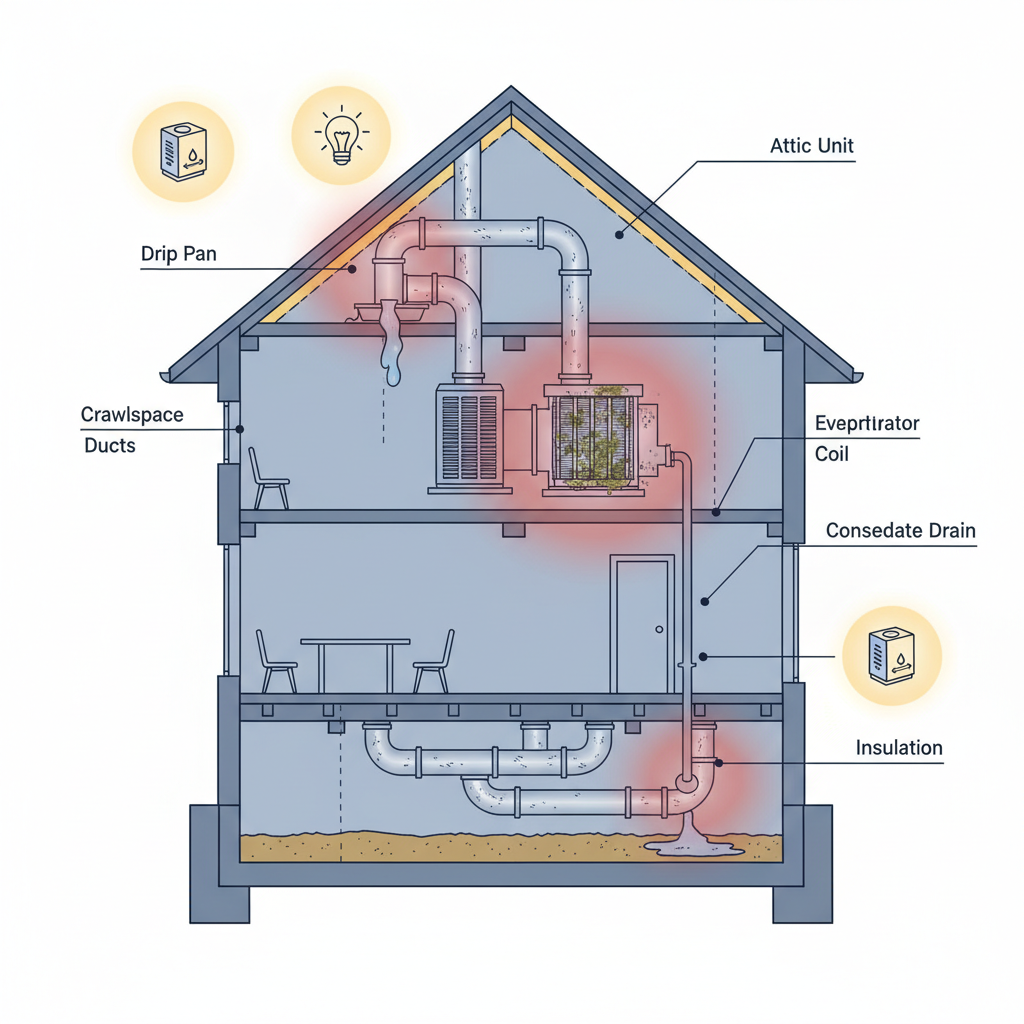
- Condensation on evaporator coils: When coils are dirty or the drip pan is clogged, water pools and provides a breeding ground for mold and mildew.
- Blocked or slow condensate drain: Stagnant water in the drain pan or lines creates persistent moisture.
- Leaky or uninsulated ducts: Ducts that run through damp crawlspaces, basements, or attics can accumulate moisture and mold.
- Dirty filters and components: A neglected air filter or contaminated blower chamber spreads mold spores through the system.
- Poor ventilation and high indoor humidity: Excess humidity (above 50%) encourages mildew growth inside ductwork and on surfaces.
- Water damage in the home: Roof leaks, plumbing leaks, or flooding can introduce moisture that makes its way into ductwork.
Health concerns linked to moldy HVAC smell
Breathing air contaminated with mold spores can aggravate allergies and respiratory conditions. Symptoms may include nasal congestion, coughing, wheezing, throat irritation, and eye irritation. People with asthma, compromised immune systems, or mold allergies can experience more severe reactions. If occupants experience persistent symptoms that improve when away from the home, the HVAC system should be inspected promptly.
How to locate the source: a practical inspection checklist
Before spending money on treatments, identify where the odor originates. Use this straightforward checklist:
- Smell test: Walk through the home and note where the odor is strongest (near vents, in specific rooms, or around the furnace/air handler).
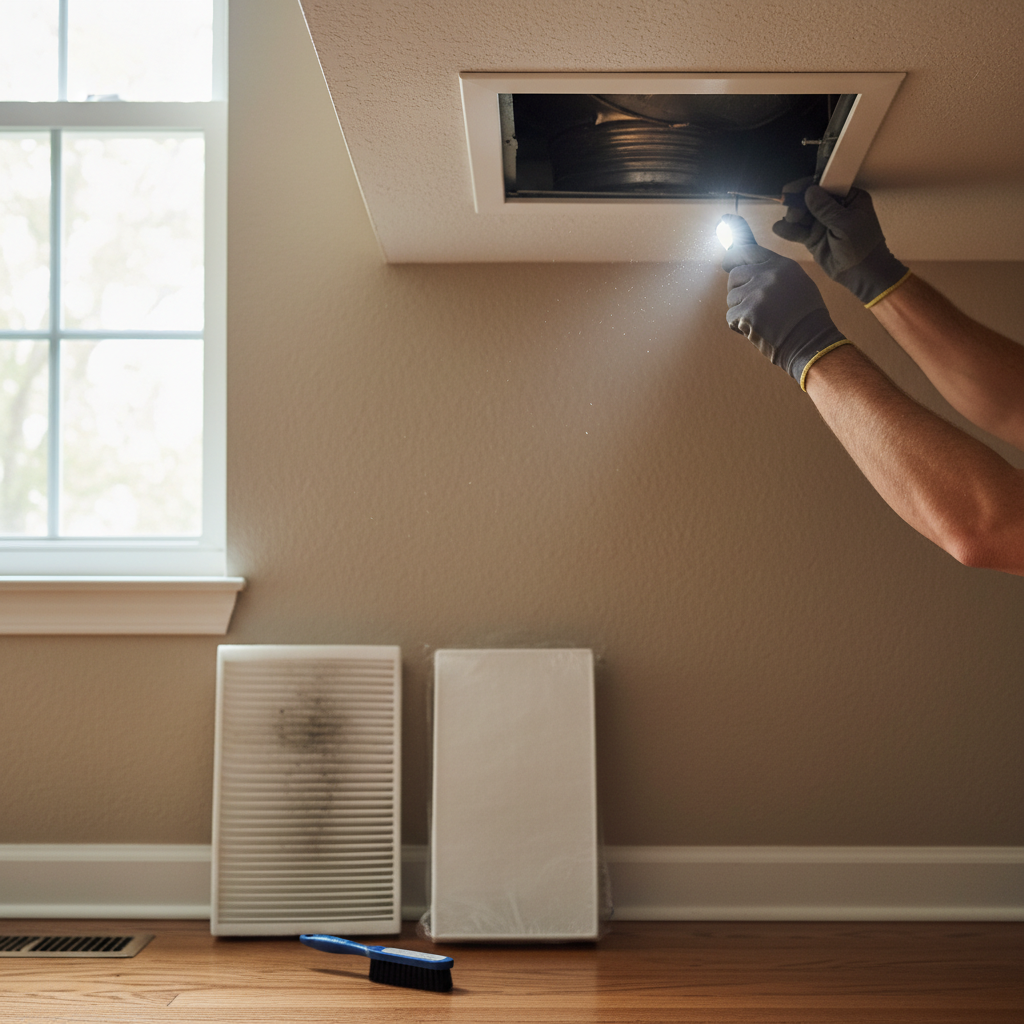
- Visual check: Remove a vent cover and inspect the visible duct opening for dust buildup, black spots, or moisture.
- Inspect the drip pan and condensate drain under the evaporator coil for standing water, slime, or discoloration.
- Examine the air filter and replace it if dirty or damp.
- Check for leaks or dampness in crawlspaces, attics, or around duct runs.
- Look at the furnace or air handler cabinet for mold growth or a musty smell when the blower runs.
Quick fixes you can try right now
If you want to reduce or eliminate the odor quickly, try these immediate steps:
- Turn off the HVAC system and replace the air filter with a fresh high-efficiency filter (MERV 8–13 depending on your system).
- Clean or replace return and supply registers: remove covers and vacuum with a HEPA-filter vacuum; wash covers in warm, soapy water.
- Dry the drip pan and clear the condensate drain line using a wet/dry vacuum or a plumber’s snake.
- Run the fan in circulate mode with windows open (weather permitting) to flush stale air from the system.
- Place activated charcoal or baking soda near registers to absorb odors temporarily.
Note: These fixes may reduce the smell but will not solve an underlying mold infestation.
Deep cleaning options: DIY vs. professional service
For widespread odor or visible mold inside ducts, deeper cleaning is often necessary. Here’s what both approaches involve:
DIY deep-clean steps (for small, localized problems)
- Safety first: Turn off power to the HVAC system at the thermostat and breaker. Wear gloves, an N95 respirator, and eye protection.
- Access and clean registers and low-visibility duct openings. Use a HEPA vacuum to remove dust and debris.
- Brush accessible duct interiors with a long-handled brush and vacuum debris. Do not aggressively damage duct insulation or flex-duct liners.
- Clean coils and the evaporator area: if you’re comfortable, use a no-rinse coil cleaner designed for HVAC systems (follow directions).
- Sanitize visible areas with an HVAC-approved antimicrobial spray. Avoid household bleach directly in ducts—strong chemicals can corrode components and damage liners.
- Replace filters and run the system with increased ventilation. Consider a high-quality pleated filter or a HEPA air purifier for living spaces.
Professional duct cleaning and mold remediation
Call a qualified duct cleaning company when you encounter any of the following:
- Visible mold growth inside ducts or on HVAC components
- Persistent, strong mold odor after DIY efforts
- Large areas of contamination, water damage, or ongoing leaks
- Vulnerable occupants (infants, elderly, immunocompromised)
Look for technicians who follow NADCA (National Air Duct Cleaners Association) standards and who can provide before-and-after photos of the system. Professional services include HVAC component cleaning (coils, fans, drain pans), duct vacuuming with negative pressure equipment, and targeted antimicrobial treatments.
Step-by-step safe cleaning routine for homeowners
If you choose a DIY route for a manageable issue, follow these expanded steps to reduce the mold smell and minimize risk:
- Turn off power: Switch the thermostat to OFF and cut power at the breaker to the furnace or air handler.
- Change the filter: Remove and replace with a new pleated filter rated for your system.
- Remove and clean vent covers: Unscrew register covers, wash them in warm, soapy water, and dry completely.
- Vacuum duct openings: Use a HEPA vacuum nozzle to remove loose dust and visible debris from each register opening.
- Brush and agitate: For visible dust near openings, use a long brush to loosen material while vacuuming to capture particles.
- Clean accessible HVAC components: If comfortable, open the air handler cabinet and vacuum debris; clean blower wheel and evaporator coil with a coil cleaner per product instructions.
- Clear condensate and dry areas: Flush the condensate drain with distilled white vinegar (not bleach) or use a wet/dry vacuum to remove clogs. Dry drip pans and allow them to air out.
- Apply HVAC-safe antimicrobial: Use a product labeled safe for HVAC systems; follow manufacturer directions and avoid home disinfectants not intended for ducts.
- Restore power and run the system: Use the fan setting to circulate fresh air. Monitor for any remaining odor.
Preventing mold smell from returning
Long-term prevention focuses on moisture control, proper maintenance, and reducing conditions where mold thrives:
- Keep indoor relative humidity between 30% and 50% using dehumidifiers if necessary.
- Change air filters every 1–3 months; consider a higher MERV rating if your system supports it.
- Schedule annual HVAC maintenance: technicians will inspect coils, drain lines, and insulation.
- Insulate ductwork that runs through unconditioned spaces to prevent condensation.
- Fix leaks promptly—roof, plumbing, or around windows—so moisture doesn’t reach duct runs.
- Ensure adequate ventilation in high-moisture areas: kitchens, bathrooms, and laundry rooms should have vent fans exhausted outdoors.
- Consider UV-C lights in the air handler to reduce microbial growth on coils (discuss with your HVAC specialist for compatibility).
How to choose a reputable pro: what to ask
Select an HVAC or mold remediation contractor carefully. Ask for:
- Proof of insurance and licenses
- References and examples of similar work
- Detailed written estimate describing scope, methods, and any antimicrobial products used
- Use of containment and HEPA filtration for mold removal
- Follow-up guarantee or warranty for odor and mold control
Typical costs and timelines
Costs vary widely by home size, problem severity, and region:
- Basic vent cleaning and register replacement: $150–$400
- Full duct cleaning (whole house, NADCA-standard): $400–$1,000+ depending on system size
- HVAC coil and drain pan cleaning: $150–$400
- Mold remediation (if widespread): $1,000–$10,000+ depending on affected areas and structural repair
Smaller fixes may take hours; professional remediation for significant mold can take several days, including drying time after water damage.
Safety and chemical precautions
Avoid using household bleach directly in ductwork. Bleach can corrode metal components and may not penetrate porous materials where mold can hide. Use HVAC-approved antimicrobial agents or leave chemical treatments to licensed remediation professionals. Always wear appropriate PPE (respirator, gloves, goggles) when disturbing moldy areas.
When the smell won’t go away: advanced steps
If odor persists after cleaning:
- Confirm the odor source with an HVAC pro—sometimes the problem is elsewhere (appliances, hidden water damage).
- Consider an indoor air quality (IAQ) assessment to measure mold spores and humidity levels.
- Evaluate whole-house solutions like a whole-home dehumidifier, improved ventilation, or a high-efficiency air cleaner.
Further reading and expert resources
For practical cleaning tips and safety suggestions from home and cleaning experts, see this overview from Good Housekeeping on removing musty and mildew odors: How to get rid of mildew smell.
Frequently Asked Questions (FAQs)
Q: Can an air freshener mask mold smell in HVAC ducts?
A: Air fresheners only mask odors temporarily and do not remove mold or address moisture. Masking can hide the problem but allow mold growth to continue, which may worsen air quality and health risks.
Q: How can I tell if the smell is actually coming from the ducts?
A: Track where the smell is strongest. If it intensifies when the HVAC runs, or is centered around vents and the air handler, ducts are likely the source. A professional can perform a duct inspection or air testing to confirm.
Q: Is duct cleaning always necessary to remove mold smell?
A: Not always. If the issue is a clogged drain pan, dirty coils, or a single dirty vent, targeted cleaning may solve it. Widespread smell or visible mold generally requires full duct cleaning and HVAC component cleaning.
Q: Can mold grow in insulated or flexible ducts?
A: Yes. Insulated and flex ducts with porous liners can trap moisture and organic dust, providing places for mold to grow. These materials are more difficult to clean completely and sometimes need replacement if contaminated.
Q: Are UV lights effective for preventing mold in HVAC systems?
A: UV-C lights installed near the evaporator coil can reduce microbial growth on coil surfaces, improving hygiene and reducing odors. They are a preventive measure, not an immediate cure for existing duct mold.
Q: Will improving ventilation help?
A: Yes. Better ventilation removes humid, stale air and reduces conditions favorable to mold growth. Use exhaust fans in high-moisture rooms and consider a whole-house ventilation strategy if your home is very airtight.
Q: How often should I service my HVAC to prevent mold?
A: Annual HVAC maintenance is recommended—before cooling season for AC systems and before heating season for furnaces. Replace filters every 1–3 months and inspect drain lines and coils regularly.
Final checklist: quick plan to tackle mold smell in HVAC ducts
- Change the air filter now.
- Inspect and dry the condensate pan and drain line.
- Vacuum and clean registers; wash covers.
- Run the HVAC fan with fresh air for circulation.
- If odor persists, schedule a professional HVAC inspection and consider duct cleaning.
- Fix any leaks and control humidity to prevent recurrence.
Addressing a mold smell in HVAC ducts quickly protects your home’s air quality and helps prevent larger problems. If you’re unsure where to start or the issue seems extensive, a qualified HVAC technician or mold remediation professional can assess and make safe, effective repairs. Explore more ideas about improving home comfort and layout in our guide How to Design A Comfortable Modern Living Space.