Water hammer noise in pipes can wake you at night, rattle your cabinets, and make your home feel less comfortable. This guide explains what causes the loud banging, how to diagnose the problem, practical DIY repairs, when to call a plumber, and long-term prevention strategies so you can restore quiet and protect your plumbing.
What is water hammer?
Water hammer (also called hydraulic shock) is the loud banging or knocking sound you hear in plumbing when flowing water suddenly stops or changes direction. It happens because moving water has momentum; when a valve closes quickly—like a washing machine valve, faucet, or toilet fill valve—that momentum is abruptly halted. The sudden change creates a pressure spike that travels through the pipes as a shock wave, striking pipe fittings, brackets, or walls and producing that characteristic bang.
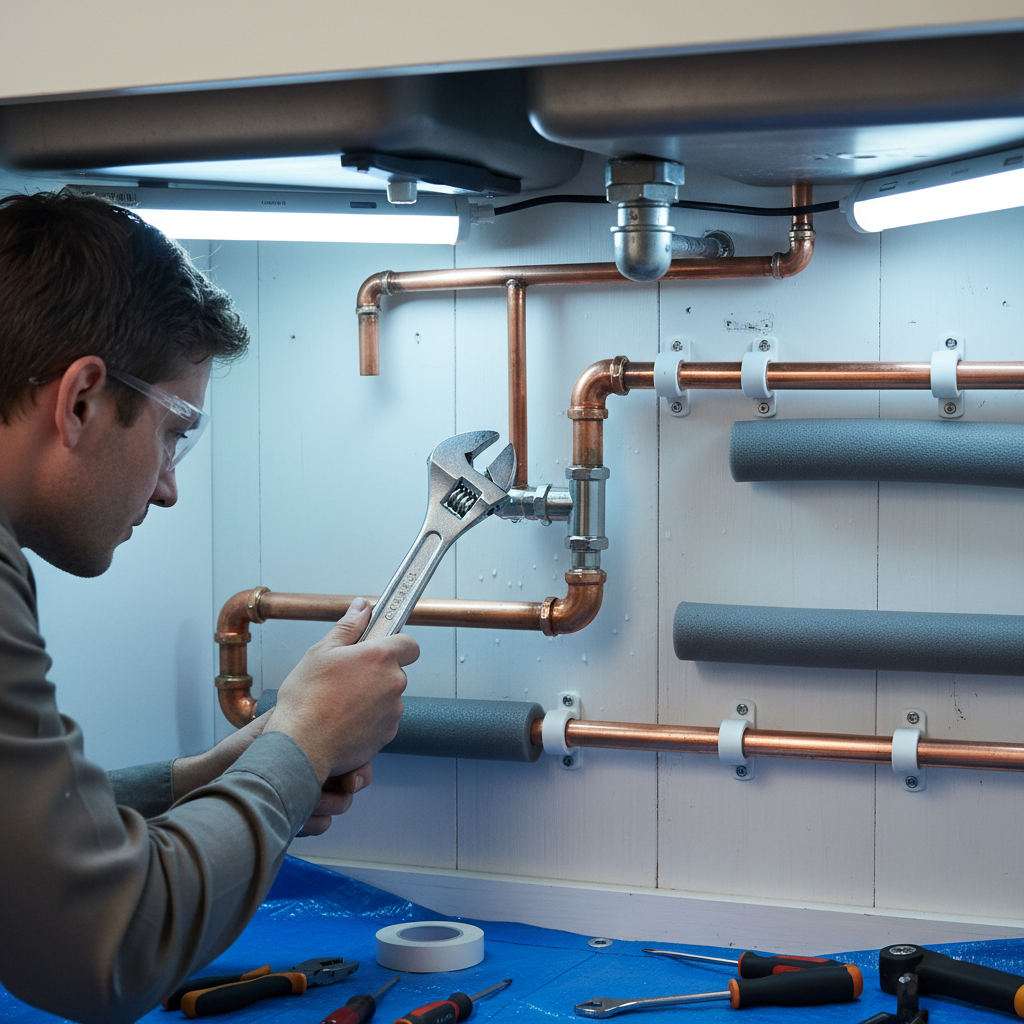
Common signs you have a water hammer problem
- Loud banging or knocking right after a faucet, shower, or appliance shuts off
- Repeated noise when appliances cycle (dishwasher, washing machine)
- Vibrations or rattling in walls or under sinks
- Loose pipes that seem to move when water is turned on/off
- Dripping or leaking near fittings after noisy events (in severe cases)
Why it matters: risks beyond the noise
Apart from being annoying, untreated water hammer can loosen pipe fittings, stress joints, and over time increase the risk of leaks or damage. In extreme cases, repeated pressure spikes can shorten the lifespan of fixtures and appliances. Fixing water hammer protects home comfort and reduces the chance of plumbing failures.
What causes water hammer? (Key culprits)
- Fast-closing valves on washing machines, dishwashers, or solenoid valves
- Faulty or worn toilet fill valves that shut off abruptly
- High water pressure in the house (above 60–80 psi)
- Missing or water-filled air chambers or air chambers that have become waterlogged
- Pipes that are loosely secured and can knock against framing
- Long straight runs of pipe that amplify shockwaves
How to diagnose where the noise is coming from
Try these simple checks before you start repairs:
- Listen carefully to locate which fixture or appliance triggers the noise. Does it happen when the washing machine drains? When the toilet refills? When a faucet shuts off?
- Tap along accessible pipes to find loose sections; a rattling sound indicates possible movement.
- Turn off appliances one at a time (or shut valves feeding them) and test to see when the noise stops—this helps isolate the source.
- Check the pressure at an outdoor spigot with a handheld gauge. Pressure consistently above 60 psi can cause or worsen water hammer.
DIY fixes for water hammer noise in pipes
Many water hammer problems can be resolved without professional help. Below are safe, step-by-step fixes ordered from simplest to more involved.
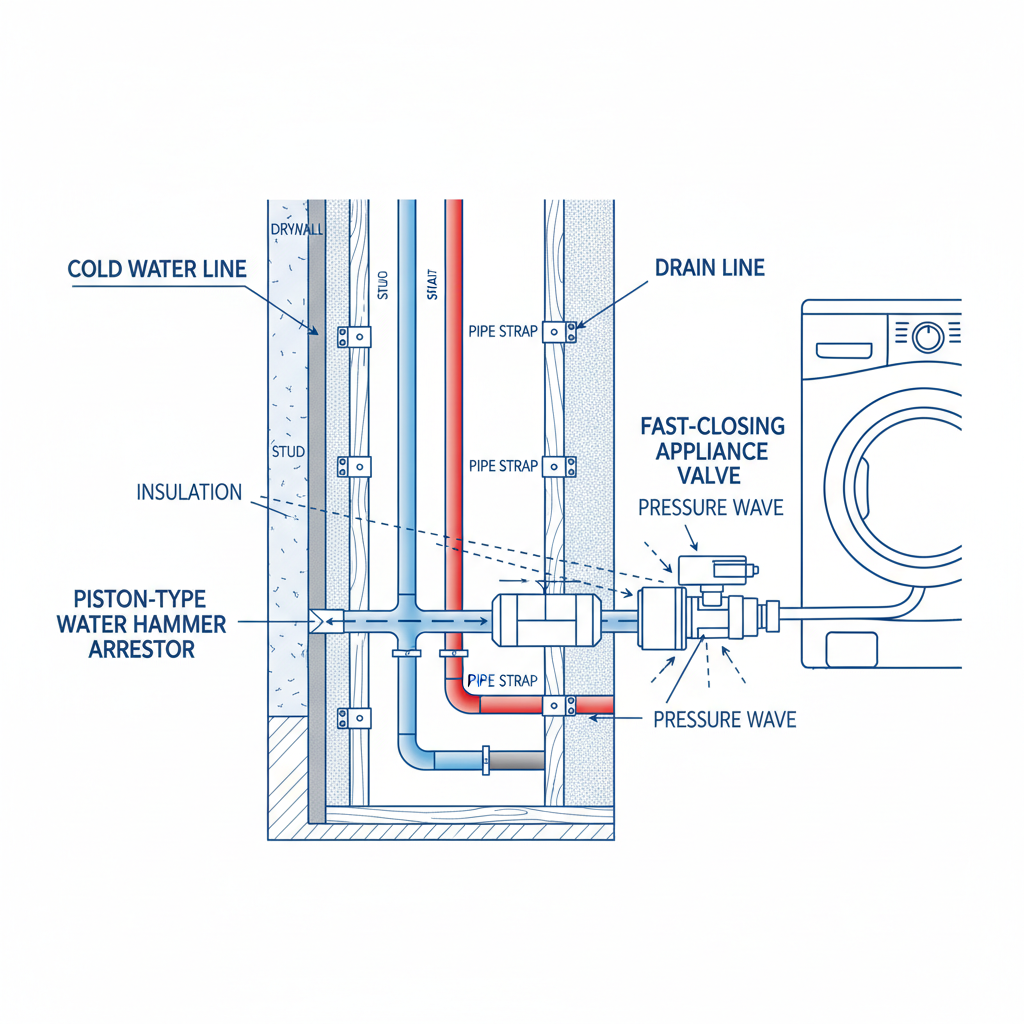
1. Fast fix: Secure loose pipes
Tools and materials: pipe straps or clamps, rubber pipe insulation or foam, drill or screwdriver.
- Locate the noisy run and fasten pipes every 4–6 feet in horizontal runs and every 6–8 feet vertically.
- Use rubber-backed pipe clamps or wrap a strip of foam between the pipe and metal strap to damp vibration.
- This reduces movement so the pipe cannot bang against framing during pressure spikes.
2. Reset toilet components
Toilets are frequent culprits because their fill valves can close suddenly. Consider these steps:
- Inspect and, if needed, replace the fill valve with a modern adjustable model that shuts off smoothly.
- Older ballcock assemblies sometimes cause water hammer. Replacing them is inexpensive and often eliminates the knocking.
3. Drain and recharge small air chambers
Many homes built with short vertical air chambers near fixtures rely on trapped air to cushion pressure spikes. Over time these chambers can fill with water and lose effectiveness.
- Turn off the main water supply and open the highest and lowest faucets to drain the system.
- Close the faucets and restore water. The moving water will often push air back into the chambers during refill.
- This is a temporary measure; modern arrestors are better long-term solutions because they contain a sealed air or gas cushion.
4. Install water hammer arrestors
Water hammer arrestors are compact devices that absorb pressure surges and are the most reliable fix for recurring problems.
- Types: piston-type (preferred) or diaphragm-type; both create a cushion that absorbs shock.
- Installation: shut off water, drain the line, unscrew the supply line near the fixture, and install the arrestor onto the supply line or the fitting. Arrestors are available in models that screw onto standard plumbing threads or fit inside valve bodies.
- Recommended placement: at the supply line for appliances (washing machine, dishwasher) and at fixtures that cause banging.
5. Reduce excessive water pressure
If your home pressure is too high, it magnifies water hammer. A pressure-reducing valve (PRV) on the main line will lower pressure to a safe range.
- Check pressure using a pressure gauge at an outdoor spigot; 40–60 psi is normal for most homes.
- If pressure is 70 psi or higher, install or adjust a PRV near the main shutoff. This is sometimes best handled by a plumber if you are unfamiliar with the device.
When to call a plumber
Try the simpler fixes first. Call a licensed plumber if:
- You can’t find or stop the source of the knocking
- The problem involves the main line or you suspect high system pressure
- Water hammer coincides with new leaks or visible damage
- Installing a PRV or arrestors feels beyond your skill level
Plumbers can perform a pressure test, install commercial-grade arrestors, and ensure the entire system is secured and safe.
Cost and time estimates
- Securing pipes with straps: $10–$50 in materials, a couple hours DIY
- Replacing a toilet fill valve: $10–$40 for the part, 30–60 minutes DIY
- Water hammer arrestor: $20–$80 per arrestor, 30–90 minutes to install DIY depending on access
- PRV installation: $150–$600 including parts and professional labor
- Plumber service call with diagnosis and repair: $100–$300+ depending on region and complexity
Long-term prevention and best practices
Adopt these strategies to keep your plumbing quiet and healthy:
- Install arrestors where fast-closing valves are present (laundry, dishwasher, some faucets)
- Keep water pressure at 40–60 psi using a PRV if needed
- Use modern fixtures with slower-closing valves when replacing old ones
- Secure and insulate exposed pipes to reduce vibration and noise transfer
- Schedule plumbing inspections every few years to catch loose fittings or aging components
Soundproofing tips if noise travels through walls
Sometimes water hammer noise transmits through walls and finishes. To reduce perceived noise:
- Wrap accessible pipes with foam insulation to dampen sound
- Add acoustic insulation inside wall cavities during remodeling
- Use vibration-damping clips or pads on pipe straps
- Install carpet, rugs, or soft cabinetry liners to soften sound transmission
Safety considerations
When working on plumbing, always take safety precautions:
- Shut off water at the appropriate valve before disassembly
- Relieve pressure by opening faucets after shutting supply
- If working near electrical devices or in tight spaces, shut off the breaker if necessary
- When in doubt about gas water heaters, main supply lines, or complicated piping work, contact a professional
Further reading
For additional home maintenance tips and step-by-step guides related to plumbing and household fixes, reputable lifestyle sites can be helpful resources. For example, Better Homes & Gardens offers practical home repair advice and how-to articles you may find useful: Better Homes & Gardens.
FAQ — Quick answers to common questions about water hammer noise in pipes
Q: Is water hammer dangerous?
A: Occasional mild water hammer is unlikely to cause immediate failure, but repeated hydraulic shock stresses fittings and pipes, increasing the risk of leaks or damage over time. If banging is strong or occurs frequently, fix it promptly.
Q: Can I fix water hammer myself?
A: Many homeowners can secure loose pipes, replace toilet fill valves, or install small water hammer arrestors. For high-pressure systems, main-line work, or if you’re unsure, hire a licensed plumber.
Q: What is the difference between an air chamber and a water hammer arrestor?
A: Air chambers are simple vertical stubs that trap air to cushion shocks, but they can fill with water and lose effectiveness. Modern arrestors use a sealed gas or piston to reliably absorb pressure spikes and are preferred for long-term performance.
Q: Will a pressure-reducing valve solve the noise?
A: If high house water pressure is contributing to the problem, a PRV will help by lowering overall pressure and reducing the intensity of pressure spikes. It may not eliminate water hammer caused by fast-closing valves unless combined with arrestors or securing pipes.
Q: How many arrestors do I need?
A: Install arrestors at each fixture or appliance that triggers the noise (washing machine, dishwasher, baths/showers with quick-closing valves). If in doubt, start with the known noisy fixture and expand as needed.
Final checklist before you finish
- Identify all fixtures that trigger the noise
- Secure loose pipes and add insulation where possible
- If noise continues, install appropriate water hammer arrestors
- Check and normalize system water pressure
- Consider professional help for complex or persistent issues
Dealing with water hammer noise in pipes restores peace and reduces wear on your plumbing. Start with simple fixes, then move to targeted solutions like arrestors and a pressure-reducing valve if needed. If you’d like guidance on making your living space more comfortable overall, consider exploring additional tips on home design and organization in our related resources such as How to Design A Comfortable Modern Living Space (link below).
How to Design A Comfortable Modern Living Space