Why Your Deck Railing is Becoming Loose: Common Causes
Before you can fix a problem, you need to understand its root cause. A deck railing becoming loose can stem from various issues, often compounded by time and exposure to the elements.
Rot or Decay (Wood)
Wood is a beautiful and common material for deck railings, but it’s susceptible to rot and decay, especially when exposed to moisture. Water seeping into screw holes, cracks, or areas where wood contacts other materials can lead to deterioration. Rot often weakens the wood around fasteners, causing them to lose their grip and the railing components to become loose.
Fastener Failure (Screws, Nails, Bolts)
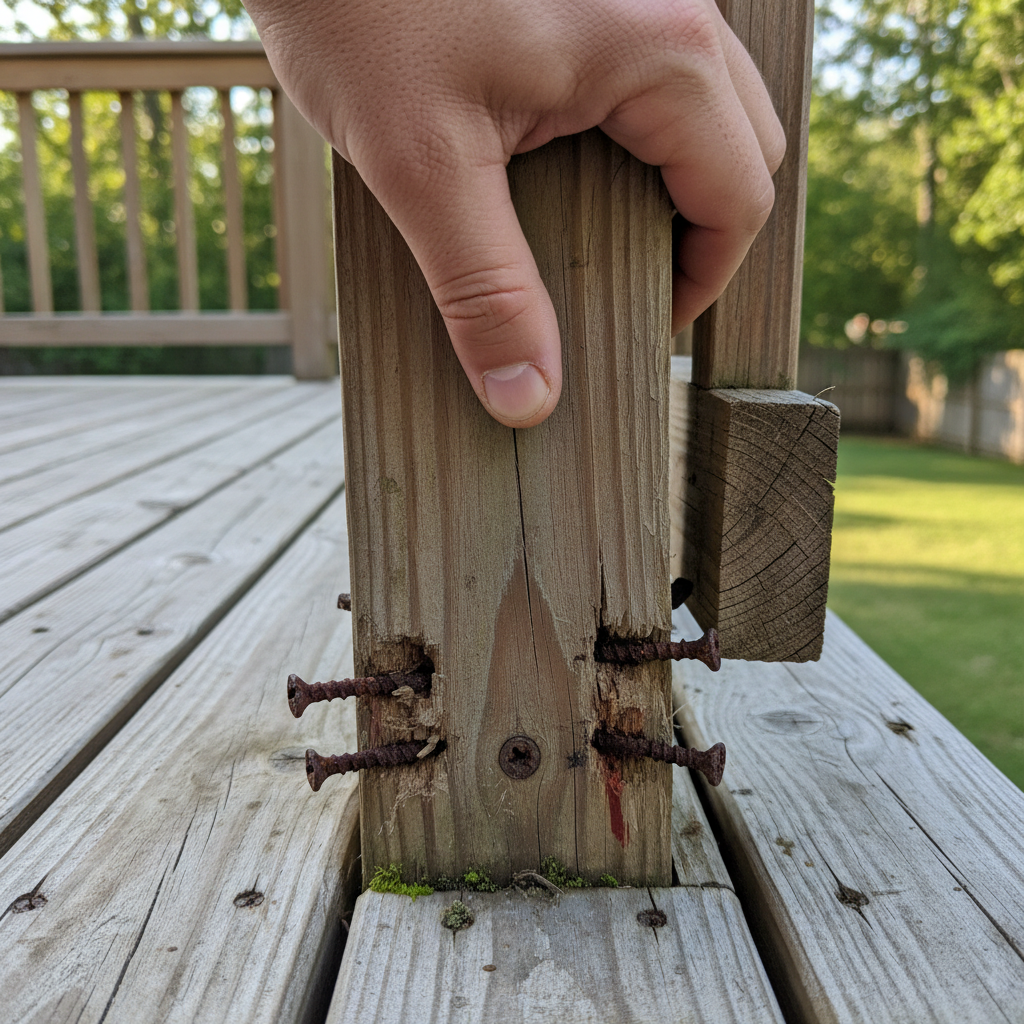
The hardware holding your railing together can fail over time. Screws can strip their holes, nails can pull out, and bolts can loosen. This can be due to:
- Corrosion: Exposure to rain and humidity can rust metal fasteners, weakening them.
- Inadequate Fasteners: Using the wrong type, size, or number of fasteners during installation.
- Wear and Tear: The constant expansion and contraction of wood, or the repeated pressure of leaning on the railing, can gradually loosen fasteners.
Material Degradation (Metal, Composite)
While often more durable than wood, metal and composite railings aren’t immune to degradation.
- Metal: Can rust, fatigue, or have connections weaken over time, particularly if welds are poorly done or if it’s exposed to harsh conditions.
- Composite: While rot-resistant, composite materials can become brittle with prolonged UV exposure or extreme temperature fluctuations. The core structure holding fasteners might degrade, leading to loose connections.
Improper Installation
Many issues with a deck railing becoming loose can be traced back to the initial installation.
- Insufficient Nailing/Screwing: Not using enough fasteners or not driving them deep enough.
- Incorrect Hardware: Using indoor-grade fasteners outdoors or fasteners too short for the application.
- Poor Post Attachment: The most critical part of a railing is how its posts are attached to the deck frame. If these connections are weak or done improperly, the entire railing system will be unstable.
Environmental Factors (Weather, UV, Moisture)
Mother Nature plays a significant role in the wear and tear of your deck.
- Rain and Snow: Constant moisture can lead to rot and fastener corrosion.
- Sunlight (UV Rays): UV radiation can break down the cellular structure of wood, fading and weakening it, and can degrade plastics in composite materials.
- Temperature Fluctuations: Wood expands and contracts with changes in temperature and humidity, which can gradually loosen fasteners.
Age and Wear
Even the best-built decks have a lifespan. Over years of use, leaning, impacts, and exposure, the components naturally wear down, contributing to a deck railing becoming loose.
Structural Issues with the Deck Itself
Sometimes, a loose railing isn’t just a railing problem. If the deck’s underlying structure (joists, beams, ledger board) is compromised, it can affect the stability of everything attached to it, including the railing posts.
The Dangers of a Loose Deck Railing
Ignoring a deck railing becoming loose is not an option. The potential consequences range from minor inconveniences to severe injuries or even fatalities.
Safety Hazards
This is the primary concern. A loose railing provides no reliable barrier against falls. Children, pets, and even adults can lean against it, lose their balance, and fall from the deck, leading to serious injuries or worse. This risk is especially high on elevated decks.
Structural Integrity Compromise
A loose railing can be a symptom of broader structural issues with your deck. If the posts are unstable, it might indicate problems with the rim joists or ledger board. Ignoring this could lead to further deck deterioration and potentially a partial or complete collapse.
Code Violations
Building codes are designed to ensure safety. A loose railing often means it no longer meets the required load-bearing capacity, making it a code violation. This could have implications for your home insurance or if you ever decide to sell your property.
Property Value Decline
A poorly maintained deck with a visibly loose railing detracts from your home’s curb appeal and overall value. Prospective buyers will view it as a safety hazard and a costly repair waiting to happen.
How to Diagnose a Loose Deck Railing
Identifying the exact source of looseness is key to an effective repair. A thorough inspection is crucial.
Visual Inspection
Start with your eyes. Look for obvious signs of damage:
- Rot: Darkened or discolored wood, soft spots when poked with a screwdriver, or visible fungal growth.
- Cracks: Especially around fastener points or where wood joins.
- Rust or Corrosion: On screws, nails, or metal brackets.
- Missing Fasteners: Gaps where screws or nails should be.
- Misaligned Components: Posts, balusters, or handrails that are visibly out of plumb or level.
The “Shake Test”
Go along the entire railing and firmly (but carefully) push and pull each section. Pay close attention to:
- Posts: Are they wobbly at their base?
- Handrails: Do they move independently of the posts or balusters?
- Balusters (Spindles): Are they loose within the top and bottom rails?
This test will help you pinpoint specific areas where the deck railing is becoming loose.
Check Posts, Balusters, and Handrails
Examine each component individually.
- Posts: These are the backbone. Check how they are attached to the deck structure (inside or outside the rim joist, bolted, lagged).
- Balusters: Are they securely seated in their grooves or attached with fasteners?
- Handrails: Are the top and bottom rails firmly connected to the posts?
Inspect Fasteners and Connections
Get up close to all visible fasteners.
- Screws: Are they stripped, rusted, or backing out?
- Nails: Are they popped out or bent?
- Bolts: Are nuts tight, or are washers rusted through?
- Brackets: Are any metal brackets bent, rusted, or loose?
DIY Fixes for a Loose Deck Railing (When Appropriate)
For minor issues, a DIY repair might be all that’s needed to secure your deck railing becoming loose. Always prioritize safety and wear appropriate protective gear.
Tightening Loose Fasteners
This is the simplest fix. If screws are merely loose, use a screwdriver or drill to tighten them. For bolts, use a wrench to snug up the nuts. Be careful not to overtighten and strip the wood or fastener.
Replacing Stripped Screws with Larger Ones
If a screw spins freely, its hole is likely stripped. Remove the old screw and replace it with a slightly longer and/or thicker screw of the same type (e.g., deck screws). If the hole is significantly damaged, you might need to fill it with wood filler or epoxy before redrilling a pilot hole and inserting a new screw.
Adding Reinforcement Brackets
Sometimes, existing connections aren’t strong enough.
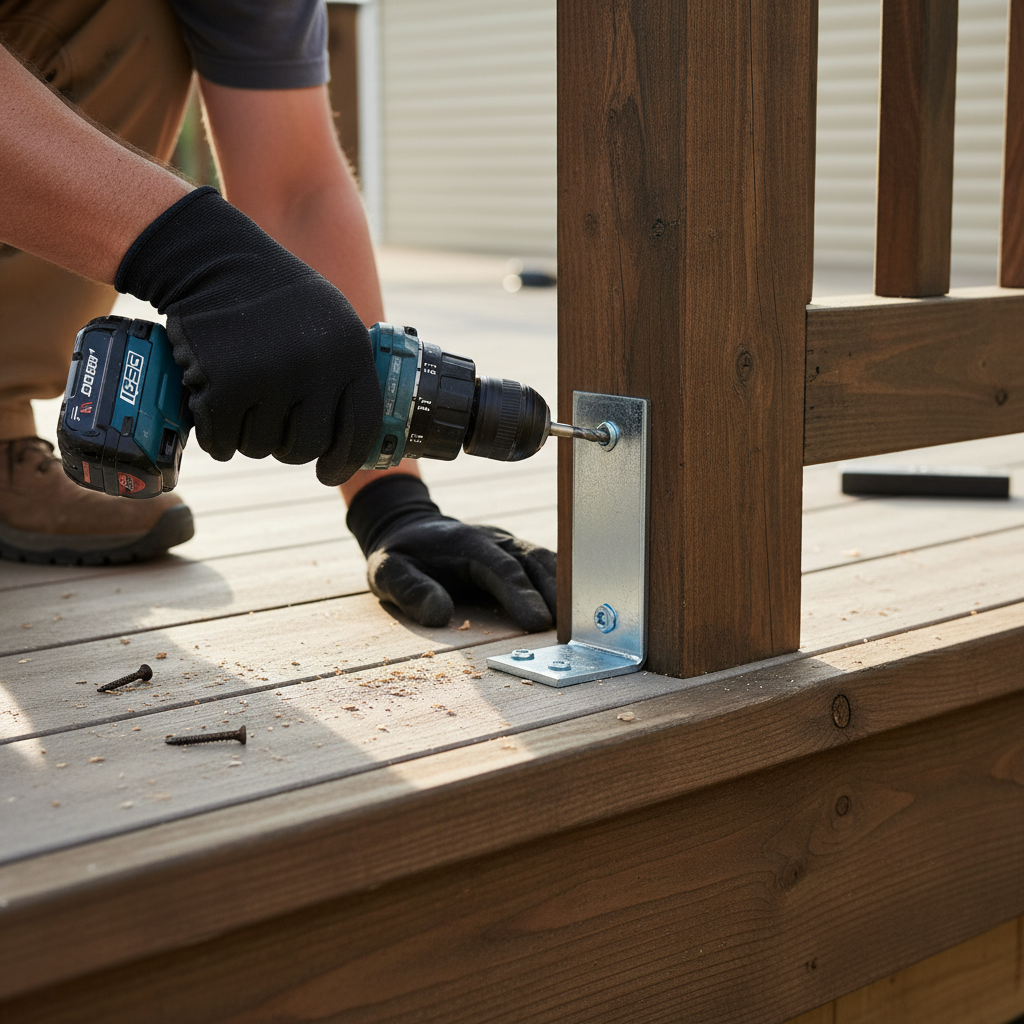
- Post-to-Deck Connections: If a post is wobbly, consider adding galvanized steel angles or post-to-deck ties. These “L” shaped brackets can be screwed into both the post and the deck joist/rim joist, significantly increasing stability.
- Rail-to-Post Connections: Small metal corner brackets can reinforce the joints where handrails meet posts.
Addressing Minor Rot with Wood Hardener/Filler
For small areas of surface rot or soft wood around a fastener, you can apply a liquid wood hardener to stabilize the fibers, followed by a wood filler to create a solid base for new fasteners. This is a temporary fix; extensive rot requires replacement.
Using Construction Adhesive
High-quality exterior-grade construction adhesive can provide extra bonding strength in addition to fasteners. Apply it to joints (e.g., where balusters meet rails) before fastening them. This creates a more rigid connection and helps prevent future movement.
Securing Balusters
Loose balusters can often be secured by adding small screws at an angle (toe-screwing) into the rails or by applying exterior-grade adhesive in their dadoes (grooves).
Strengthening Post Connections
This is often the most critical area. If a deck post is truly loose at its base, you might need to:
- Add Through-Bolts: If the post is lagged or screwed, adding through-bolts (with washers and nuts) through the post and into the rim joist can provide superior strength.
- Install Blocking: If access allows, add solid wood blocking between joists, securely fastened, to provide a more robust attachment point for the post.
When to Call a Professional Deck Contractor
While many minor issues can be DIY projects, there are clear instances where calling a professional is the safest and most effective course of action when a deck railing is becoming loose.
Extensive Rot or Damage
If you find widespread rot in multiple posts, joists, or ledger boards, or if components are severely cracked and splintered, it’s beyond a simple patch. A professional can assess the full extent of the damage and recommend a safe, lasting solution, which might involve replacing entire sections.
Structural Problems with the Deck
Any signs that the main deck structure (e.g., wobbly stairs, bouncy deck surface, sagging beams, cracked footings) is compromised require expert attention. A railing issue could be a symptom of a much larger underlying problem that only a qualified contractor should tackle.
Complex Repairs
If the railing design is intricate, involves welding, or requires specialized tools or knowledge you don’t possess, hiring a professional will ensure the repair is done correctly and safely. Re-engineering a post attachment, for example, often benefits from professional expertise.
Lack of DIY Experience/Tools
If you’re uncomfortable working with power tools, don’t have the necessary equipment, or lack the confidence to perform the repair safely, it’s always better to defer to an expert. Your safety and the safety of others using the deck are paramount.
Building Code Compliance Concerns
Deck railings must meet specific local building codes for height, baluster spacing, and load-bearing capacity. If your existing railing doesn’t meet these standards, or if you’re unsure how to ensure a repair brings it up to code, a professional contractor will have the necessary knowledge to ensure compliance. They can advise on the latest regulations and guarantee your deck is not only safe but also up to legal standards.
Preventative Measures to Keep Your Deck Railing Secure
Prevention is always better than cure. Proactive maintenance can significantly extend the life and safety of your deck railing, preventing it from becoming loose in the first place.
Regular Inspections
Make it a habit to inspect your deck railing at least once a year, ideally in the spring before heavy use. Perform the “shake test” and a visual check as described above. Catching issues early can save you significant time and money.
Proper Maintenance and Cleaning
Keep your deck clean. Remove debris, leaves, and dirt that can trap moisture against wood surfaces. Use a mild deck cleaner periodically to remove mildew and grime.
Sealing and Staining Wood
For wood railings, apply a high-quality exterior stain or sealant every 2-3 years, or as recommended by the product manufacturer. This protects the wood from UV damage, moisture absorption, and rot.
Addressing Drainage Issues
Ensure water drains off your deck effectively. Clear gutters and downspouts near the deck. Consider adding flashing where the deck meets the house to prevent water from seeping into critical connections.
Using Quality Materials and Fasteners
If you’re building a new deck or replacing parts, invest in pressure-treated lumber, composite materials designed for outdoor use, and corrosion-resistant fasteners (e.g., hot-dipped galvanized or stainless steel screws and bolts).
Professional Installation
If you’re not a seasoned DIYer, hiring a reputable professional for deck installation or major repairs ensures that the railing is built to code and designed to withstand the elements, significantly reducing the chances of a deck railing becoming loose prematurely.
Understanding Deck Railing Building Codes
Building codes exist for a reason: to ensure safety and structural integrity. When dealing with a deck railing becoming loose, it’s essential to understand that any repair or replacement must comply with local regulations. These codes typically specify:
- Railing Height: Usually 36 or 42 inches, depending on the deck height and local jurisdiction.
- Baluster Spacing: Often requires that a 4-inch sphere cannot pass through any opening, preventing children from falling through.
- Load-Bearing Capacity: Railings must be able to withstand a certain amount of horizontal and vertical force without failing.
- Fastener Requirements: Specific types and sizes of fasteners are often mandated for critical connections.
Familiarize yourself with your local building department’s requirements, or consult with a professional. For more general guidance on home safety, including aspects of deck maintenance, resources like Good Housekeeping offer valuable tips to keep your outdoor spaces secure.
FAQs About Loose Deck Railings
How often should I check my deck railing?
You should inspect your deck railing at least once a year, preferably in the spring before heavy use. However, it’s wise to give it a quick check after any major storm or if you notice any visible damage.
Can I just add more screws to a loose post?
Adding more screws can help if the existing fasteners are insufficient or slightly loose. However, if the wood around the existing screws is rotted or stripped, simply adding more screws might not provide a lasting solution. In such cases, you might need to replace the wood, use larger screws, or add reinforcement brackets.
What’s the best way to prevent wood rot?
Preventing wood rot involves several steps: using pressure-treated lumber, ensuring proper drainage, applying a high-quality water-repellent stain or sealant regularly, and promptly repairing any cracks or damage that could allow moisture to penetrate.
Is it safe to use my deck if the railing is a little loose?
No, even a “little” loose railing poses a safety risk. It indicates a compromised barrier, and you cannot predict when that “little” looseness might turn into a complete failure. It’s best to repair it immediately or restrict access to the deck until it’s secure.
How much does it cost to repair a loose deck railing?
The cost varies widely depending on the extent of the damage, the type of railing, and whether you DIY or hire a professional. Minor DIY fixes (tightening screws, adding a bracket) might cost very little. Extensive repairs involving professional labor, material replacement, or structural work could range from a few hundred to several thousand dollars.
A loose deck railing is a problem that should never be put off. By understanding the causes, performing thorough inspections, and applying the right solutions—whether a simple DIY fix or calling in a professional—you can ensure your deck remains a beautiful, safe, and functional extension of your home. Prioritize safety, maintain vigilance, and enjoy your outdoor living space with complete peace of mind.