Understanding the Enemy: Why Ants Love Your Baseboards
Ants are driven by fundamental needs: food, water, and shelter. Your home, with its controlled climate and abundant resources, is an ideal target. Baseboards, specifically, offer a unique combination of attractions that make them prime real estate for ant activity.
What Attracts Ants Indoors?
- Food Sources: Even the smallest crumbs, spilled drinks, or pet food left out can become a beacon for ants. They are opportunistic scavengers, constantly searching for easily accessible sustenance.
- Water: Leaky pipes, condensation, or high humidity areas provide essential moisture, especially in drier climates or during certain seasons. Kitchens and bathrooms are particularly vulnerable.
- Shelter: Walls, foundations, and subfloors offer dark, protected spaces away from predators and environmental extremes. These areas provide ideal nesting sites.
Why Baseboards Specifically?
Baseboards are not just decorative trim; they often conceal the subtle entry points and hidden pathways that ants exploit:
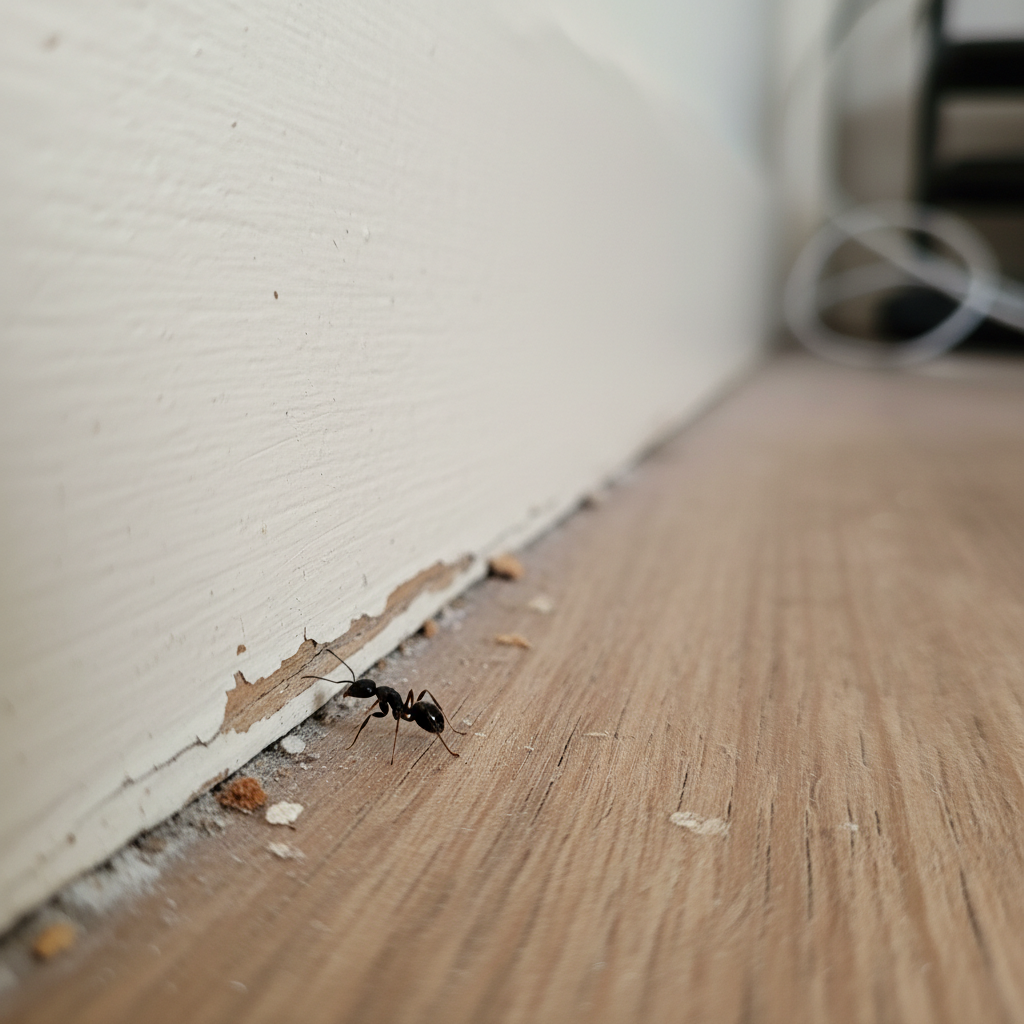
- Entry Points: Tiny cracks, gaps, or imperfections where baseboards meet the wall or floor can serve as microscopic doorways for ants to enter your living space from the wall voids or foundation.
- Hidden Pathways: Once inside the wall voids, ants can travel unseen, using the space behind baseboards as a superhighway to access different rooms or specific food and water sources.
- Proximity to Resources: Baseboards often line areas where food is prepared (kitchens) or water is present (bathrooms), making them strategic pathways for ants to reach their desired destinations.
Common Ant Species Found Indoors
Identifying the type of ant you’re dealing with is crucial, as different species respond to different treatments. Here are some common culprits:
- Odorous House Ants: Small, dark brown to black ants that emit a rotten coconut-like smell when crushed. They often nest in wall voids, under floors, and around water sources. They are particularly attracted to sweets.
- Pavement Ants: Dark brown to black ants, typically found nesting under pavement, sidewalks, and foundations. They enter homes through cracks in the foundation and are attracted to a wide variety of foods, including grease, sweets, and pet food.
- Carpenter Ants: Larger ants (0.25 to 0.5 inches), usually black, red, or a combination. Unlike termites, they don’t eat wood but excavate galleries within it to build nests. You might see sawdust-like material (frass) near baseboards or hear rustling sounds within walls. They prefer damp or decaying wood.
- Pharaoh Ants: Very small (0.08 inches), yellowish or light brown ants. They are notorious for being difficult to control due to their tendency to “bud” (split into multiple colonies) when disturbed by conventional insecticides. They prefer warm, humid areas and feed on sweets, proteins, and even other insects.
Detecting the Source: More Than Just a Trail
Seeing ants crawling on your baseboards is just the tip of the iceberg. To truly solve the problem, you need to become a detective and locate their origin.
Following the Trail
Ants often leave a chemical pheromone trail for their colony mates to follow. Observing these trails can lead you directly to their entry point or food source. Pay attention to where the trail originates from the baseboard and where it leads.
Locating Nests
Ant nests can be surprisingly elusive:
- Behind Baseboards or in Wall Voids: Many species, like odorous house ants and carpenter ants, will nest in the sheltered spaces behind your baseboards or within the walls.
- Under Floors or in Attic Spaces: Ants might travel through these areas before emerging into your living space.
- Outdoors: Often, the main colony is outside, and scout ants simply venture indoors for food. Look for ant mounds in your yard, near the foundation, or under landscaping rocks.
Signs of Infestation Beyond Visible Ants
- Frass: For carpenter ants, tiny piles of sawdust-like material (frass) mixed with insect parts near baseboards or window sills are a strong indicator of an active nest.
- Rustling Sounds: In quiet moments, you might hear faint rustling or chewing sounds coming from within your walls if a large carpenter ant colony is present.
- Moisture Damage: The presence of certain ants, like carpenter ants, can sometimes indicate underlying moisture problems in your home’s structure.
Your Arsenal: Effective Strategies to Get Rid of Ants Under Baseboards
Once you’ve identified the ants and have an idea of their entry points, it’s time to act. A combination of DIY methods and, if necessary, professional help, will be your most effective approach.
DIY Approaches
1. Cleaning and Sanitation: The First Line of Defense
Before deploying any chemical treatments, thoroughly clean the infested areas. This removes existing pheromone trails and eliminates food sources that attract ants.
- Wipe Down Surfaces: Use a mixture of vinegar and water or a general household cleaner to wipe down floors, counters, and especially the baseboards. This disrupts pheromone trails.
- Vacuum Regularly: Vacuuming not only picks up crumbs but also removes ants and their trails. Dispose of the vacuum bag contents immediately outside.
- Store Food Properly: Keep all food, including pet food, in airtight containers. Clean up spills immediately. For more tips on maintaining a pest-free kitchen, consider resources like Good Housekeeping’s guide to pest prevention.
- Manage Pet Food: Don’t leave pet food bowls out overnight. Wash them after each feeding.
2. Sealing Entry Points
Once you’ve cleaned, prevent future access by sealing any gaps or cracks around your baseboards.
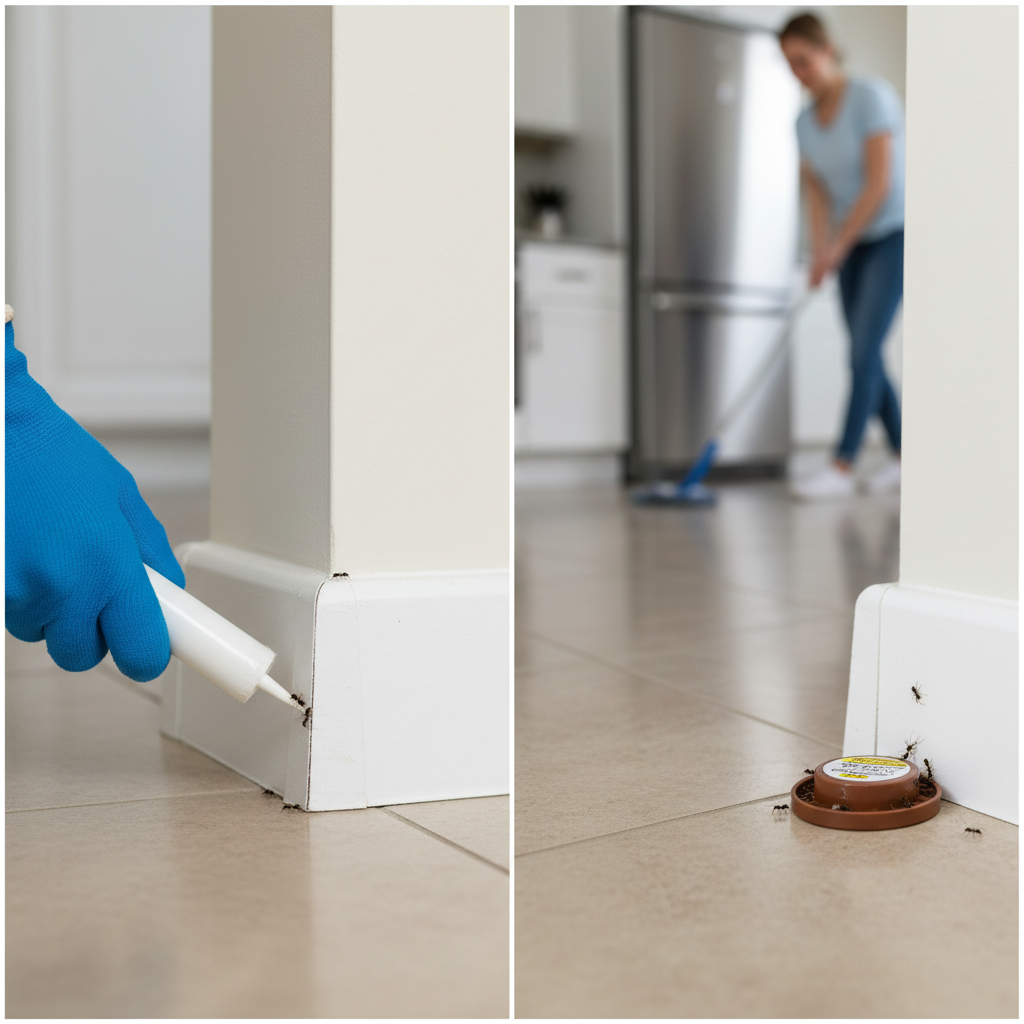
- Caulk and Sealant: Use silicone caulk to seal any visible cracks where baseboards meet the wall or floor. Pay attention to corners and areas around pipes.
- Repair Gaps: For larger gaps, wood putty or spackle can be used, followed by painting to match your trim.
3. Baits: The Smart Solution
Ant baits are highly effective because they allow worker ants to carry the toxic substance back to the colony, including the queen, ultimately destroying the entire nest. This is often more effective than direct sprays, which only kill visible ants.
- How Baits Work: Baits consist of an attractive food source (sweet, protein, or grease-based, depending on the ant species) mixed with a slow-acting insecticide. Ants consume the bait and share it with the rest of the colony through a process called trophallaxis.
- Types of Baits:
- Gel Baits: Often used for cracks and crevices, these are effective for ants attracted to sweets. Apply small dots near ant trails or entry points.
- Granular Baits: Spread outdoors around the foundation, these are good for a broader range of ants.
- Bait Stations: Child and pet-resistant plastic containers with bait inside, ideal for indoor placement.
- Placement: Place baits directly in the ants’ path, near baseboards, under sinks, or wherever you see ant activity. Be patient; it can take several days to a few weeks for the colony to be eradicated.
4. Sprays: Use with Caution
While contact sprays can provide immediate satisfaction by killing visible ants, they often only address the symptom, not the root cause. Some sprays can even cause colonies to “bud” and scatter, making the problem worse.
- Contact Sprays: Kill ants on contact. Use sparingly and only for immediate relief. Avoid spraying directly on bait stations, as it will deter ants.
- Residual Sprays: Leave an insecticide residue that continues to kill ants for a period. These are best used as a barrier around the perimeter of your home or along known entry points, not as a primary solution for ants under baseboards. Always follow label directions meticulously.
5. Natural Deterrents (Limited Effectiveness)
Some natural methods can deter ants, but they are rarely effective for eliminating an established colony.
- Vinegar: White vinegar mixed with water can be sprayed on surfaces to clean and disrupt pheromone trails.
- Essential Oils: Peppermint, tea tree, and lemon essential oils are said to deter ants. Apply a few drops on cotton balls and place them in problem areas.
- Diatomaceous Earth (DE): A natural powder made from fossilized algae. When ants walk through it, the sharp particles cut their exoskeletons, leading to dehydration. Food-grade DE is safe for pets and humans but can be messy and requires proper application. Sprinkle a thin layer along baseboards and entry points.
When to Call a Professional
While DIY methods can be effective for minor infestations, there are situations where professional pest control is the best course of action:
- Large or Persistent Infestations: If ants keep returning despite your best efforts, a professional can identify the species accurately and apply targeted treatments.
- Difficulty Identifying Species: Correct identification is key to effective treatment. Professionals have the expertise.
- Carpenter Ants: These ants can cause significant structural damage over time. Their nests are often deep within walls, requiring specialized knowledge and tools (like drilling small holes to inject insecticide dust) to reach and eliminate the colony.
- Pharaoh Ants: These ants are notoriously difficult to control due to budding. Professional intervention is often necessary to avoid worsening the problem.
- Safety Concerns: If you’re uncomfortable using pesticides, or if you have young children or pets, a professional can apply treatments safely and effectively.
Prevention is Key: Keeping Ants Out for Good
Once you’ve tackled the immediate problem of ants crawling under baseboards, implementing a robust prevention strategy is vital for long-term success.
Regular Cleaning Routines
- Daily Wipes and Sweeps: Make it a habit to wipe down kitchen counters, sweep floors, and vacuum regularly, especially in dining areas.
- Deep Cleaning: Periodically move appliances (refrigerator, oven) to clean underneath and behind them, where crumbs and spills often accumulate.
Food Storage Best Practices
- Airtight Containers: Store all dry food items—cereals, pasta, sugar, flour, pet food—in sealed containers.
- Refrigerate or Seal: Leftovers should be refrigerated promptly, and open food packages should be sealed.
Moisture Control
- Fix Leaks: Promptly repair any leaky faucets, pipes, or drains. Even small drips can attract ants.
- Ventilation: Ensure bathrooms and basements are well-ventilated to reduce humidity. Use dehumidifiers if necessary.
Exterior Maintenance
Your home’s exterior is the first line of defense against ants.
- Seal Foundation Cracks: Inspect your home’s foundation and seal any cracks or gaps with caulk or concrete patch.
- Trim Vegetation: Keep tree branches and shrubs trimmed away from your house, as they can serve as bridges for ants to access your roof or windows.
- Clear Debris: Remove leaf litter, firewood piles, and other organic debris near your foundation, as these provide harborage for ants.
- Maintain Gutters: Ensure gutters are clean and draining properly away from the foundation to prevent moisture buildup.
Perimeter Treatments
For an added layer of protection, consider creating an insecticide barrier around your home’s exterior foundation. This can be done with granular or liquid insecticides designed for outdoor use. Always read and follow product instructions carefully.
Safety First: Using Products Responsibly
When dealing with any pest control product, safety should be your top priority, especially if you have children or pets.
- Read Labels Thoroughly: Always read the entire product label before use. This provides crucial information on application, safety precautions, and first aid.
- Pet and Child Safety:
- Baits: While bait stations are often child and pet-resistant, place them in areas inaccessible to curious hands or paws (e.g., behind appliances, inside cabinets).
- Sprays: Keep children and pets away from treated areas until sprays have dried completely, and ensure adequate ventilation.
- Ventilation: When using sprays or strong-smelling natural remedies, ensure the area is well-ventilated.
- Storage: Store all pest control products in their original containers, in a locked cabinet or out of reach of children and pets.
Common Myths and Misconceptions About Ant Control
Navigating the world of pest control can be confusing, with many myths perpetuated. Dispelling these can help you focus on effective strategies.
- Myth: Ants will just disappear on their own.
Reality: While a few scout ants might leave if they find no food, an established colony will continue to forage and can grow significantly. Ignoring the problem almost always leads to a worse infestation.
- Myth: Killing visible ants solves the problem.
Reality: Spraying and killing the ants you see only eliminates a fraction of the colony – the foragers. The queen and the vast majority of worker ants remain safely in the nest, ready to send out more foragers. This is why baits are generally more effective, as they target the entire colony.
- Myth: Homemade remedies always work.
Reality: While some natural deterrents (like vinegar or essential oils) can temporarily repel ants or disrupt trails, they rarely have the potency to eliminate an entire colony. For serious infestations, targeted insecticides are usually necessary.
- Myth: Ants are only attracted to dirty homes.
Reality: While cleanliness certainly helps, ants can invade even the cleanest homes in search of food, water, or shelter. A single dropped crumb or a tiny water leak is enough to attract a scout ant.
FAQs
Why are ants suddenly appearing under my baseboards?
Ants often appear suddenly due to changes in weather (seeking shelter from rain or heat), new food sources, or the expansion of an outdoor colony. A scout ant likely found an entry point and reported back to the colony.
Can ants cause structural damage?
Most common household ants (like odorous house ants or pavement ants) do not cause structural damage. However, carpenter ants excavate wood to create nests, which can compromise the structural integrity of your home over time if left untreated. It’s crucial to identify the species.
How long does it take to get rid of ants?
For minor infestations treated with baits, you might see a significant reduction in ant activity within a few days to a week. Complete eradication of a colony can take 2-3 weeks as the bait cycles through the colony. Larger or persistent infestations may take longer or require professional intervention.
Are ant baits safe for pets?
Many ant baits are designed to be low-toxicity to pets, but it’s always best to choose child and pet-resistant bait stations and place them in areas inaccessible to pets. If a pet ingests bait, contact your veterinarian immediately and have the product label handy.
What’s the best way to clean up ant trails?
Wipe down ant trails with a solution of white vinegar and water (50/50 mix) or a common household cleaner. This physically removes ants and disrupts the pheromone trails they use to communicate, making it harder for other ants to follow.
Eliminating ants crawling under baseboards requires a multi-pronged approach: identification, targeted treatment, and diligent prevention. By understanding ant behavior, choosing the right tools, and maintaining a proactive stance, you can reclaim your home from these tiny invaders and ensure your baseboards remain ant-free.