Understanding Why Your Chimney Leaks During Storms
When heavy rain, strong winds, or even hail pound your home, your chimney, being the highest point, takes the brunt of the weather. Several components work together to keep water out, and if any of them fail, a leak is inevitable.
Damaged Chimney Cap or Crown
The very top of your chimney structure is designed to be the first line of defense against the elements. The chimney cap sits over the flue opening, preventing rain, snow, debris, and animals from entering. Below that, the chimney crown is a concrete slab that covers the top of the chimney masonry, sloping outwards to direct water away from the flue and the chimney walls.
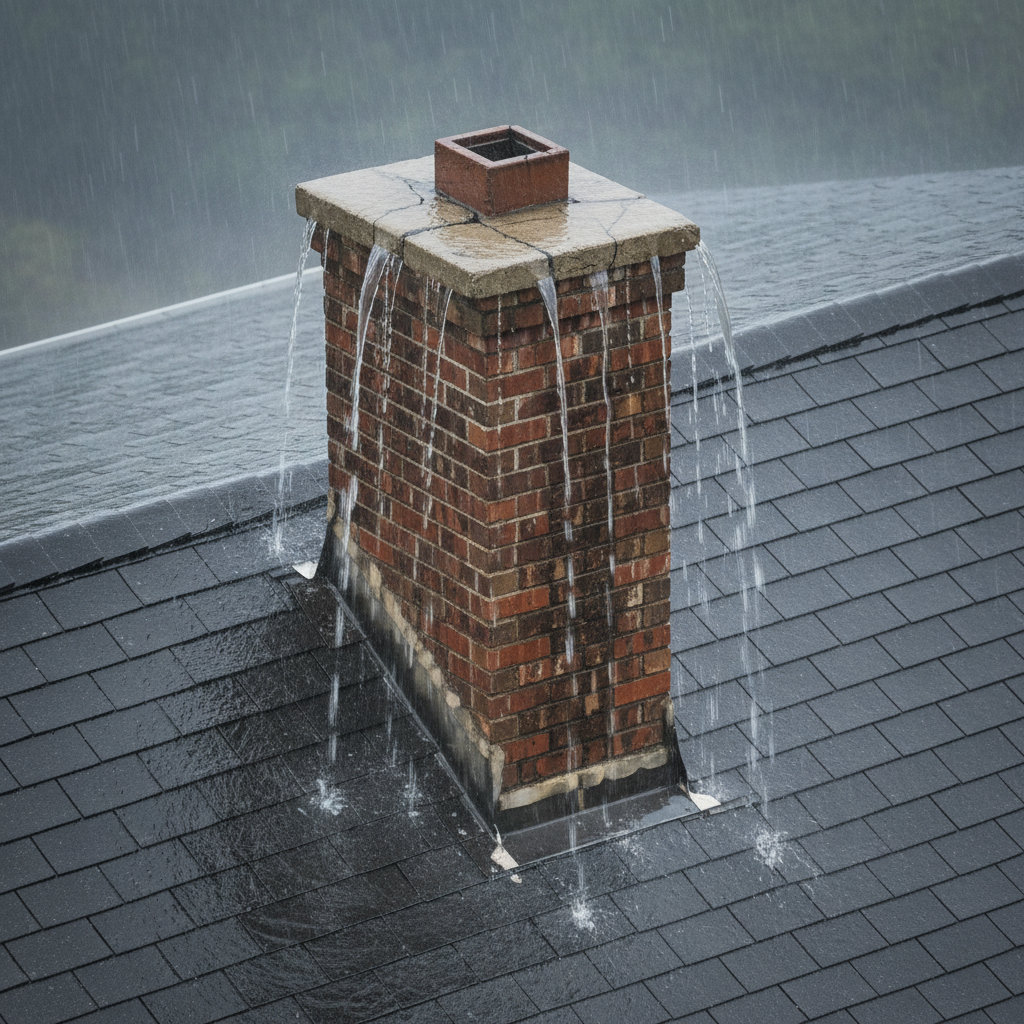
- Damaged Chimney Cap: If your chimney cap is missing, rusted through, or has holes, rain can easily pour directly down your flue, leading to water in your firebox or even into your home.
- Cracked Chimney Crown: Exposure to freeze-thaw cycles and general wear and tear can cause cracks in the concrete chimney crown. These cracks allow water to seep into the masonry below, eventually making its way into your home.
Faulty or Deteriorated Flashing
Flashing is a critical waterproof barrier, typically made of metal, that seals the joint where the chimney meets the roof. It’s installed in overlapping layers to ensure a watertight seal. If the flashing is improperly installed, bent, rusted, lifted, or has gaps, it creates an open pathway for water to run down the exterior of the chimney and directly into your attic or walls.
- Improper Installation: If the flashing wasn’t installed correctly initially, it might not provide a tight seal, leaving gaps for water intrusion.
- Wear and Tear: Over time, exposure to harsh weather can cause the sealant around the flashing to degrade, or the metal itself can rust, warp, or pull away from the roof or chimney.
- Storm Damage: Strong winds can lift or bend flashing, compromising its seal and allowing water to penetrate.
Porous Masonry and Mortar
The bricks and mortar that make up your chimney are naturally porous, especially older ones. While they are designed to withstand weather, constant exposure to rain, sun, and temperature fluctuations can degrade them over time.
- Cracked Mortar Joints: The mortar between bricks can crack and crumble, creating channels for water to enter the chimney structure.
- Spalling Bricks: When water repeatedly soaks into bricks and then freezes, it can cause the brick face to pop off or crumble, a process known as spalling. This makes the chimney even more susceptible to water penetration.
- No Water Repellent: Unsealed or untreated masonry can absorb large amounts of water, which can then migrate through the chimney walls and into your home.
Condensation Issues (Often Confused with Leaks)
While not directly a “leak during storms,” condensation can often mimic leak symptoms, especially in high-efficiency heating systems. When hot exhaust gases from furnaces or water heaters pass through a cold chimney flue, condensation can form. This acidic moisture can deteriorate the flue liner and eventually seep through the masonry, causing stains similar to a leak. It’s crucial to differentiate between condensation and direct water infiltration, as the solutions are different.
Clogged or Damaged Gutters
Your home’s gutter system plays a crucial role in directing rainwater away from your foundation and roofline. If gutters near the chimney are clogged with leaves and debris, or if they are damaged and overflowing, water can pool against the chimney walls or flood the roof area surrounding the chimney. This constant saturation can exacerbate existing issues with flashing or masonry, overwhelming the chimney’s defenses and leading to leaks.
How to Identify a Chimney Leak
Detecting a chimney leak early can save you from more extensive and costly repairs. Here are the common signs to look out for:
Water Stains on Ceilings or Walls
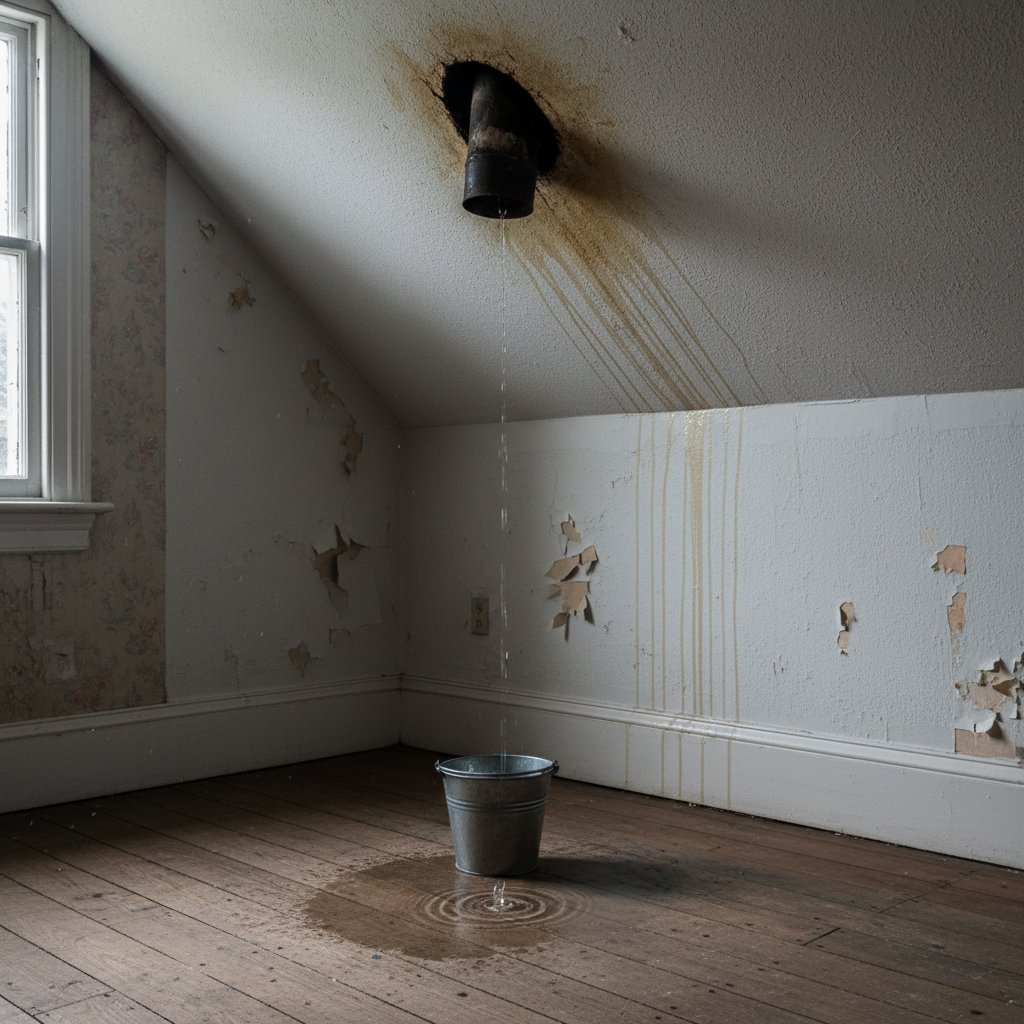
This is perhaps the most obvious sign. Look for discolored areas, rings, or streaks on your ceiling or walls, particularly near the chimney stack or where the chimney passes through your attic. These stains might be brown, yellow, or even appear as peeling paint.
Dampness or Musty Odors
Even if you don’t see visible stains, a persistent musty smell, especially after it rains, can indicate hidden moisture and potential mold growth within your chimney or walls. Feel for damp spots on walls, ceilings, or even the floor near the fireplace.
Rust in the Firebox
If you notice rust on the damper, the fireplace grate, or other metal components within your firebox, it’s a strong indicator that water is entering the flue and running down into the fireplace.
Crumbling Masonry
Inspect the exterior of your chimney. Look for cracked, spalling (flaking) bricks, or crumbling mortar joints. These are not only signs of existing water damage but also potential entry points for future leaks. In the attic, also check for any damp or discolored wood around the chimney framing.
Immediate Steps When You Discover a Leak
Finding a leak can be stressful, but there are a few immediate actions you can take:
- Protect Your Interior: If water is actively dripping, place buckets or towels to catch the water and prevent damage to floors or furnishings.
- Document the Damage: Take clear photos and videos of the leak and any damage it has caused. This will be invaluable for insurance claims and for communicating with repair professionals.
- Contain Electrical Hazards: If the leak is near electrical outlets or wiring, turn off power to that area at your circuit breaker to prevent electrical shorts or hazards.
- Contact a Professional: While you might be tempted to patch it yourself, chimney leaks are often complex. Contact a qualified chimney sweep or masonry professional as soon as possible. They have the expertise and equipment to safely inspect and diagnose the issue.
Long-Term Solutions: Fixing Your Leaking Chimney
Once the source of the leak is identified, specific repairs can be made to restore your chimney’s integrity and prevent future water intrusion.
Repairing or Replacing the Chimney Cap/Crown
- Chimney Cap: A damaged or missing cap should be replaced with a sturdy, rust-resistant cap, preferably one made of stainless steel or copper, to ensure long-term protection.
- Chimney Crown: Small cracks in a concrete crown can often be sealed with a flexible crown repair sealant. For extensive damage or a poorly constructed crown, a full replacement with a properly sloped, reinforced concrete crown is usually necessary. This is a critical repair for preventing water from saturating the top courses of masonry.
Flashing Repair and Replacement
Repairing flashing requires skill and precision. If the existing flashing is only slightly lifted or has minor gaps, it might be possible to reseal it with a high-quality, weatherproof sealant. However, if the flashing is rusted, bent, torn, or was improperly installed, a full replacement is the most reliable solution. Professional chimney and roofing experts will ensure the new flashing is correctly integrated with both the chimney and roof shingles, often using a combination of step flashing and counter flashing techniques for a superior seal.
Masonry and Mortar Repair
For deteriorating bricks and mortar joints, a process called “tuckpointing” is often employed. This involves grinding out the old, failing mortar and replacing it with new, durable mortar. Any spalling bricks should also be replaced with new, matching bricks to maintain structural integrity and appearance. Addressing these masonry issues is crucial for preventing water absorption and further deterioration of the chimney structure.
Applying a Water Repellent
After masonry repairs are completed and the chimney is dry, applying a breathable, siloxane-based water repellent is highly recommended. Unlike paint or sealers that can trap moisture, these repellents penetrate the masonry to create a barrier that repels water while still allowing the chimney to breathe. This significantly reduces the amount of water absorbed by the bricks and mortar during storms, providing an extra layer of protection against future leaks and deterioration. Consider discussing professional waterproofing services with your chimney technician.
Addressing Gutter Issues
Ensure that all gutters around your chimney are clear of debris and properly sloped to drain water away from the chimney and house foundation. Repair any damaged sections of gutters and downspouts. Installing gutter guards can help prevent future clogs and reduce the risk of overflowing water impacting your chimney.
Preventing Future Chimney Leaks
Proactive maintenance is your best defense against a leaky chimney.
Regular Inspections
Schedule annual chimney inspections by a certified professional. A chimney sweep or technician can identify potential issues with your cap, crown, flashing, and masonry before they turn into major leaks. Early detection allows for minor repairs that are far less costly than extensive water damage remediation.
Professional Cleaning and Maintenance
Beyond inspections, professional chimney cleaning (sweeping) removes creosote buildup, which can also contribute to moisture problems if it traps dampness. They can also ensure proper ventilation, reducing condensation risks.
Consider a Chimney Cover
If you don’t already have one, installing a multi-flue chimney cover can provide comprehensive protection for your entire chimney top. These covers typically protect the flues from rain and animals, and some models also offer added protection to the chimney crown by extending slightly beyond its edges.
When to Call a Professional
While some minor tasks, like clearing gutters, can be DIY, anything involving working on the roof or within the chimney structure should be left to certified professionals. Chimney repairs require specialized knowledge, tools, and safety equipment. Attempting complex repairs yourself can be dangerous and may lead to further damage or inadequate solutions. Look for chimney sweeps certified by organizations like the Chimney Safety Institute of America (CSIA) for reliable and safe service.
Conclusion
A chimney leaking during storms is more than just an annoyance; it’s a serious problem that demands immediate attention. By understanding the common causes, knowing how to spot the signs, and taking proactive steps for repair and prevention, you can protect your home from water damage and ensure your chimney stands strong against the harshest weather. Don’t let a small drip turn into a major disaster – invest in the care and maintenance your chimney deserves to keep your home dry and secure for years to come.
Frequently Asked Questions (FAQs)
Can a chimney leak cause structural damage?
Yes, absolutely. Persistent moisture from a chimney leak can saturate surrounding wooden structures (joists, rafters), leading to rot, weakened supports, and even compromised roof integrity. It can also degrade the mortar and bricks of the chimney itself, leading to costly masonry repairs or rebuilding.
How much does it cost to fix a leaking chimney?
The cost varies significantly depending on the source and extent of the leak. Minor repairs like resealing flashing or repairing small crown cracks might range from a few hundred dollars. More extensive issues such as full flashing replacement, tuckpointing, crown replacement, or rebuilding damaged masonry can cost several hundred to several thousand dollars. Getting multiple quotes from certified professionals is always recommended.
Is a chimney leak an emergency?
While not always an immediate structural emergency, a chimney leak should be treated with urgency. Lingering leaks can quickly escalate, leading to mold growth, electrical hazards, and widespread water damage that becomes much more expensive to repair over time. It’s best to address it as soon as you discover it.
Can I repair chimney leaks myself?
For most chimney leak repairs, it’s strongly advised to hire a professional. Working on a roof is inherently dangerous, and diagnosing chimney leaks accurately requires specific expertise. Improper repairs can lead to ongoing leaks or even create new problems. Professionals have the necessary tools, safety equipment, and knowledge to correctly identify and fix the issue.
How often should my chimney be inspected?
The National Fire Protection Association (NFPA) recommends that chimneys, fireplaces, and vents be inspected at least once a year. This annual inspection helps identify any issues, including potential leak sources, creosote buildup, or structural damage, before they become significant problems.