Why Your Deck Railing Might Be Loose
Understanding the root cause of a loose deck railing is the first step toward a lasting repair. Several factors can contribute to railings losing their stability, often a combination of environmental exposure, material wear, and installation methods.
Weather Damage: The Silent Eroder
Exposure to the elements is arguably the most common culprit behind deteriorating deck components. Your deck railings are constantly battling:
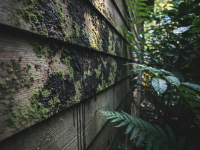
- Moisture: Rain, snow, and humidity can lead to wood rot in untreated or poorly maintained wooden railings and posts. Moisture can also cause wood to swell and shrink, loosening fasteners over time.
- UV Radiation: Sunlight’s ultraviolet rays can degrade wood fibers, making them brittle and less resistant to fasteners. It can also break down finishes, leaving the wood vulnerable to moisture.
- Freeze-Thaw Cycles: In colder climates, water trapped in cracks or around fasteners can freeze, expand, and then thaw, gradually widening gaps and weakening connections.
Material Deterioration: Age and Wear
Even the strongest materials have a lifespan, and constant exposure to the elements accelerates their decline.
- Wood Rot: The most common issue for wooden decks, rot can severely compromise the structural integrity of posts, balusters, and handrails where they connect to the deck frame or other railing components.
- Metal Corrosion: For metal railings, rust and corrosion can weaken joints, posts, and fasteners. This is especially true for galvanized steel or iron railings if their protective coating is compromised.
- Composite Degradation: While more resistant to rot, composite materials can still degrade over time due to UV exposure, leading to brittleness or cracking where fasteners are located.
Improper Installation: A Foundation for Failure
Sometimes, the problem stems from how the railing was initially installed. Common installation flaws include:
- Insufficient Fasteners: Not using enough screws, bolts, or connectors, or using ones that are too short or thin for the load.
- Incorrect Fastener Type: Using interior-grade screws outdoors, which will rust and weaken, or using nails where bolts are required for structural support.
- Poor Post Attachment: Deck posts are the backbone of your railing. If they are not adequately secured to the deck framing (e.g., bolted through joists or rim joists), they will inevitably become loose.
- Lack of Blocking: Proper blocking within the deck frame provides crucial support for railing posts, especially in cantilevered or surface-mounted installations.
Wear and Tear / Age: The Inevitable
Even perfectly installed and maintained railings will eventually show signs of age. Constant use, people leaning on them, and the natural expansion and contraction of materials contribute to fasteners slowly loosening over decades.
Foundation Issues: Beyond the Railing Itself
In rare but serious cases, a loose railing can be a symptom of a larger problem with the deck’s foundation. If the deck itself is shifting, settling, or experiencing structural issues, the railings attached to it will naturally become unstable. This requires immediate professional assessment.
The Dangers of a Loose Deck Railing: Safety First!
It’s impossible to overstate the importance of a secure deck railing. Neglecting a loose railing can have severe consequences, not only for the safety of individuals but also for the structural integrity and value of your property.
Falls and Injuries: The Most Obvious Risk
The primary purpose of a deck railing is to prevent falls. A loose railing, especially at height, can give way unexpectedly when someone leans on it, leading to serious injuries, including:
- Fractures and sprains
- Head trauma
- Spinal cord injuries
- Even fatalities
Children and the elderly are particularly vulnerable, making regular inspection and prompt repair essential for families. For further reading on general deck safety and maintenance, which often includes railing integrity, consider consulting resources like Better Homes & Gardens for valuable insights.
Structural Compromise: A Chain Reaction
A loose railing isn’t an isolated problem. The forces exerted on a wobbly railing can transmit stress to other parts of the deck structure, potentially:
- Loosening other railing sections
- Stressing the ledger board where the deck attaches to your house
- Warping deck boards
- Accelerating overall deck deterioration
What starts as a minor issue can cascade into a more extensive and costly repair if left unaddressed.
Property Value Impact: Beyond the Obvious
Beyond safety, a visibly loose or poorly maintained deck railing significantly detracts from your home’s curb appeal and market value. Prospective buyers will view it as a red flag, indicating potential neglect and future repair costs, which could affect their offer or even deter them entirely.
How to Diagnose a Loose Deck Railing
Before you can fix the problem, you need to accurately identify exactly what’s loose and why. A systematic diagnostic approach will save you time and ensure you address the core issue.
Visual Inspection: Look for the Clues
Start with a thorough visual examination of your entire railing system:
- Look for Gaps: Are there gaps between posts and the deck surface, or between balusters and the top/bottom rails?
- Check for Rot/Corrosion: Inspect all wooden components for signs of rot (soft spots, discoloration, fungal growth) and metal components for rust or corrosion, especially around fasteners.
- Examine Fasteners: Are screws protruding, stripped, or rusted? Are bolts missing nuts or washers? Are brackets bent or broken?
- Inspect Post Bases: How are the posts attached to the deck frame? Look for any signs of movement or decay at the base.
- Review Joins: Check where top rails meet posts, and where balusters fit into rails.
The “Shake Test”: Identify the Weak Points
This hands-on test is crucial for pinpointing specific areas of instability:
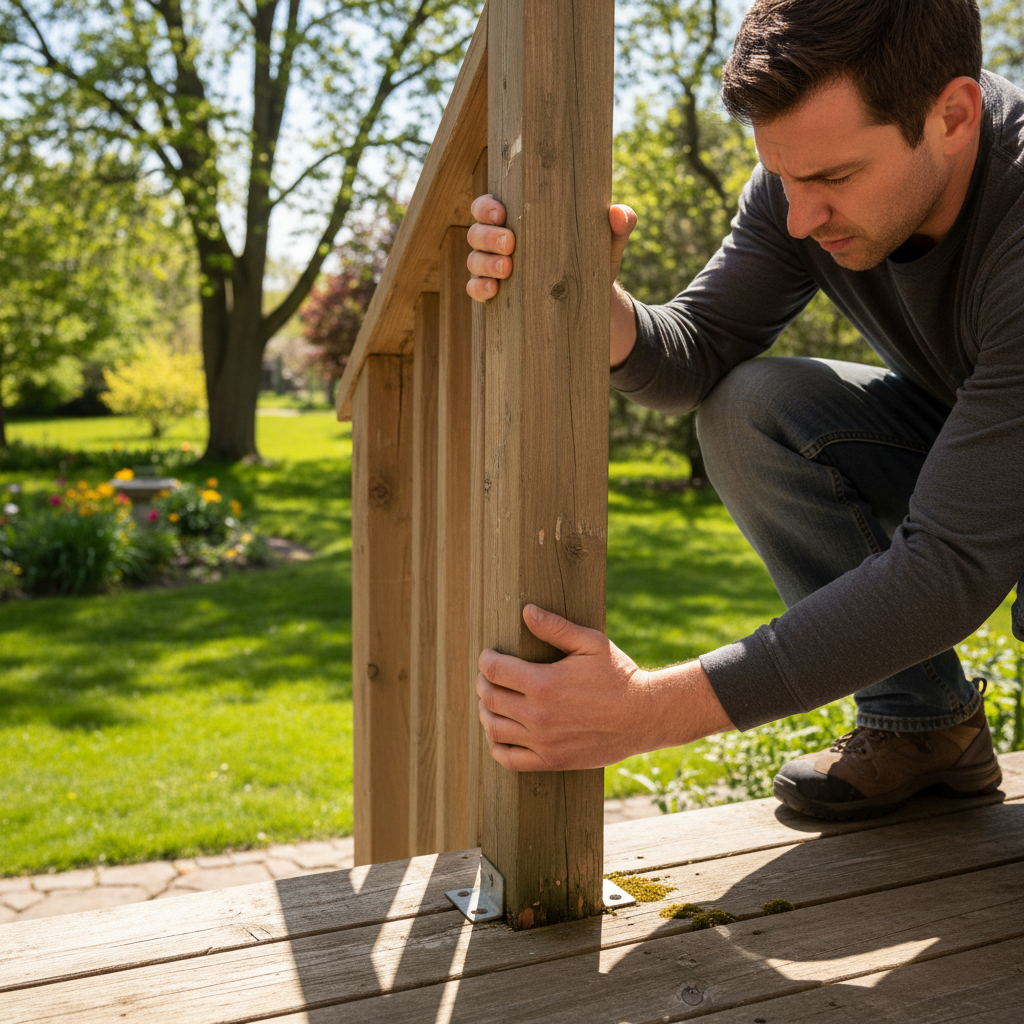
- Grab Each Post: Firmly grasp each deck post, one by one, and try to shake it. Note which ones move, and in what direction. Does it pivot at the base? Does the entire railing section wobble?
- Test Rail Sections: Push and pull on individual railing sections (the part between two posts) to see if they move independently or if the movement originates from the posts themselves.
- Wiggle Balusters/Spindles: Try to wiggle individual balusters. Are they loose within their sockets or are their fasteners compromised?
Make notes or even mark loose areas with chalk to remember where the problem spots are.
Check Fasteners and Posts: Get Up Close and Personal
Once you’ve identified a loose area, get closer to examine the fasteners. Sometimes, all that’s needed is to tighten a few screws or bolts. Other times, you’ll discover stripped holes, rusted fasteners that need replacing, or severely rotted wood that can no longer hold a screw.
Pay particular attention to the base of the posts. Many railing problems stem from posts not being securely anchored to the deck frame. If a post is rotted at its base, tightening fasteners won’t solve the issue; the rotted section will need to be replaced or adequately reinforced.
Step-by-Step Guide to Fixing a Loose Deck Railing
Once you’ve diagnosed the issue, you can proceed with the repair. Always prioritize safety during repairs by wearing appropriate protective gear and, if necessary, having a helper.
Gather Your Tools and Materials
Before you begin, ensure you have the right equipment:
- Safety Gear: Work gloves, safety glasses.
- Measuring Tape: For accurate measurements.
- Drill/Driver: Cordless drill with appropriate bits (Phillips, square drive, hex).
- Wrenches/Socket Set: For bolts and nuts.
- Level: To ensure plumb and level installations.
- Clamps: To hold pieces securely while fastening.
- Wood Blocks/Scrap Wood: For shims or temporary support.
- Exterior-Grade Screws/Bolts: Galvanized, stainless steel, or specifically coated for outdoor use.
- L-brackets or Post Anchors: For reinforcing post connections.
- Wood Filler/Epoxy: For stripped screw holes or minor wood damage.
- Wood Preservative/Waterproofer: To protect repaired wood.
- Replacement Wood (if needed): For rotted sections.
Reinforcing a Loose Post: The Backbone of Your Railing
Loose posts are often the most critical point of failure. The repair method depends on the cause of the looseness.
- If the Post is Sound but Fasteners are Loose:
- If possible, access the underside of the deck.
- If the post is bolted, try tightening the nuts. If the nuts spin, you may need to replace the bolts with longer ones that penetrate further, or use fatter lag screws if bolts aren’t feasible.
- If the post is surface-mounted with screws, remove the old screws. If the holes are stripped, fill them with wood epoxy or hardwood dowels glued in place, then pre-drill new holes slightly offset from the old ones. Drive new, longer, exterior-grade screws.
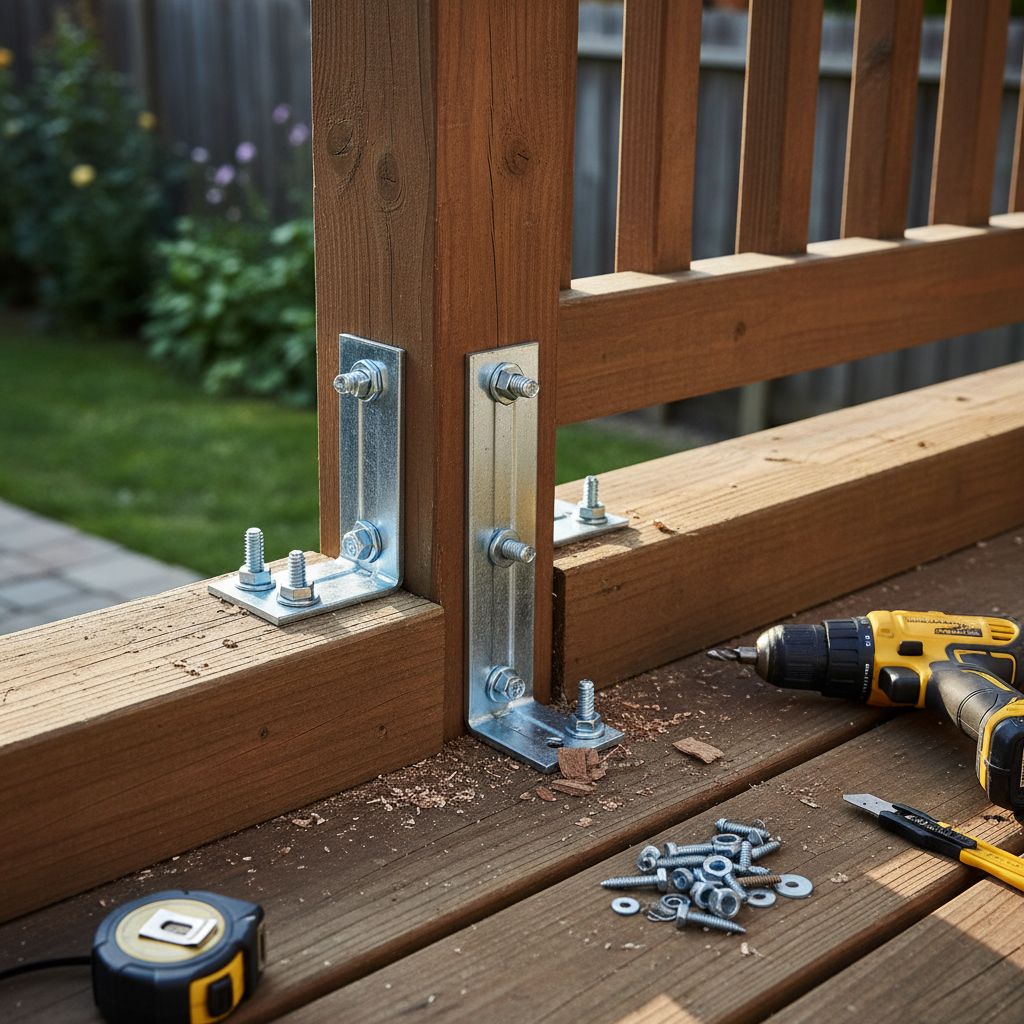
- Add extra support: Install heavy-duty galvanized L-brackets or post anchors at the base of the post, securing them to the post and the adjacent deck joists or rim joists with appropriate fasteners. Use at least two brackets per post, ideally on adjacent sides.
- If the Post Base is Rotted:
- This is a more serious issue. If the rot is extensive, the post needs to be replaced. This often involves carefully detaching the railing section, removing the old post, installing a new one, and reattaching the railing.
- For minor rot, you might be able to cut away the rotted section and splice in new wood, secured with specialized connectors or strong exterior adhesives. However, for structural integrity, replacement is usually safer.
- If the Post is Surface-Mounted on Decking:
- These posts are more prone to looseness. The best fix often involves adding robust blocking underneath the deck boards, directly beneath the post base.
- Securely fasten the post through the deck boards and into this new blocking using long structural screws or carriage bolts that pass through the post, deck boards, and blocking.
Tightening Loose Balusters or Spindles
Balusters can become loose where they join the top and bottom rails.
- For Screwed Balusters:
- Try tightening existing screws.
- If holes are stripped, remove the baluster, fill the holes with wood filler or epoxy, let cure, and then re-drill pilot holes and re-secure with longer, exterior-grade screws.
- Alternatively, add a small, discreet L-bracket at the bottom or top of the baluster, securing it to the rail.
- For Dado/Grooved Balusters:
- These typically fit into grooves in the rails. If they’re loose, it’s often due to wood shrinkage or degradation.
- You can try shimming the gaps with thin cedar shims and then applying exterior-grade adhesive.
- Another option is to drive a small, angled screw through the rail into the baluster, being careful not to split the wood.
Repairing Loose Top Rails
The top rail provides continuous support and stability.
- Where Top Rail Meets Post:
- This joint is often secured with screws or specialized connectors.
- Tighten existing fasteners. If they’re stripped, remove, fill holes, and re-fasten with new, larger screws.
- If the connection relies on toe-nailing (screwing at an angle), consider adding a hidden metal mending plate or L-bracket on the underside of the joint for extra rigidity.
- Splits or Cracks in the Rail:
- Small cracks can sometimes be repaired with exterior-grade wood glue clamped securely until dry.
- Larger splits that compromise structural integrity may require replacing the entire rail section.
Addressing Foundation or Ledger Board Issues (When to Call a Pro)
If your railing issues seem to stem from the deck itself moving or detaching from your house, it’s time to call a professional. Problems with ledger boards, support posts, or footings are structural and require expertise to ensure safety and compliance with building codes. Do not attempt these repairs yourself unless you are an experienced contractor.
Preventive Measures to Keep Your Deck Railings Secure
Prevention is always better than cure. Regular maintenance can significantly extend the life and stability of your deck railings.
Regular Inspections: Your Annual Safety Check
Make it a habit to perform a thorough deck inspection at least once a year, preferably in spring. Look for the signs of looseness, rot, and corrosion discussed earlier. Pay extra attention to areas exposed to the most weather or heavy use.
Proper Sealing and Staining: Your First Line of Defense
Apply a high-quality exterior-grade stain or sealer to your wooden deck and railings every 2-3 years, or as recommended by the product manufacturer. This protects the wood from moisture, UV damage, and fungal growth. Ensure all surfaces, especially end grain and joints, are well-covered.
Using Quality Hardware: Invest in Longevity
When building or repairing, always use fasteners and connectors specifically designed for outdoor use. Look for hot-dipped galvanized, stainless steel, or other corrosion-resistant options. Avoid using common interior screws or nails for structural connections.
Professional Maintenance: When in Doubt
If you’re unsure about the condition of your deck or how to perform a repair, don’t hesitate to hire a qualified deck inspector or contractor. Their expertise can identify potential issues early and ensure that any repairs or maintenance are done correctly and safely.
When to Call a Professional Deck Builder
While many minor railing repairs can be handled by a DIY enthusiast, there are specific situations where calling a professional is not just advisable, but essential for safety and compliance.
Extensive Damage: Beyond a Quick Fix
If you’re dealing with widespread rot in multiple posts, significant structural damage to the deck frame itself, or entire sections of railing that are detached, a professional has the tools, experience, and knowledge to assess the damage accurately and execute a lasting repair or replacement.
Lack of DIY Expertise or Tools: Know Your Limits
If you don’t feel confident in your ability to perform the repair safely and correctly, or if you lack the necessary power tools (e.g., for cutting and fitting new lumber), it’s always better to call a professional. Attempting complex repairs without the right skills can lead to further damage or, worse, an unsafe outcome.
Structural Concerns: The Deck Itself is Shifting
Any signs that the entire deck structure is compromised – such as leaning support posts, significant ledger board detachment from the house, or noticeable sagging in the deck surface – warrant immediate professional intervention. These are serious structural issues that impact the entire safety of your home. A professional can evaluate the foundation, framing, and attachment points to ensure everything is up to code.
Code Compliance: Building It Right
Deck railings have specific building code requirements regarding height, baluster spacing, and load-bearing capacity. A professional deck builder is familiar with local codes and can ensure any repairs or replacements meet these standards, which is particularly important if you plan to sell your home in the future or for insurance purposes.
A loose deck railing is a serious concern that should never be ignored. By understanding the common causes, recognizing the risks, and knowing how to diagnose and address the issues, you can maintain a safe and beautiful outdoor space. Whether you tackle the repair yourself or call in a professional, prioritizing the integrity of your deck railings is an investment in your home’s safety and longevity.
Frequently Asked Questions About Loose Deck Railings
Q: How often should I check my deck railings?
A: It’s recommended to perform a thorough visual and physical inspection of your deck railings at least once a year, preferably in the spring before heavy usage. However, if you notice any wobbling or damage at any time, address it immediately.
Q: Can I fix a loose railing myself?
A: Many minor issues, such as tightening loose screws, reinforcing a wobbly post with brackets, or re-securing balusters, can be DIY projects. However, if there’s extensive rot, significant structural damage, or if you’re unsure about the repair, it’s best to consult a professional.
Q: What kind of screws should I use for deck railings?
A: Always use exterior-grade fasteners. Look for screws that are hot-dipped galvanized, stainless steel, or specifically coated for outdoor use (e.g., ceramic-coated deck screws). These are designed to resist rust and corrosion in outdoor environments and provide superior holding power.
Q: Is a slightly wobbly railing a big deal?
A: Yes, even a slightly wobbly railing should be considered a big deal. A small wobble indicates that fasteners are loosening or wood is deteriorating, and it can quickly worsen with use and weather exposure. It compromises safety and can lead to more significant structural issues down the line.
Q: How long do deck railings typically last?
A: The lifespan of deck railings varies greatly depending on the material, climate, quality of installation, and maintenance. Well-maintained wooden railings can last 15-25 years, while composite or metal railings might last 25-50+ years. Regular inspections and timely repairs are key to maximizing their lifespan.