Artificial grass room divider ideas for open spaces offer a fresh, low-maintenance way to create privacy, define zones, and add a touch of biophilic design to open-plan homes and studios. Whether you want a temporary partition in a loft or a permanent green wall that separates your living and dining areas, synthetic turf dividers bring texture, color, and sound-softening benefits without the upkeep of live plants.
Why Choose Artificial Grass as a Room Divider?
Using artificial turf as a room divider is more than a trendy choice. It’s practical and versatile:
- Low maintenance: No watering, pruning, or soil required—just occasional brushing and vacuuming.
- Durability: UV-resistant and pet-friendly options can last many years indoors and in covered outdoor spaces.
- Acoustic benefits: Pile and backing help dampen noise in echo-prone open rooms.
- Instant greenery: Provides the visual warmth of plants year-round without light requirements.
- Customizable: Cut, mount, or frame the turf to any size or shape for tailored zoning solutions.
Popular Types of Artificial Grass Room Dividers
1. Freestanding Turf Panels
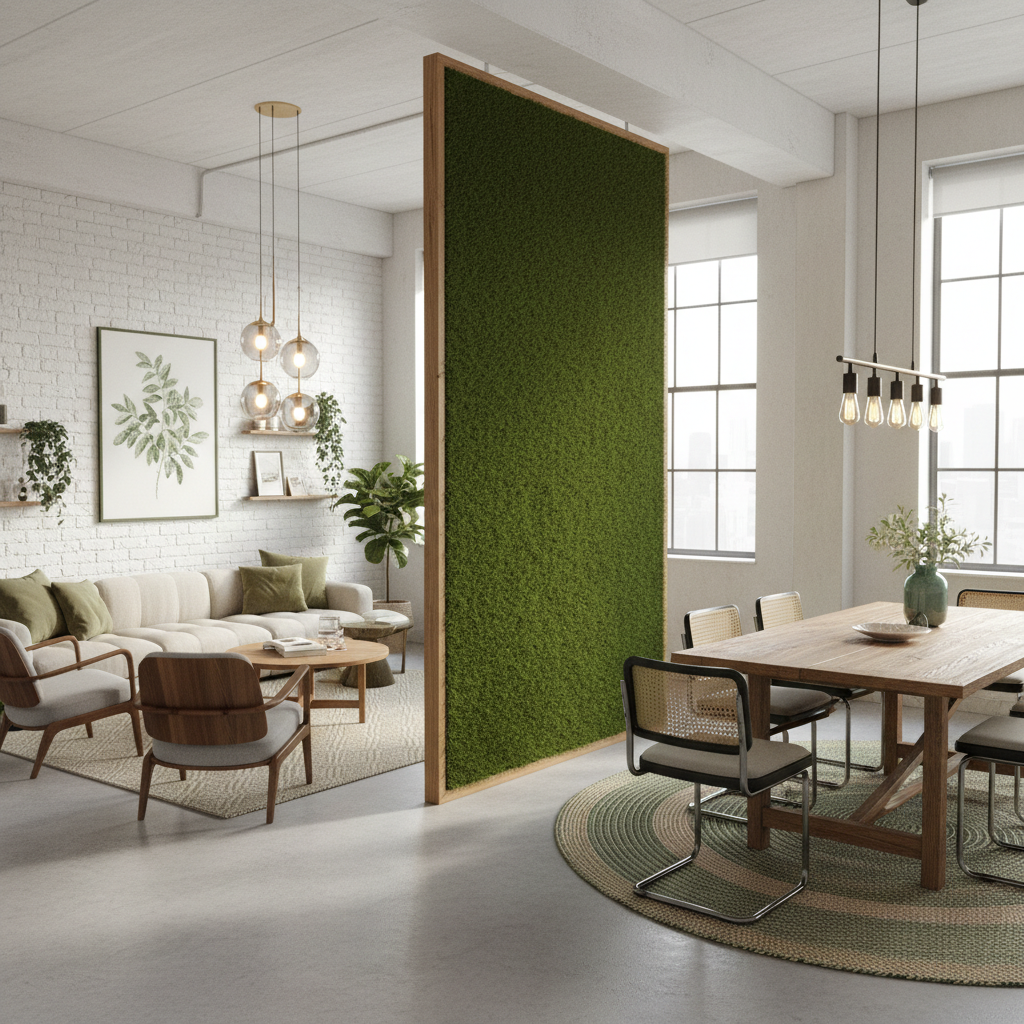
Prefabricated panels or DIY frames wrapped in artificial grass provide a quick, movable partition. These are ideal for renters and flexible layouts because they don’t require drilling into ceilings or floors.
2. Turf-Topped Planter Dividers
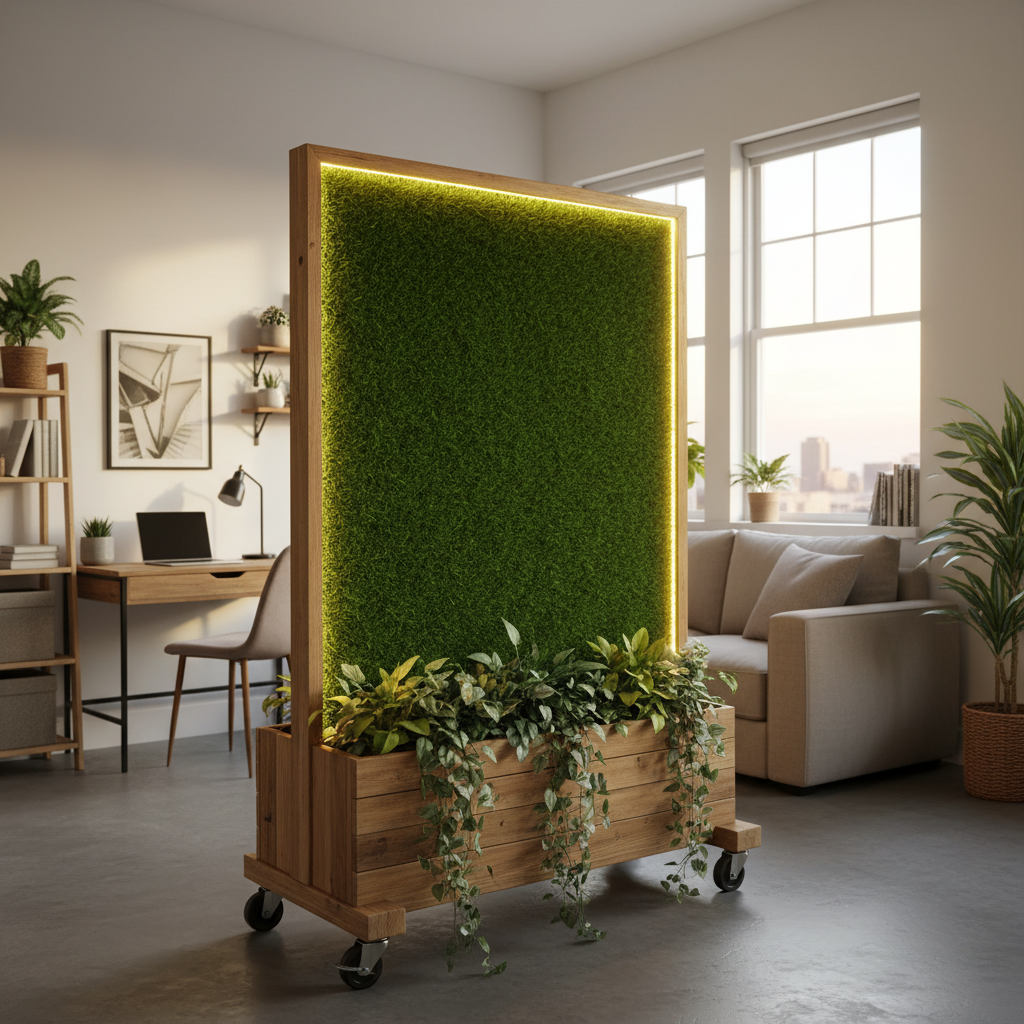
Combine a low planter chest with a turf-faced panel to create a two-in-one divider that also houses real or faux plants. The planter base adds weight and stability while softening the divider’s profile.
3. Ceiling-Hung Turf Screens
For a dramatic, floating effect, hang turf panels from a ceiling track or suspension wire. This solution allows partial sightlines while clearly separating zones below.
4. Rolling Turf Screens
Attach turf to a wheeled frame for a barrier you can move as needed. Rolling dividers are great for multipurpose rooms and events where flexibility is key.
5. Modular Turf Panels
Interlocking panels (similar to modular shelving or slatted screens) let you create curved or stepped partitions. They’re especially useful in offices and co-living spaces that require frequent reconfiguration.
6. Half-Wall and Bench Toppers
Add turf to the front of a half-wall or bench to turn existing architectural features into visual dividers. This is an easy way to add texture without changing the room’s footprint.
Design Ideas by Room Type
Open-Plan Living/Dining
Place a freestanding turf panel between the sofa and dining table to establish two zones while maintaining an airy flow. Use a taller panel (6–7 ft) for privacy during gatherings, or a shorter bench-top divider for a subtler separation.
Studio Apartment
Use a rolling turf screen behind the bed to create a bedroom nook. Combine with sheer curtains or a canopy rod to balance light control and openness.
Home Office in an Open Space
Create a visual boundary for focus using a ceiling-hung turf panel behind your desk. Add task lighting and a shelf or small corkboard mounted to the panel for added function.
Child’s Play Area
Use soft-pile turf panels to define a play corner. The cushioned texture is comfortable for floor play, and the turf can be cleaned easily—an advantage with messy crafts and snacks.
Covered Patio or Balcony
Turf dividers are perfect for covered outdoor rooms where live plants may struggle. Opt for UV-stable turf and a weatherproof frame to handle humidity and sun exposure.
Choosing the Right Artificial Grass
Selecting the correct turf matters for appearance, feel, and longevity. Consider these factors:
- Pile height: Short (8–12 mm) for sleek, modern looks; medium (13–25 mm) for a natural lawn appearance; long (>25 mm) for plush texture and sound absorption.
- Density and stitch rate: Higher density looks fuller and wears better for frequently touched partitions.
- Backing type: Heavy-duty latex or polyurethane backings provide stability; drain holes aren’t necessary indoors but can be helpful if you plan to hose the panel outdoors for cleaning.
- UV protection: Choose UV-stabilized turf to prevent fading if the divider will get direct sunlight.
- Fire and safety ratings: For commercial or multiunit buildings, check flame-retardant ratings or follow local codes.
How to Build Three Easy Artificial Grass Room Dividers
DIY Freestanding Frame Panel (Beginner)
Tools & materials: 1x plywood or MDF board cut to size, artificial turf roll, spray adhesive or contact cement, trimming knife, wooden battens for edge trim, optional feet or casters.
- Cut board to desired dimensions (common sizes: 48″x72″ or 36″x72″).
- Lay turf face down and apply spray adhesive to backing. Smooth board onto turf and trim excess with a utility knife.
- Secure edges with battens nailed or glued to the back for a clean profile.
- Add feet, a weighted base, or caster brackets for mobility and stability.
Planter-Base Divider (Intermediate)
Tools & materials: shallow planter or custom-built box, 1x plywood panel, turf tiles or roll, screws, waterproof liner for planter, plants (real or faux).
- Build or buy a sturdy planter box and line it with waterproof material.
- Fix a plywood panel vertically to the back of the planter using screws and angle brackets.
- Attach turf to the panel using heavy-duty adhesive or staples, trimming cleanly at the edges.
- Fill planter with soil or weighted material (for stability) and add plants. If using faux plants, secure them to the panel or planter top.
Ceiling-Hung Turf Panels (Advanced)
Tools & materials: lightweight turf panels, ceiling track or suspension cables, eye bolts, carabiners, level, drill.
- Locate ceiling joists and mark attachment points for the track or eye bolts.
- Install the ceiling hardware rated for the panel weight.
- Attach panels via grommets, clips, or carabiners to the suspension system. Use a level to align panels evenly.
- Consider adding a thin frame or hem to the panel top and bottom to prevent curling.
Styling Tips to Make Turf Dividers Look Intentional
- Mix textures: Pair turf with wood, rattan, or metal frames for a refined contrast.
- Add shelving: Mount slim shelves on the turf panel for books, candles, or small planters (ensure mounts are properly secured).
- Integrate lighting: String LED lights or attach a slim LED strip to the panel’s edge to create ambiance and highlight the green texture.
- Use color accents: Coordinate cushions, rugs, or art with the turf’s green tone—warm neutrals and terracotta hues pair beautifully.
- Combine faux and real plants: Use a mix to enrich the visual depth—real plants in the planter base and faux trailing plants on the turf surface for low maintenance.
Maintenance, Safety, and Pet Considerations
Keeping a synthetic turf divider fresh is simple:
- Regularly vacuum or brush the pile to remove dust and keep fibers upright.
- Spot-clean spills with mild detergent and water; for stubborn stains, remove the panel outdoors and hose off if backing permits.
- For pet owners, choose non-toxic, durable turf with antimicrobial layers to minimize odors; clean solid waste immediately and hose area as needed.
- Check for flame-retardant ratings if installing in multi-unit buildings or near heat sources—follow local building codes.
For general guidance on synthetic turf properties and care, resources like Better Homes & Gardens provide helpful overviews and product tips: Better Homes & Gardens.
Budgeting and Where to Buy
Costs vary by size, pile quality, and mounting method. Ballpark estimates:
- Small freestanding panel (DIY): $40–$150 for materials
- Pre-made modular panels: $100–$350 each depending on quality
- Custom build with planter: $200–$800+ depending on materials and plants
Buy turf by the roll, in tiles, or as preassembled panels. Retailers include home improvement stores, specialty turf suppliers, and online marketplaces. Always request samples to check color and texture before ordering large quantities.
Pros and Cons—Quick Summary
- Pros: Low maintenance, instantly green, versatile, noise-dampening, pet-friendly options.
- Cons: Not a replacement for living plants’ air-purifying benefits; some lower-quality turf can smell or flatten over time; check fire and building codes for commercial settings.
FAQ: Artificial Grass Room Dividers for Open Spaces
Is artificial grass safe indoors?
High-quality artificial turf designed for indoor use is non-toxic and safe when properly installed. Check product specifications for certifications and flame-retardant ratings if safety codes apply.
Will the turf trap odors or dust?
Turf can collect dust if left uncleaned, and pet urine can cause odor if not cleaned promptly. Regular brushing and spot cleaning prevent buildup. Look for antimicrobial-backed turf if you have pets.
Can I attach shelving or decor to a turf panel?
Yes, but you must secure mounts into a rigid substrate (plywood or framed studs) behind the turf. Avoid relying on the turf backing alone to support weight.
How do I keep the turf looking natural?
Brush the fibers periodically with a stiff broom or turf rake to keep them upright. Vacuum lightly to remove dust. Choose turf with varied blade colors and appropriate pile height for the most natural look.
Will artificial turf make a room feel smaller?
Not necessarily. Turf adds texture and color but can be used to visually expand a space when combined with light materials and open designs—choose lower-height dividers or partial screens for a sense of openness.
Can I use turf dividers in commercial spaces?
Yes, many offices and hospitality spaces use turf dividers for biophilic design. Confirm that the product meets local fire and building codes and select commercial-grade turf for higher durability.
How do I remove or replace a turf divider?
Freestanding and rolling options are straightforward to remove. Fixed panels mounted with screws or adhesive require basic tools. If turf is glued, heat and adhesive removers can help detach it cleanly from rigid backings.
Are there eco-friendly artificial turf options?
Some manufacturers offer recycled-material backings and recyclable turf fibers. When sustainability is a priority, request product lifecycle and recycling information before purchase.
Final Tips and Styling Inspiration
When planning artificial grass room dividers for open spaces, start with scale: measure the zone you want to define and choose a divider height that balances privacy with light flow. Mix real textures and layers—wood, woven textiles, and soft rugs—to prevent the green surface from feeling too decorative. Lastly, test a small panel in place before committing to a permanent install; moving a sample around will show you how light and sightlines behave throughout the day.
If you enjoyed these ideas, explore practical interiors and layout tips to continue refining your open-plan design—try the guide How to Design A Comfortable Modern Living Space for more inspiration and hands-on strategies.
Explore More
Looking for step-by-step project guides or product recommendations to get started? Check planning resources and local suppliers to compare samples, and consider mixing artificial turf with living elements for the best of both worlds.