Artificial grass room divider ideas for open spaces are a fresh, modern way to define zones without heavy construction. Whether you want a green backdrop for a home office, a cozy dining nook, or a playful partition in a loft, synthetic turf brings texture, color, and a touch of biophilic design—without the upkeep of live plants.
Why Choose Artificial Grass as a Room Divider?
Artificial grass offers several benefits that make it an excellent choice for room dividers in open-plan homes and studio apartments:
- Low maintenance: no watering, trimming, or soil to worry about.
- Durability: high-quality turf resists wear and fading from indoor light sources.
- Lightweight options: panels and rolls are easy to mount or move compared with masonry or glass partitions.
- Acoustic softening: turf can help absorb sound, reducing echo in large open spaces.
- Year-round green: provides a consistent aesthetic regardless of season.
Planning Your Artificial Grass Room Divider
Before you begin, take time to plan scale, style, and function. Consider these steps:
- Measure: know the dimensions of the area to divide and the height you need for privacy or visual separation.
- Decide function: do you want a full visual block, a partial screen for light flow, or a mobile partition for flexibility?
- Choose material quality: thicker pile heights and UV-resistant backing are best for longevity.
- Check building constraints: if you rent, confirm you can mount anchors to ceilings or walls; consider freestanding or tension-mounted options instead.
- Budget: decide between DIY installations with turf rolls and adhesive vs. buying pre-made artificial grass panels or screens.
10 Artificial Grass Room Divider Ideas for Open Spaces
1. Freestanding Turf Panel Frames
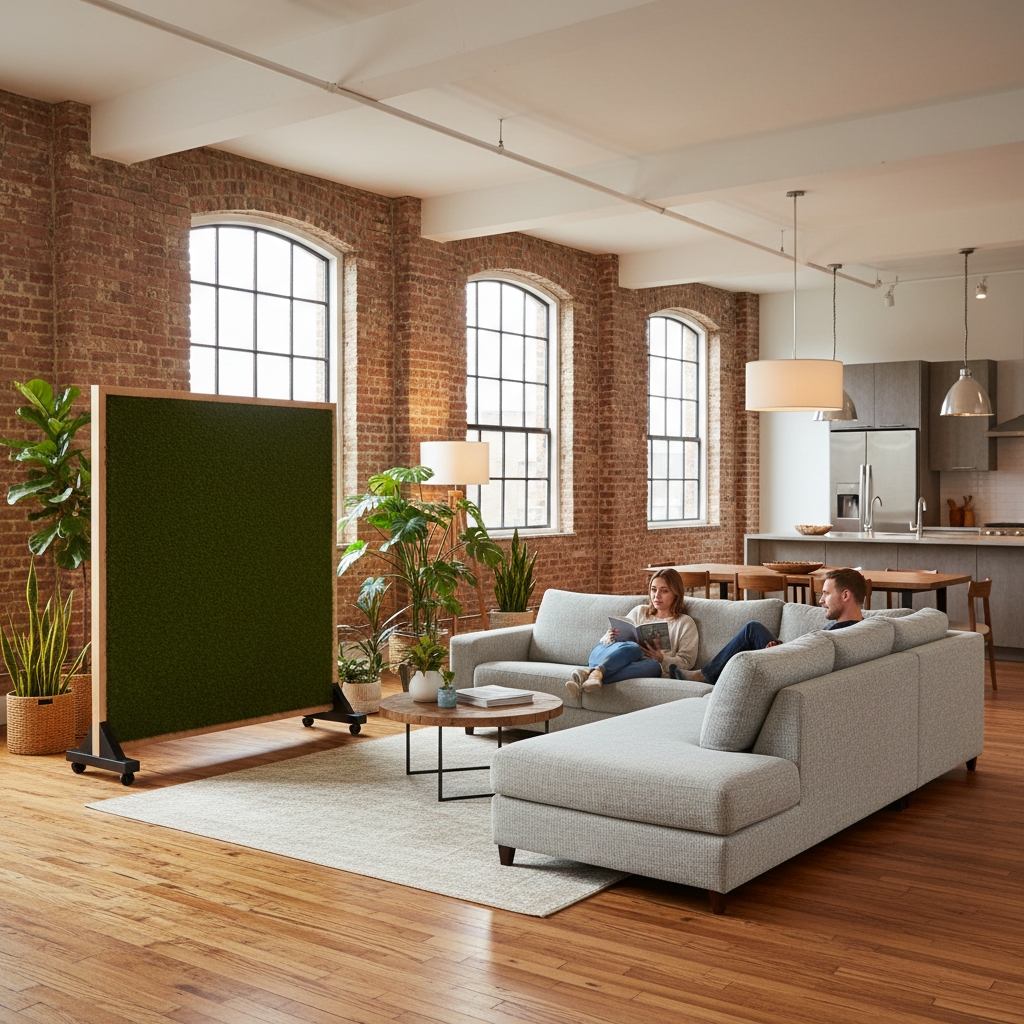
Create wooden or metal frames and staple artificial grass onto both sides to form freestanding panels. Frame widths of 2–3 inches provide stability, and adding felt pads or rubber feet protects floors. These panels are perfect for living-dining separations and can be linked together for a continuous green wall.
2. Rolling Turf Screens (Mobile Dividers)
Attach turf to lightweight plywood or foam board mounted on caster wheels. Rolling screens are ideal for renters or flexible layouts—roll them away when you want an open plan. Use locking casters for stability when stationary.
3. Hanging Turf Curtains
For minimal floor disruption, install a ceiling-mounted curtain track and hang turf panels with grommets or loops. This creates a soft, semi-transparent partition that can be drawn open or closed. Use thicker backing to avoid excess sagging.
4. Rustic Wooden Slat Divider with Turf Insets
Combine vertical wooden slats with turf-filled insets for a modern-rustic look. Alternate open slats and grass panels to let light through while still indicating separate zones. This works especially well in lofts and industrial-style interiors.
5. Planter-Integrated Turf Wall
Mount turf panels onto a shallow frame that includes planters at the base. Use real or faux potted plants to add depth and varied foliage textures. The turf backdrop unifies the look and hides watering drips or soil stains.
6. Acoustic Turf Partition
For shared apartments or work-from-home spaces, sandwich a layer of acoustic foam between two turf panels. The combination reduces noise transfer while delivering a lush visual barrier. Use fire-rated acoustic materials if required in commercial spaces.
7. Folding Turf Screen
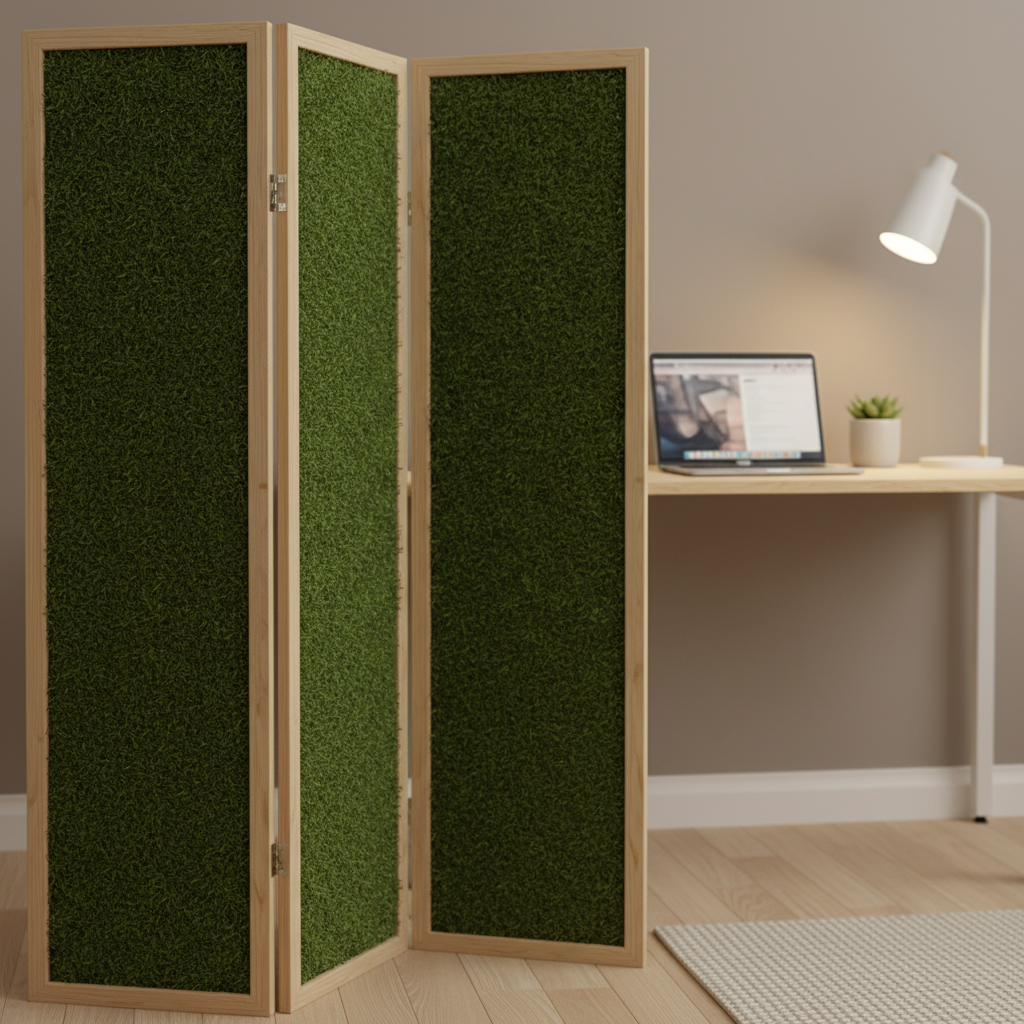
Create a multi-panel folding screen similar to traditional Japanese byōbu. Hinges connect lightweight frames covered with turf, allowing you to fold and reposition the divider as needed. This is a compact solution for small open-plan studios.
8. Suspended Grid Panels with Turf Squares
Build a metal or wooden grid and inset turf squares into each cell. Suspended from the ceiling, this option partitions a room without occupying floor space. The grid permits airflow and light to pass while providing a striking architectural element.
9. Balcony-to-Living Room Visual Buffer
If your living area opens to a balcony or large window wall, place a turf divider near the threshold to define the indoor living zone. This can be low enough to preserve sightlines while creating a psychological separation between zones.
10. Artful Turf Mural Divider
Turf isn’t limited to uniform green. Mix turf shades, pile lengths, and trimmed shapes to create a mural or geometric pattern on a partition. This turns your room divider into a focal artwork and conversation piece.
Step-by-Step DIY: Make a Simple Freestanding Turf Panel
Tools and materials:
- 1/2″ plywood sheet cut to preferred panel size
- Artificial grass roll (oversized by 2–3 inches per side)
- Staple gun and galvanized staples
- Sandpaper, wood stain or paint (optional)
- Felt pads or rubber feet
- Sand and finish the plywood edges to prevent splinters. Stain or paint if desired and let dry.
- Lay the turf face down on a flat surface, then place the plywood on top, centered.
- Fold the turf edges around the plywood, pulling taut, and staple along the back edge every 2–3 inches.
- Trim any excess turf and attach felt pads or rubber feet to protect floors. For added weight stability, secure a thin strip of metal or wooden foot along the base back edge.
Styling Tips: How to Make Turf Dividers Look Intentional
- Mix textures: pair turf with smooth metals, ceramics, or woven textiles to avoid a “fake” look.
- Add lighting: uplights or LED strips on the top edge emphasize the green texture and create ambience at night.
- Layer with plants: real plants in front of turf make the composition feel natural and grounded.
- Use complementary colors: warm wood tones or neutral greys prevent the green from looking overly saturated.
- Scale to space: taller, wider panels create more privacy; smaller panels are better for subtle zoning.
Practical Considerations: Safety, Maintenance, and Durability
Maintenance:
- Regular vacuuming or brushing removes dust and debris. Use a soft-bristle brush to maintain pile direction.
- Spot-clean spills with a mild detergent and water; rinse and blot dry. Avoid harsh chemicals that could damage backing.
- For outdoor-exposed indoor spaces (near balcony), choose UV-resistant turf rated for exterior use to avoid fading.
Safety and building rules:
- Check local building codes and rental agreements before making structural changes such as ceiling mounts.
- Use non-toxic, flame-retardant materials where required—especially in shared or commercial spaces.
- When anchoring heavy pieces, use appropriate hardware for drywall, masonry, or ceiling joists to avoid accidents.
Cost Guide and Where to Buy
Costs vary by quality and size. Expect the following ranges:
- Economy turf rolls: $5–$12 per square foot (thinner pile, lower durability).
- Mid-range turf: $12–$25 per square foot (better feel, UV-stable options).
- High-end artificial turf: $25+ per square foot (realistic fibers, heavier backing, specialized warranties).
- Pre-made panel screens: $100–$600 depending on size, materials, and mobility features.
You can purchase turf and materials at home improvement stores, specialty artificial grass retailers, or online suppliers. When comparing, request samples to evaluate pile texture, color, and backing quality.
Room-by-Room Ideas
Living Room
Use a mid-height turf panel to delineate seating from an open dining area while preserving sightlines. Anchor the divider behind a sofa or console table for a cohesive look.
Home Office
Place a turf-backed screen behind your desk as a feature wall to reduce screen glare and add a calm background for video calls. Combine with sound-absorbing panels if acoustics are a priority.
Dining Area
Create an intimate dining nook by positioning a curved turf panel that wraps around the table. A low, semi-circular shape retains openness while marking a defined space.
Studio or Loft
In large lofts, suspended grid panels with turf insets can segment sleeping and living zones without building permanent walls, maintaining airflow and natural light.
Eco Notes: Sustainability and Recycling
Artificial turf is a synthetic product, so consider sustainability choices carefully:
- Choose recyclable or partially recycled turf options when available.
- Buy durable, high-quality turf to avoid frequent replacement.
- When replacing, check local recycling programs or manufacturers that offer take-back services.
Inspiration and Further Reading
If you’re looking for more room-divider ideas and professional styling tips, lifestyle magazines and home design sites offer a wealth of examples and case studies. Better Homes & Gardens is a helpful resource for room layout and divider inspiration: Better Homes & Gardens.
Frequently Asked Questions (FAQs)
Is artificial grass safe to use indoors?
Yes—most modern indoor-rated artificial grass products are non-toxic and safe when properly installed. Choose products without harmful volatile organic compounds (VOCs) and verify any flame-retardant or fire-safety ratings if needed.
Will artificial turf retain dust or odors?
Like any fabric or carpet, turf can collect dust over time. Regular vacuuming or brushing prevents buildup. For pet areas, choose turf with antimicrobial backing and rinse regularly to avoid odors.
How do I attach turf to a divider without damaging walls?
Freestanding frames, tension rods, or ceiling-mounted tracks minimize wall damage. If you must affix to a wall, use removable hook systems or secure to studs. For renters, consider mobile screens or hanging systems that use existing ceiling tracks.
Can I combine real plants with a turf divider?
Absolutely—real plants soften the synthetic appearance and create a lush, layered effect. Use planters with trays to catch water and protect the turf backing from moisture damage.
How long does indoor artificial grass last?
With proper care, indoor artificial turf can last 10+ years. Lifespan depends on pile quality, traffic levels, and maintenance routines.
Final Thoughts
Artificial grass room dividers for open spaces are a versatile, design-forward way to carve out functional zones while bringing a hint of the outdoors inside. From DIY freestanding panels to suspended grid systems, there’s a solution to suit every layout, style, and budget. Prioritize material quality, plan your installation carefully, and use styling details like lighting and plants to make the divider feel intentional rather than an afterthought.
If you’d like more guidance on adapting these ideas to your floor plan or need a step-by-step material list for a specific divider project, explore further resources or practical how-to guides to help you get started.
👉 internal link (https://mdasid.org/) How to Design A Comfortable Modern Living Space