From simple fixes like a tripped circuit breaker to more complex issues requiring professional attention, understanding the potential problems is the first step towards a solution. We’ll empower you with the knowledge to diagnose the problem and decide when it’s time to call in a qualified electrician.
Understanding Your Bathroom Fan and Light System
Most modern bathroom fan and light units are integrated, meaning they share the same electrical wiring and often, the same switch. This is why when one stops working, the other often follows suit. Power flows from your home’s electrical panel, through a circuit breaker, to the switch, and then to the fan/light unit. Any interruption along this path can cause a loss of power.

Common Reasons Your Bathroom Fan and Light Are Losing Power
Diagnosing the problem begins with identifying the most likely culprits. Here are the common reasons you might be experiencing a loss of power to your bathroom fan and light:
-
Tripped Circuit Breaker
This is often the first and simplest thing to check. Circuit breakers are safety devices designed to “trip” and cut off power when they detect an overload or a short circuit, preventing damage to your wiring and appliances. A bathroom circuit can easily become overloaded if too many high-wattage appliances (like hair dryers, curling irons, or even a space heater) are used simultaneously, or if the fan or light unit itself develops an internal fault.
-
Tripped GFCI Outlet
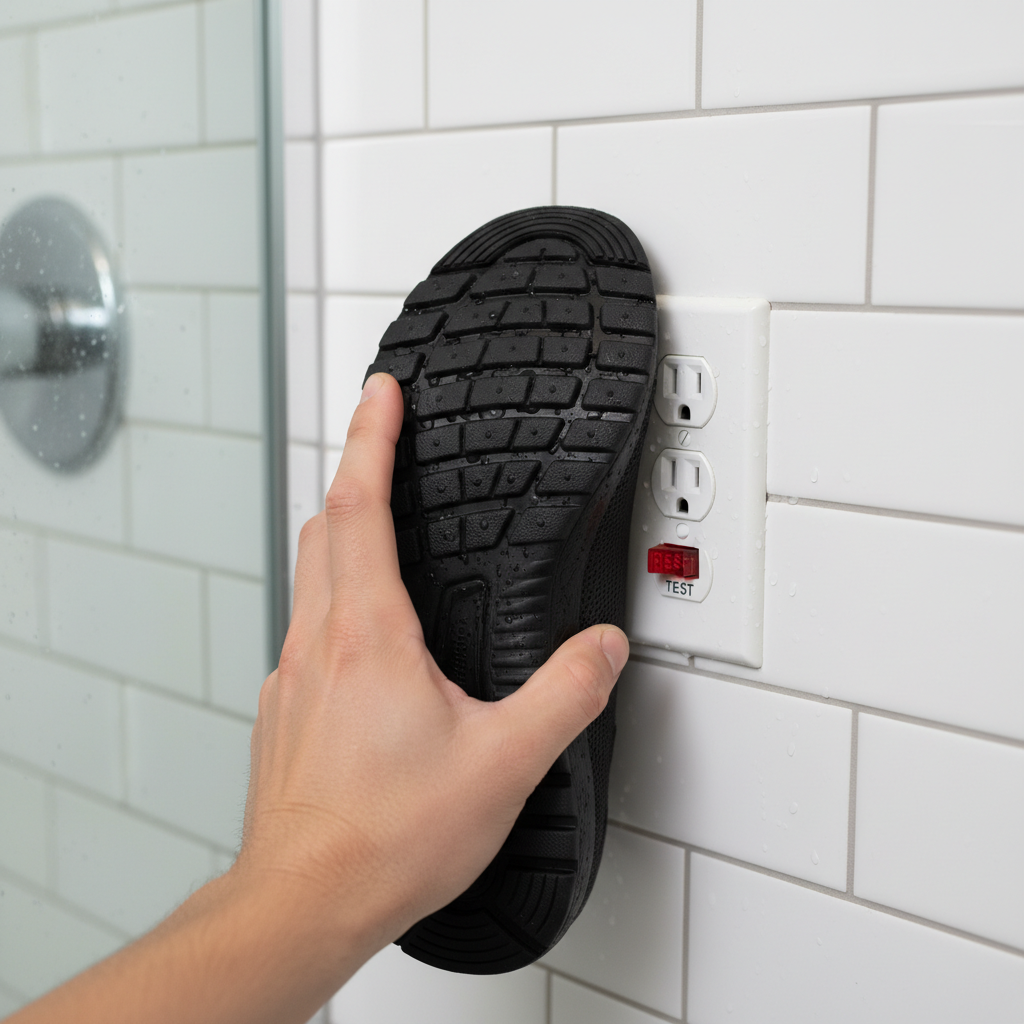
Bathrooms are typically equipped with Ground Fault Circuit Interrupter (GFCI) outlets for safety, which protect against electric shock in damp environments. If your bathroom fan and light are wired through a GFCI-protected circuit (which can include not just outlets but also other fixtures on that circuit), a tripped GFCI can cut power to the fan and light, even if they aren’t directly plugged into the outlet. This often happens if there’s any moisture ingress or a minor electrical fault.
-
Faulty Wall Switch
The wall switch is a mechanical component that can wear out over time. Internal contacts can become corroded, loose, or even break, preventing power from reaching the fan and light unit. If the switch feels loose, hot, or doesn’t click definitively, it might be the problem.
-
Burned-Out Light Bulb
While seemingly obvious, a burned-out light bulb can sometimes be mistaken for a broader power issue, especially if the fan is also not working. In some integrated units, a failing or incorrect bulb might even temporarily affect the fan’s operation or create a perceived loss of power. Always check the bulb first.
-
Loose Wiring Connections
Over time, vibrations, temperature changes, or even improper installation can cause electrical wires to become loose at connection points – inside the switch box, at the fixture itself, or within junction boxes. A loose connection can lead to intermittent power or a complete loss of power.
-
Motor Failure or Fan Impeller Issues
The fan’s motor is a mechanical component with a finite lifespan. If the motor fails, it won’t be able to turn the fan blades (impeller). Sometimes, dust and debris can clog the motor or jam the impeller, preventing it from spinning and potentially causing the motor to overheat and shut down. A burning smell or a loud humming noise followed by silence are common indicators of motor trouble.
-
Moisture or Corrosion Damage
Bathrooms are high-humidity environments. Over time, moisture can seep into electrical components, leading to corrosion on wires, terminals, and switch contacts. This corrosion can impede electrical flow, causing intermittent or complete power loss. This is a serious safety concern as it can lead to short circuits.
-
Damaged Wiring
Less common but more serious, wiring within the walls or ceiling can be damaged by pests (like rodents), accidental punctures during renovations, or simply degrade over many decades. Damaged wiring can cause shorts, leading to power loss and potential fire hazards.
-
Integrated Unit Failure
Sometimes, the entire fan and light unit itself might have an internal electrical fault or component failure that prevents it from drawing power correctly or functioning at all. This is more common in older or lower-quality units.
Safety First: Crucial Steps Before Troubleshooting
Before you attempt any troubleshooting or repairs on electrical components, safety must be your absolute priority. Ignoring these steps can lead to severe injury or even fatality.
- Turn Off the Power at the Breaker: Locate your home’s main electrical panel (usually in the basement, garage, or a utility closet). Find the circuit breaker labeled for your bathroom (or the general bathroom/bedroom circuit if specific labels are absent). Flip the breaker to the “OFF” position. If you’re unsure, or if your labels are unclear, it’s safest to turn off the main breaker for your entire home.
- Verify Power is Off: Use a non-contact voltage tester to confirm that there is no power at the light fixture, fan, and switch before touching any wires.
- Work in a Well-Lit Area: If you’ve turned off the power, use a flashlight or portable work light.
- Never Work on Live Wires: This cannot be stressed enough. Always assume wires are live until you have personally verified they are not.
- Wear Protective Gear: Rubber-soled shoes, safety glasses, and electrical-rated gloves are recommended.
- When in Doubt, Call a Professional: If you are uncomfortable or unsure at any point, do not proceed. Electrical work can be dangerous and is best left to licensed electricians. For more comprehensive electrical safety guidelines in your home, consult resources from trusted experts such as Good Housekeeping.
Step-by-Step Troubleshooting Guide for Your Bathroom Fan and Light
Once you’ve ensured the power is off, you can begin to systematically troubleshoot the issue. Start with the easiest and most common fixes and work your way to the more involved ones.
Step 1: Check Your Electrical Panel for a Tripped Breaker
- Go to your electrical service panel.
- Look for any circuit breakers that are in the “OFF” position or are “tripped” (often halfway between ON and OFF, or slightly off-center).
- To reset a tripped breaker, push it firmly to the full “OFF” position first, then push it back to the full “ON” position.
- If the breaker immediately trips again, there’s a serious underlying issue like a short circuit or overload. Do NOT repeatedly reset it. Call an electrician.
Step 2: Reset Any GFCI Outlets in the Bathroom
- Locate all GFCI outlets in your bathroom. They are identifiable by their “TEST” and “RESET” buttons.
- Even if your fan/light isn’t plugged into an outlet, it might be on the same GFCI-protected circuit.
- Press the “RESET” button firmly on each GFCI outlet. If it doesn’t click and stay in, or if it immediately trips again, there could be a ground fault issue on the circuit.
Step 3: Replace the Light Bulb
- With power OFF, carefully remove the old light bulb from the fixture.
- Inspect the socket for any signs of corrosion or damage.
- Insert a new bulb of the correct type and wattage.
- Restore power at the breaker and test the light and fan.
Step 4: Inspect and Test the Wall Switch
This step requires caution as you’ll be exposing electrical wires. Ensure power is OFF at the breaker.
- Carefully remove the cover plate from the light switch.
- Gently pull the switch out from the wall box.
- Visually inspect the wiring connections. Are they tight? Are any wires frayed, burnt, or disconnected?
- If you have a multimeter or voltage tester, you can test the switch for continuity (after disconnecting it from the circuit and verifying no power). A faulty switch will show no continuity when toggled “ON.”
- If wires are loose, and you’re comfortable, gently tighten them. If the switch appears damaged or fails a continuity test, it needs to be replaced.
- Reinstall the switch, replace the cover plate, restore power, and test.
Step 5: Examine the Fan/Light Unit’s Wiring and Components
Again, ensure power is OFF at the breaker.
- Remove the cover plate from the fan/light unit (usually by pinching springs or unscrewing fasteners).
- If applicable, remove the light globe and bulb.
- Look for any visible loose wires where the unit connects to your home’s wiring.
- Inspect for signs of burning, corrosion, or moisture within the unit.
- Check the fan’s motor for obstructions (dust, debris) that might prevent the impeller from spinning. Gently clean any blockages.
- If the motor smells burnt or makes grinding noises when you try to manually spin the impeller, it might be failing.
- If you see extensive corrosion, burnt wires, or the unit appears water damaged, it’s best to replace the entire fixture or call an electrician.
- Carefully reassemble, restore power, and test.
Step 6: Listen to the Fan Motor (If Partially Working)
If your fan makes a humming noise but doesn’t spin, the motor might be trying to work but is obstructed or failing. If it’s silent, it’s likely a power issue or a completely dead motor. If the fan spins slowly or noisily, it could be bearings wearing out or dirt accumulation.
When to Call a Professional Electrician
While some issues are straightforward DIY fixes, many electrical problems are best left to licensed professionals. You should call an electrician if:
- The circuit breaker repeatedly trips: This indicates an underlying and potentially dangerous electrical fault.
- GFCI outlets keep tripping: Persistent GFCI trips signal a persistent ground fault, which needs professional diagnosis.
- You smell burning, see smoke, or sparks: These are immediate signs of a serious electrical hazard. Turn off the main power to your home immediately and call an emergency electrician.
- You find corroded or damaged wiring: Repairing or replacing damaged wiring requires expertise and specialized tools.
- You’re uncomfortable or unsure at any step: Your safety is paramount. If any part of the troubleshooting process feels beyond your skill level, don’t hesitate to call an expert.
- After trying basic troubleshooting, the problem persists: This suggests a more complex issue, possibly hidden within walls or involving internal unit failure.
Preventative Maintenance Tips for Your Bathroom Fan and Light
A little preventative care can go a long way in avoiding future power loss issues and prolonging the life of your bathroom fixtures.
- Regular Cleaning: Once or twice a year, remove the cover of your exhaust fan and gently vacuum or wipe away dust and debris from the grille, fan blades, and motor housing. This prevents clogs and reduces strain on the motor.
- Check for Moisture: Periodically inspect the area around your fan and light for any signs of water stains, condensation, or leaks. Address any moisture issues promptly to prevent corrosion and electrical hazards. Ensure proper ventilation is maintained.
- Avoid Overloading Circuits: Be mindful of how many high-wattage appliances you use on a single bathroom circuit. Plug hair dryers, straighteners, and space heaters into different outlets or circuits if possible, or use them one at a time.
- Use Correct Bulb Wattage: Always use light bulbs that match the recommended wattage for your fixture. Over-wattage bulbs can overheat the unit and strain the electrical system.
- Listen and Look: Pay attention to any unusual noises (grinding, squealing) coming from the fan or flickering lights. These can be early warning signs of impending failure.
Frequently Asked Questions About Bathroom Fan and Light Power Loss
Q1: Why did my bathroom fan and light stop working suddenly?
A sudden stoppage often points to a tripped circuit breaker, a tripped GFCI outlet, a faulty wall switch, or a completely burned-out light bulb (if the fan is also integrated and affected). Less commonly, it could be a sudden motor failure or a loose wire connection.
Q2: Can a burned-out light bulb affect the bathroom exhaust fan?
In some integrated fan/light units, yes. If the light and fan are wired in series or if a short occurs within the light fixture portion, it could potentially prevent the fan from receiving power. It’s always a good idea to replace the bulb first.
Q3: My bathroom fan hums but doesn’t spin. What does that mean?
A humming fan motor that isn’t spinning usually indicates that the motor is receiving power but something is preventing the fan blades (impeller) from rotating. This could be due to an accumulation of dust and debris, a jammed impeller, or a failing motor bearing. Turn off power, clean the unit, and if the issue persists, the motor may need replacement.
Q4: How do I know if my bathroom switch is faulty?
Signs of a faulty switch include a lack of a definitive “click” when flipped, feeling loose, visible damage, or if it feels warm to the touch (which is a serious warning sign). A multimeter can also be used to test for continuity when the switch is in the “ON” position (with power off and switch disconnected).
Q5: Is it safe to try and fix electrical problems myself?
Only if you are confident in your abilities, understand basic electrical safety, and have verified the power is off at the circuit breaker. For anything beyond checking breakers, GFCI outlets, and light bulbs, or if you feel uncomfortable, it is always safest to call a licensed electrician. Electrical work carries significant risks if not done correctly.
Conclusion
A bathroom fan and light losing power can be an irritating inconvenience, but with a systematic approach and a strong emphasis on safety, many common issues can be diagnosed and resolved. By understanding the potential causes, following our step-by-step troubleshooting guide, and knowing when to call in a professional, you can effectively restore functionality to your bathroom and ensure a comfortable, well-ventilated, and well-lit space. Remember, when in doubt, never compromise on safety – professional help is always the best solution for complex electrical issues.