The Power of Reflection: Why Mirrors Are a Small Living Room’s Best Friend
Mirrors have been utilized in interior design for centuries, not just for personal grooming but for their inherent ability to manipulate light and space. In a small living room, their impact is particularly profound:
- Illusion of Depth and Space: By reflecting the room itself, a mirror tricks the eye into perceiving a continuation of space beyond its physical boundaries. This creates an immediate sense of openness and prevents the room from feeling cramped.
- Light Amplification: Mirrors are masters at bouncing light around a room. Whether reflecting natural daylight from a window or artificial illumination from a lamp, they enhance brightness, making the room feel airier and more vibrant. This is especially beneficial in small living rooms that may lack abundant natural light sources.
- Adding Visual Interest: A well-chosen mirror, with its unique frame or shape, can serve as a stunning focal point, drawing the eye and adding a layer of sophisticated design. They can be artistic statements in their own right, reflecting the beauty of your existing decor.
- Reflecting Desirable Views: Strategically placed, a mirror can capture and “frame” a beautiful view from outside or an attractive piece of artwork within the room, bringing those elements into sharper focus and adding a dynamic quality to the space.
Strategic Mirror Placement for Maximum Impact
The magic of mirrors in small living rooms isn’t just about having one; it’s about intelligent placement. The ‘where’ is just as important as the ‘what’.
Opposite a Window: Maximizing Natural Light
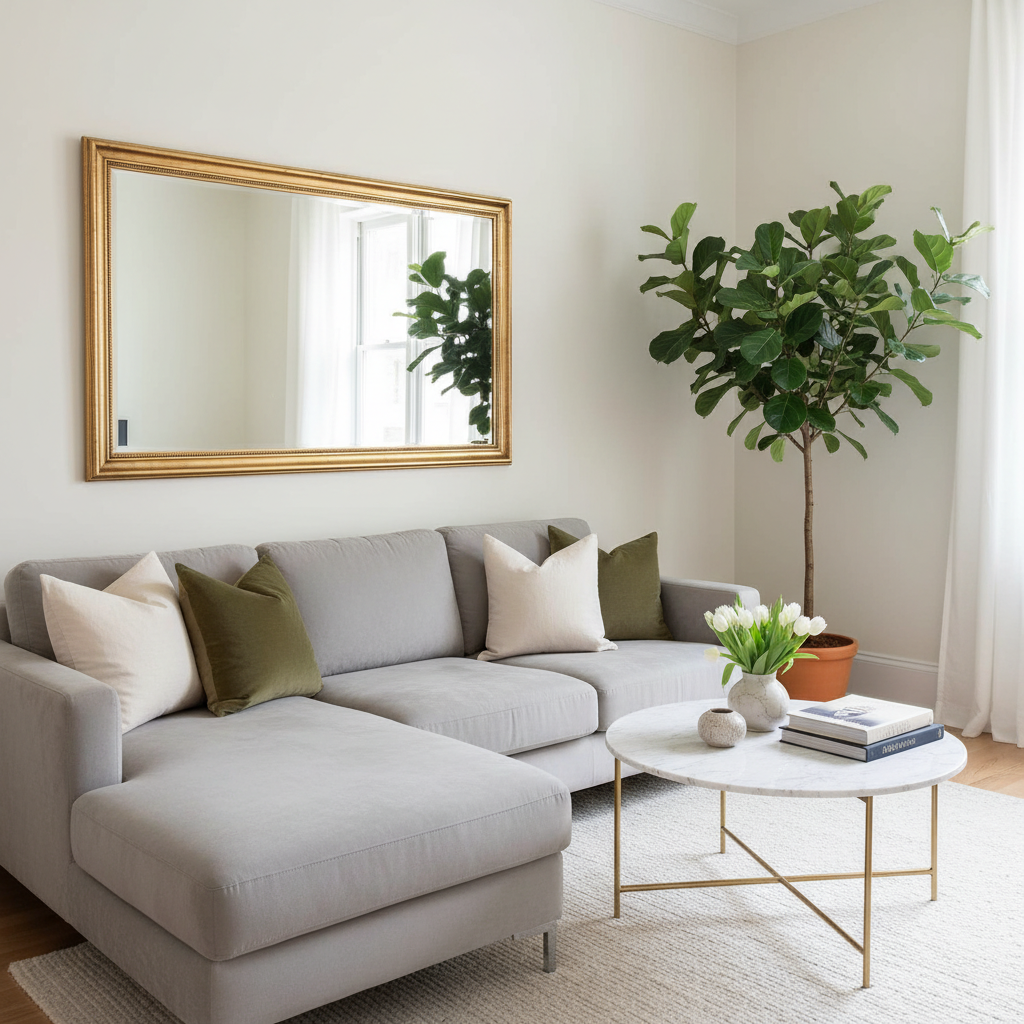
This is arguably the most classic and effective trick in the book. Placing a large mirror directly across from a window allows it to capture and reflect all the incoming natural light, essentially doubling the brightness in the room. This also reflects the outdoor view, bringing a sense of nature and openness indoors, making the small living room feel less confined. When considering this placement, evaluate what the mirror will reflect. Ideally, it should be a pleasant view or a source of light, not an unsightly wall or an untidy corner.
Behind Furniture: Creating Depth
Mounting a mirror behind a key piece of furniture, such as a sofa, a console table, or even a bookshelf, can instantly add depth and dimension. For example, a large mirror behind a sofa can make the seating area feel more expansive without adding physical bulk. This technique works particularly well with leaner, more open-backed furniture that doesn’t completely obstruct the mirror’s surface.
Above a Fireplace or Console: Focal Point Magic
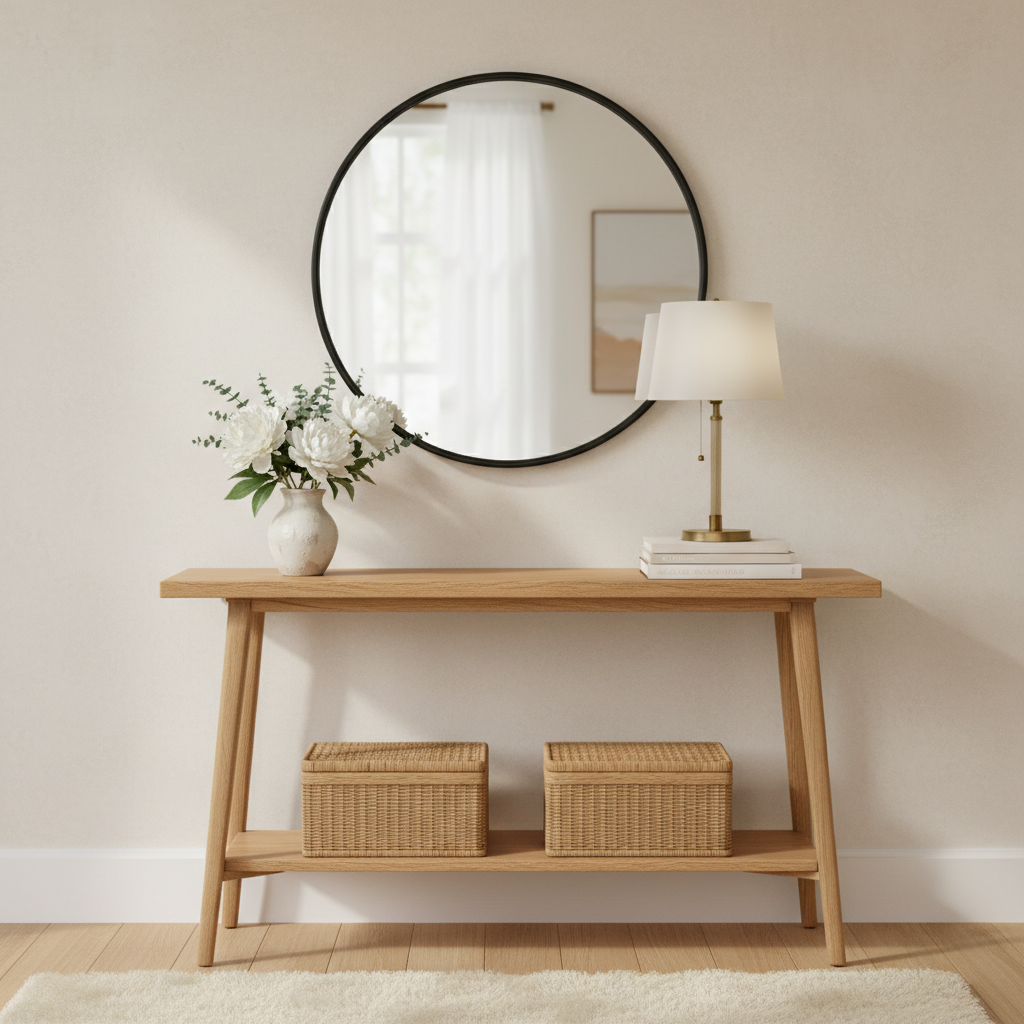
If your small living room has a fireplace, a large mirror above the mantelpiece is a timeless design choice. It creates an instant focal point, drawing the eye upwards and giving the illusion of higher ceilings. Similarly, placing a decorative mirror above a stylish console table or a compact credenza can serve the same purpose, anchoring the wall and adding visual weight to that area. This arrangement is also ideal for reflecting light from lamps or other decorative elements placed on the console.
Gallery Walls: A Reflective Twist
Instead of a traditional gallery wall featuring only framed artwork, consider incorporating mirrors of various shapes and sizes. This creates a dynamic and reflective display that not only adds personality but also amplifies light and space in a less conventional way. Mix framed mirrors with unframed ones, or combine different frame styles to create an eclectic yet cohesive look. This approach can be particularly effective in breaking up a long, narrow wall in a small living area.
Corner Placement: Softening Angles
Small rooms often feel boxy. Placing a tall, slender mirror in a corner can help to soften sharp angles and create a more fluid transition between walls. This can be a particularly effective trick in a small living room where every inch matters. A floor-length mirror leaning in a corner also offers a casual elegance while still providing the reflective benefits.
Choosing the Right Mirror Style and Size
Once you’ve decided on placement, the next step is selecting the perfect mirror. The style, size, and shape all contribute significantly to the overall aesthetic and spatial illusion.
Large Statement Mirrors: Bold and Beautiful
Don’t be afraid to go big, even in a small space. A single, large mirror can often be more impactful than several smaller ones. A floor-length mirror leaned against a wall or a substantial framed mirror hung prominently can make a small living room feel grander and more luxurious. The key is to ensure it doesn’t overwhelm the space but rather enhances it by reflecting a significant portion of the room or an appealing view.
Multi-Panel or Mirrored Furniture: Subtle Reflections
For those who prefer a more subtle approach, consider multi-panel mirrors or furniture pieces that incorporate mirrored surfaces. A screen with mirrored panels can be used to zone off areas or add a decorative element, while a mirrored coffee table or end table can reflect light and add sparkle without being overtly dominant. These pieces blend functionality with reflective properties, making them excellent choices for small living room mirror ideas.
Frame Styles: From Minimalist to Ornate
The frame of your mirror plays a crucial role in defining its style and how it integrates with your existing decor.
- Minimalist or Frameless: These are perfect for contemporary or minimalist spaces, allowing the reflection itself to be the main focus. They offer a sleek, unobtrusive look that can make a room feel clean and uncluttered.
- Ornate or Vintage: A beautifully carved or antique frame can add character, history, and a touch of drama, especially if you want to introduce a touch of bohemian or classical elegance. These work well as focal points.
- Industrial or Rustic: Metal, wood, or distressed frames can complement industrial-chic or farmhouse aesthetics.
Choose a frame that either blends seamlessly with your existing decor or provides a deliberate contrast for an interesting design statement.
Proportionality: Finding the Right Balance
While a large mirror can be effective, ensure its size is proportionate to the wall it’s on and the furniture around it. A mirror that’s too small will look lost, while one that’s excessively large can feel disproportionate. A good rule of thumb is for the mirror to be roughly two-thirds the width of the furniture piece below it, such as a sofa or console, or to fill a significant portion of the wall space without looking cramped.
Beyond the Wall: Creative Mirror Applications
Mirrors aren’t limited to being hung on walls. There are many inventive ways to incorporate their reflective qualities into your small living room’s design.
Mirrored Tabletops and Trays
A coffee table or side table with a mirrored top can subtly reflect light and decor, adding a touch of glamour without occupying additional wall space. Similarly, mirrored trays on ottomans or consoles can serve as stylish bases for decorative objects, enhancing their sparkle and presence.
Mirrored Cabinet Doors
For built-in cabinetry or standalone storage units in a small living room, consider doors with mirrored panels. This not only makes the furniture blend more seamlessly into the room but also adds the reflective quality without needing a separate mirror piece. It’s a clever way to integrate storage and spatial illusion.
Decorative Mirrored Accents
Small, decorative mirrored accents, such as a mirrored clock, a collection of tiny mirrored tiles, or even reflective mosaic elements on other decor pieces, can add unexpected pops of light and interest throughout the room. These are particularly useful for filling awkward spaces or adding detail to shelves and bookcases.
Integrating Mirrors with Other Small Space Design Principles
Mirrors are powerful, but they work best when integrated with a holistic approach to small space design. Consider these synergistic strategies:
Color Palette Coordination
Light colors – whites, creams, soft grays, and pastels – naturally make a room feel more open and airy. When combined with mirrors, this effect is amplified significantly. The mirrors reflect these light hues, bouncing them around the room and reinforcing the spacious illusion. Darker colors can be used as accents, but a predominantly light color scheme will maximize the mirror’s impact.
Furniture Selection and Layout
Opt for furniture that is appropriately scaled for your small living room. Pieces with exposed legs, transparent materials (like glass or acrylic), or those with multiple functions (e.g., an ottoman with storage) can help maintain an open feel. Arrange furniture to allow clear sightlines to your strategically placed mirrors, ensuring their reflective magic isn’t obstructed. Minimalist layouts often benefit the most from mirror placement, as there’s less clutter to reflect.
Lighting Strategies
Beyond reflecting natural light, mirrors can dramatically enhance artificial lighting. Place lamps or sconces near mirrors to double their glow and create a warmer, more inviting ambiance. Uplighting aimed at a mirror can add dramatic height, while sconces flanking a mirror create a classic, balanced look. Combining these elements contributes significantly to a cozy yet spacious feel.
Decluttering and Organization
It’s crucial to remember that mirrors reflect everything, including clutter. In a small living room, an untidy space reflected in a mirror will only make the room feel more chaotic and smaller. Therefore, maintaining a tidy and organized environment is paramount when incorporating mirrors. Embrace storage solutions and a minimalist approach to accessories to ensure your reflections are always of an appealing, uncluttered space. According to Good Housekeeping, strategic storage and decluttering are key to maximizing any small area.
Maintenance and Safety Tips for Mirrors
To ensure your mirrors continue to enhance your small living room safely and effectively, keep these tips in mind:
Cleaning Your Mirrors
For streak-free shine, use a microfiber cloth and a dedicated glass cleaner or a solution of water and white vinegar. Wipe in a consistent direction and buff dry immediately. Regular cleaning will keep your mirrors looking pristine and maximize their light-reflecting properties.
Secure Installation
Especially for large or heavy mirrors, secure installation is non-negotiable. Use appropriate wall anchors for the weight of the mirror and the type of wall (e.g., drywall, plaster, masonry). If leaning a large mirror, ensure it is stable and perhaps secured with a safety strap to prevent accidental tipping, especially in homes with children or pets.
Considering Reflective Glare
While mirrors enhance light, be mindful of potential glare. Avoid placing a mirror where it directly reflects harsh sunlight into a seating area or onto a TV screen, which could cause discomfort. Adjust placement or consider adding sheer curtains to windows if glare becomes an issue.
Frequently Asked Questions About Mirrors in Small Living Rooms
Can a mirror truly make a small room look bigger?
Yes, absolutely. Mirrors create an optical illusion of depth and space by reflecting the room, making it appear as though the area extends beyond its physical boundaries. They also amplify light, which contributes to a more open and airy feel.
Where is the best place to hang a mirror in a small living room?
The most effective spot is typically opposite a window to maximize natural light and reflect an outdoor view. Other excellent locations include behind a sofa or console table to add depth, or above a fireplace to create a strong focal point.
What size mirror is best for a small space?
Often, a single large mirror can be more effective than several small ones, as it creates a more significant, uninterrupted illusion of space. However, ensure it is proportionate to the wall and furniture; it shouldn’t overwhelm the room. Floor-length mirrors or those covering a significant portion of a wall are excellent choices.
Should I use multiple mirrors in a small living room?
You can, but it requires careful consideration. A gallery wall incorporating mirrors can be effective, but too many mirrors can create a fragmented or disorienting effect. Focus on strategic placement of one or two key pieces, or use mirrored accents, rather than scattering many small mirrors without purpose.
Are there any downsides to using mirrors in small spaces?
The main potential downside is that mirrors reflect everything. If your room is cluttered, the mirror will magnify that clutter, making the space feel even smaller and more chaotic. Additionally, poor placement can lead to undesirable reflections (e.g., a messy corner) or create glare from direct sunlight.
Conclusion: Reflecting Your Style in Every Small Space
When it comes to home design ideas for small living rooms mirrors are an indispensable tool in your decorating arsenal. They offer a simple yet powerful way to overcome the challenges of limited square footage, transforming cramped areas into bright, expansive, and inviting spaces. By carefully considering placement, style, and integration with other design elements, you can unlock the full potential of your small living room, creating an environment that feels both spacious and deeply reflective of your personal style. Embrace the illusion, and watch your small living space expand before your very eyes.