Understanding Warping: What Exactly Happens to Your Deck Boards?
Warping is a general term encompassing various forms of distortion that can affect wooden deck boards. Each type of warp presents a unique challenge and often stems from specific environmental factors or installation issues. Recognizing these different forms is the first step toward effective prevention and repair.
Cupping
Cupping occurs when the edges of a deck board rise higher than its center, creating a concave, trough-like shape. This is typically caused by a moisture imbalance where one side of the board (usually the top, exposed side) dries out faster or gets wetter than the other side (the underside, which might retain more moisture). The differential in moisture content causes the wood fibers to shrink or swell unevenly.
Crowning
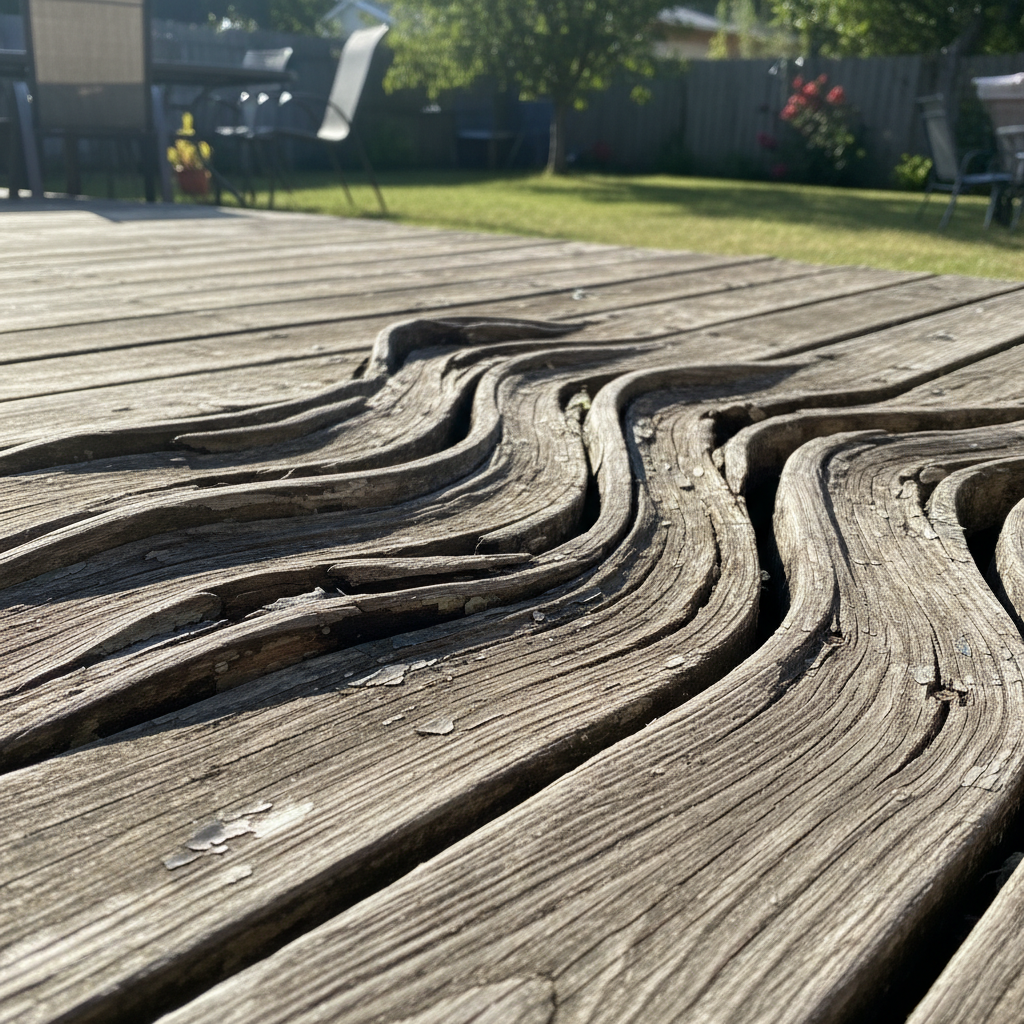
Crowning is the opposite of cupping. In this scenario, the center of the deck board rises, while the edges remain lower, forming a convex, dome-like shape. Crowning is less common than cupping but can still occur due to uneven moisture exposure or improper installation where the board is installed “bark side up” (more on this later).
Twisting
Twisting involves a rotational distortion along the length of the board. This is a more complex type of warping where the board turns along its longitudinal axis, making it difficult to walk on and nearly impossible to secure flush to the joists. Twisting often results from uneven drying within the wood’s grain or from internal stresses inherent in the lumber.
Bowing
Bowing refers to the curvature along the length of a board. A bowed board will curve upward or downward from one end to the other, resembling a gentle arc. This usually happens when one side of the board dries or shrinks more rapidly than the other, or if the board experiences sustained pressure or moisture on one side only.
Splitting and Checking
While not strictly “warping,” splitting and checking often accompany or are exacerbated by the same conditions that cause warping. Splits are larger separations in the wood grain, often running the entire length or width of the board. Checks are smaller, often superficial cracks on the surface. Both are typically caused by rapid drying and shrinking of the wood, especially at the ends of boards, as moisture escapes unevenly.
The Root Causes of Deck Board Warping
Understanding the “why” behind deck boards warping is essential for both prevention and repair. Most warping issues can be traced back to a handful of primary culprits, often working in conjunction.
Moisture Imbalance: The Primary Culprit
Wood is a hygroscopic material, meaning it absorbs and releases moisture from its environment. This natural process is the single biggest factor in warping. When moisture content changes unevenly, stress builds within the wood fibers, leading to distortion.
Uneven Drying and Wetting
When one side of a deck board is consistently wetter or drier than the other, problems arise. For instance, the top surface of your deck is exposed to sun and rain, drying out faster after a downpour, while the underside remains shaded and perhaps in contact with lingering moisture from the ground or poor ventilation. This differential causes the exposed side to shrink more rapidly than the protected side, leading to cupping.
Poor Drainage and Ventilation
A deck needs proper airflow both above and below. If water pools on the surface due to insufficient slope or if the area beneath the deck lacks adequate ventilation, moisture can become trapped. This keeps the underside of the boards consistently damp, contributing significantly to uneven drying and warping. Consider the spacing between your deck boards; too narrow, and water can’t drain effectively, sitting on the surface and soaking in.
Ground Contact and Sprinkler Systems
Boards that are too close to the ground, or even worse, in direct contact with soil, will absorb ground moisture constantly. Similarly, irrigation systems that spray water directly onto or under the deck can lead to chronic wetting of specific areas, creating a localized moisture imbalance that encourages warping.
UV Exposure and Extreme Temperatures
The sun’s relentless UV rays and fluctuating temperatures also play a significant role in drying out and damaging deck boards. Prolonged exposure to intense sunlight can accelerate the drying process on the top surface of the boards, contributing to the moisture imbalance mentioned above. Rapid temperature changes, especially cycles of freezing and thawing, can cause wood fibers to expand and contract repeatedly, weakening them and making them more susceptible to warping and cracking.
Material Quality and Type
The type and quality of wood you choose for your deck can greatly influence its resistance to warping.
Lumber Grade and Species
Not all wood is created equal. Higher grades of lumber generally have fewer knots and straighter grain patterns, making them less prone to warping. Certain wood species are also naturally more stable and resistant to moisture fluctuations. For example, some exotic hardwoods are renowned for their stability, while common softwoods like pine or spruce can be more prone to warping if not properly treated or installed. Flat-sawn lumber (where the growth rings are visible as wide arches on the board’s face) tends to cup more than quarter-sawn lumber (where rings are parallel to the board’s face).
Composite Decking and Warping
While often marketed as warp-resistant, composite decking (made from a mix of wood fibers and plastic) is not entirely immune. Excessive heat absorption, especially in darker colors, can cause some composite boards to expand, contract, or even warp or bow, particularly if not installed according to manufacturer specifications regarding gapping and fastening. Lower-quality composites might also be more susceptible to these issues.
Improper Installation Techniques
Even the highest quality wood can warp if not installed correctly. Installation mistakes can exacerbate natural tendencies for wood to move.
Incorrect Fastening
Using too few fasteners, incorrect fastener types (e.g., nails instead of screws), or improper fastening techniques (e.g., nails splitting the wood) can all contribute to warping. Fasteners are designed to hold the boards securely to the joists, resisting the forces that cause warping. If boards are not adequately secured, they are free to move and distort.
Insufficient Spacing
Leaving insufficient gaps between deck boards prevents proper drainage and airflow, trapping moisture. Wood naturally expands when wet and contracts when dry. Without adequate spacing, boards can push against each other when they expand, leading to buckling, lifting, and eventual warping.
Acclimation Issues
Lumber often arrives at the job site with a higher moisture content than it will have once installed and exposed to the elements. If boards are installed immediately without allowing them to acclimate to the local environment, they will dry and shrink unevenly after installation, leading to warping.
Preventing Deck Board Warping: Proactive Measures
The best way to deal with warped deck boards is to prevent them from warping in the first place. Proactive steps during material selection, installation, and ongoing maintenance can significantly reduce the risk.
Choose the Right Decking Material
Your choice of material is foundational to preventing warping.
High-Quality Lumber
Invest in the best grade of lumber your budget allows. Look for boards with straighter grain and fewer large knots. Cedar and redwood are naturally rot-resistant and relatively stable. Pressure-treated lumber, while prone to initial movement, is treated to resist decay.
Pressure-Treated Wood
Pressure-treated lumber is a popular choice due to its resistance to rot and insects. However, it often comes saturated with chemicals and moisture. It’s crucial to allow pressure-treated boards to acclimate and dry out properly before sealing or staining to prevent severe warping.
Exotic Hardwoods
Species like Ipe, Tigerwood, and Garapa are naturally dense, durable, and highly resistant to moisture and insect damage. They are excellent at resisting warping but come at a higher cost and require specific installation techniques due to their density.
Composite and PVC Decking
While not entirely warp-proof, high-quality composite and PVC (cellular PVC) decking materials offer superior stability compared to traditional wood. They are engineered to be highly resistant to moisture absorption, rot, and insects, significantly reducing the likelihood of warping. Ensure you follow manufacturer guidelines meticulously for installation, especially regarding gapping and fastening, to accommodate thermal expansion and contraction.
Proper Storage and Acclimation
Once you’ve purchased your decking materials, how you store them before installation is critical. Stack boards flat on level ground, elevated on sleepers, and spaced to allow airflow. Cover them to protect from direct sun and rain but avoid sealing them completely, which can trap moisture. Allow them to acclimate to your local climate for several days to a few weeks, depending on the wood type and local humidity.
Meticulous Installation Practices
Even perfectly flat boards can warp if installed improperly. Attention to detail during installation pays dividends.
Correct Fastener Choice and Placement
Use high-quality deck screws (stainless steel or coated to prevent corrosion) rather than nails, as screws provide superior holding power. Pre-drill pilot holes, especially in denser woods, to prevent splitting. Use two fasteners per joist per board, positioned approximately 3/4 to 1 inch from each edge. Hidden fastening systems can also provide a clean look while securely holding boards.
Adequate Gapping
Maintain consistent spacing between deck boards (typically 1/8 to 1/4 inch, depending on wood type and local climate). This allows for drainage, airflow, and accommodates the natural expansion and contraction of the wood. Specialized deck spacers can help maintain uniform gaps.
Strategic Board Orientation (Growth Rings)
For solid wood decking, install boards “bark side up” or “heart side down.” This means placing the side of the board that had the growth rings curving downwards (like a frown) facing up. This orientation helps to resist cupping because if cupping does occur, it will typically cup towards the bark side (the side with the frowny face), meaning the edges will curl down rather than up, making the deck less prone to holding water.
Ensuring Good Ventilation Beneath the Deck
Adequate ventilation under your deck is paramount. Ensure there’s enough space between the ground and the underside of the deck (at least 18 inches is often recommended) and consider installing lattice or skirting with vents if your deck is enclosed. This prevents moisture from accumulating and keeps the underside of the boards drier, reducing the risk of cupping and rot.
Regular Maintenance is Key
Ongoing care is essential for preventing deck boards warping and extending the life of your deck. Proper maintenance ensures the wood is protected from the elements and maintains a balanced moisture content.
Cleaning Your Deck
Regularly clean your deck to remove dirt, mildew, and debris. These can trap moisture against the wood, promoting rot and warping. Use a deck cleaner and a stiff brush, or a pressure washer on a low setting, being careful not to damage the wood fibers. For more detailed advice on maintaining your deck, check out these excellent tips from Good Housekeeping.
Sealing and Staining
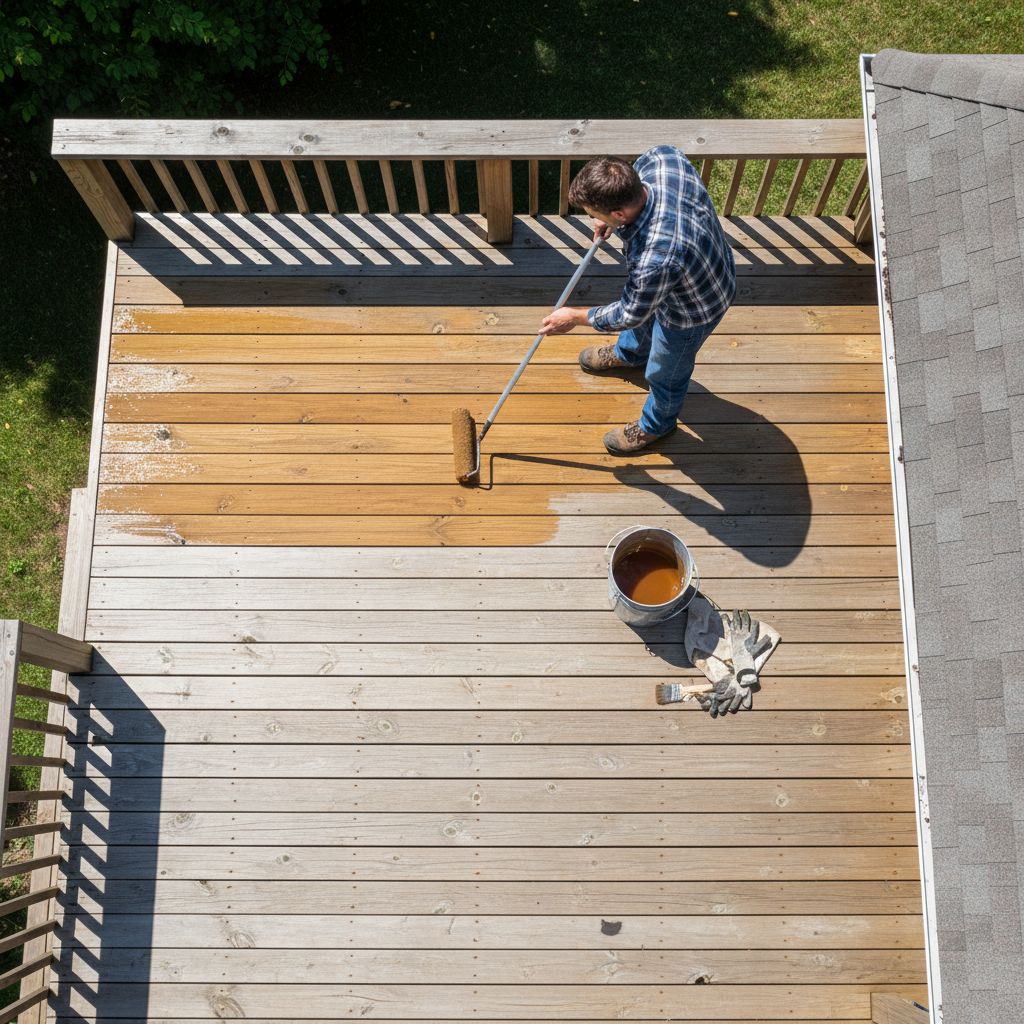
Applying a high-quality deck sealant or stain is one of the most effective ways to protect your boards. These products create a barrier against moisture, preventing water from penetrating the wood and minimizing UV damage. Reapply sealant or stain every 1-3 years, or as recommended by the product manufacturer and dictated by your local climate. Ensure the deck is clean and dry before application.
Addressing Repairs Promptly
Don’t ignore minor issues. Tighten loose fasteners, replace split boards, and address any drainage or ventilation problems as soon as they arise. Small issues can quickly escalate into bigger, more expensive problems if left unattended.
How to Fix Warped Deck Boards: Solutions and Strategies
If despite your best efforts, some of your deck boards have started to warp, don’t despair. Depending on the severity of the warping, there are several strategies you can employ to fix or mitigate the issue.
Minor Warping: Addressing the Issue Early
For slight cupping or bowing, early intervention can often save the board.
Re-fastening and Reinforcing
If a board is only slightly warped and has lifted from the joist, you might be able to pull it back down. Use longer, stronger deck screws to fasten the board securely to the joist. You might need to add additional fasteners, especially near the edges, to pull the board flat. Sometimes, temporary clamps can help hold the board down while you fasten it.
Strategic Wetting and Weighing Down
For cupped boards, you can try to reintroduce moisture to the drier, cupped side and then apply pressure. Soak towels in water and lay them over the convex (raised) side of the board for several hours or even overnight. Once the wood has absorbed moisture and softened, place heavy objects (like concrete blocks or buckets of sand) on the board’s raised areas. Allow the board to dry slowly under pressure. This method works best on relatively new, lightly warped boards and requires patience.
Moderate Warping: More Intensive Repair
When warping is more pronounced, you might need specialized tools or techniques.
Using a Deck Board Straightener (Board Bender)
A deck board straightener is a specialized tool designed to pull moderately warped boards into alignment so they can be securely fastened. These tools typically use a cam or lever action to apply strong lateral force, allowing you to straighten the board long enough to drive screws into the joists. They are particularly useful for closing gaps between warped boards or aligning a board that has bowed significantly.
Planing or Sanding High Spots
If a board is only slightly crowned or has developed a high spot that creates a tripping hazard, you might be able to smooth it out. A hand planer or an orbital sander can be used to carefully shave down the raised areas until the surface is more level. This is a good option for localized warping that doesn’t affect the entire board’s integrity, but be cautious not to remove too much material, which could weaken the board or create a new low spot.
Severe Warping: When Replacement is Necessary
Sometimes, a board is simply too far gone to be salvaged. Severe twisting, deep splits, or extensive cupping that creates large water puddles often warrants replacement.
Assessing the Damage
Carefully inspect severely warped boards. Look for signs of rot, extensive cracking, or boards that have completely pulled away from fasteners. If the board is structurally compromised or poses a significant safety risk, replacement is the safest and most effective solution.
Safely Removing and Replacing Boards
Removing a warped board involves carefully extracting existing fasteners and prying the board up without damaging adjacent boards or the underlying joists. You might need a pry bar and a circular saw to cut the board into smaller, more manageable sections if it’s tightly secured or difficult to lift. When replacing, ensure the new board is properly acclimated, correctly spaced, and securely fastened, following all the prevention tips outlined earlier. It’s often a good idea to treat new boards with a protective sealant before installation.
FAQs About Deck Board Warping
Q: Can I straighten warped deck boards?
A: Yes, minorly warped boards can often be straightened using methods like strategic wetting and weighing down, or by using a specialized deck board straightener tool during re-fastening. Severely warped boards are usually best replaced.
Q: What causes deck boards to cup?
A: Cupping is primarily caused by an uneven moisture content between the top and bottom surfaces of the board. The side that dries faster or is consistently wetter will shrink or swell differently, causing the board to curl. Poor ventilation, inadequate gapping, and direct sun exposure contribute to this imbalance.
Q: Is composite decking immune to warping?
A: While significantly more resistant than traditional wood, composite decking is not entirely immune to warping. It can bow or warp due to excessive heat absorption, especially in darker colors, or if not installed with proper gapping and fastening according to manufacturer instructions.
Q: How often should I seal my deck to prevent warping?
A: Generally, wooden decks should be cleaned and re-sealed or re-stained every 1 to 3 years. The exact frequency depends on the type of wood, the product used, and the severity of sun and weather exposure in your climate. A good test is to sprinkle water on your deck; if it soaks in rather than beading up, it’s time to re-seal.
Q: Can improper storage cause deck boards to warp?
A: Absolutely. Storing deck boards improperly, such as stacking them unevenly on the ground, exposing them to direct sun and rain, or not allowing for proper airflow, can lead to significant warping even before installation.
Conclusion: Protecting Your Investment from Warping
A warped deck can be a source of constant frustration and expense, but by understanding the causes and implementing preventative measures, you can keep your outdoor living space looking beautiful and functioning safely. From selecting the right materials and ensuring meticulous installation to committing to a regular maintenance routine, every step you take contributes to the longevity and stability of your deck. Don’t let the problem of deck boards warping diminish your enjoyment of your home. With the right knowledge and a proactive approach, you can ensure your deck remains a cherished spot for relaxation and entertaining for many years to come.