What is Ponding Water on a Low-Slope Roof?
Ponding water on a low-slope roof refers to any accumulation of water that remains on the roof surface for more than 48 hours after rainfall. While it’s normal for some water to linger briefly after a storm, prolonged ponding indicates that the roof is not draining properly. Low-slope roofs, often mistakenly called “flat roofs,” are designed with a slight incline (typically between 1/4 inch and 3 inches per foot) to facilitate water runoff. When this drainage system fails, water collects in depressions, creating a persistent problem that stresses the roofing membrane and the underlying structure.
Common Causes of Ponding Water
Ponding water rarely has a single cause. More often, it’s a combination of factors working together to impede proper drainage. Identifying the root cause is the first step towards an effective solution.
1. Structural Deflection and Settlement
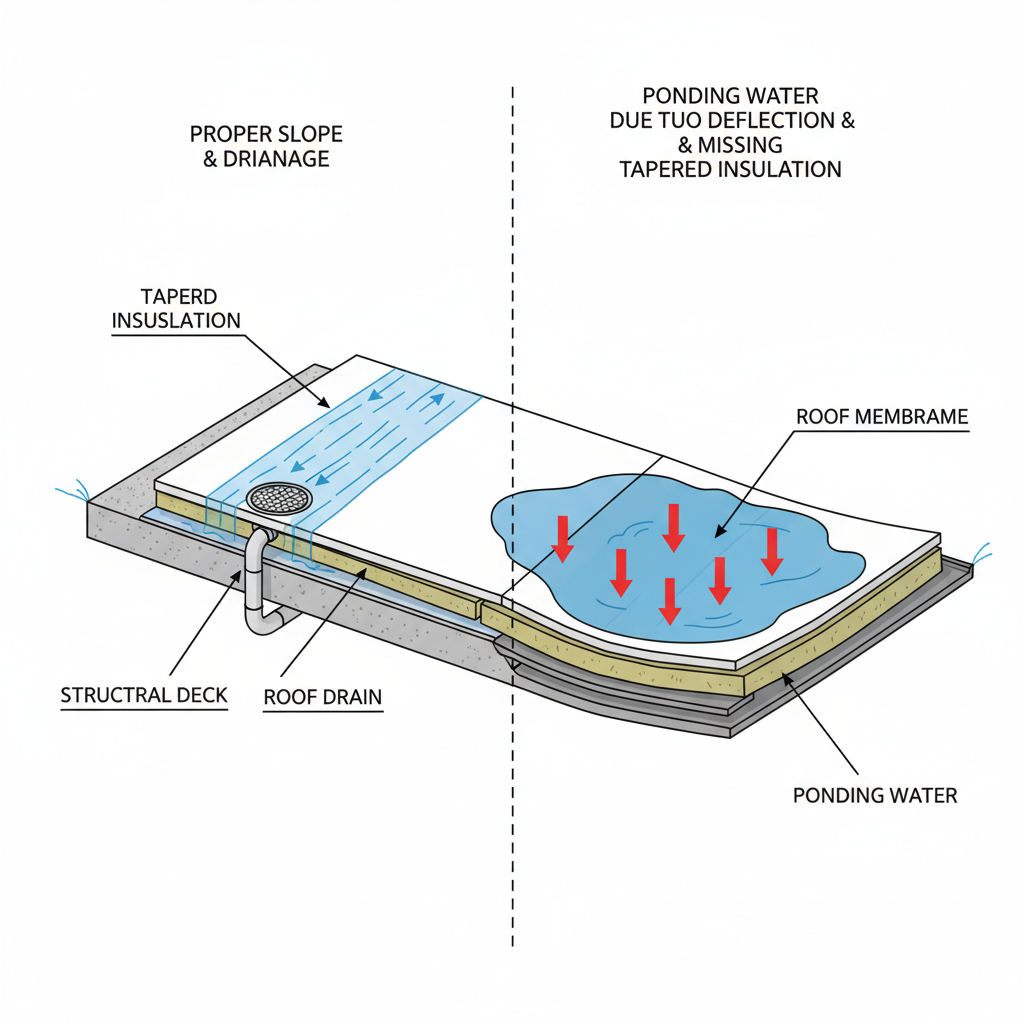
Over time, buildings settle, and roof decks can deflect or sag due to several reasons:
- Inadequate Structural Support: The original design may not have specified sufficient support for the roof deck, leading to sagging under its own weight or the weight of snow, ice, or HVAC units.
- Building Movement: Foundation settlement, seismic activity, or even heavy loads within the building can cause the roof structure to shift and create low points.
- Water Weight Itself: A vicious cycle can occur where initial ponding water adds weight, further deflecting the roof deck and creating larger, deeper ponds.
2. Improper Drainage Design or Installation
Even a well-built roof can suffer from ponding if its drainage system is flawed:
- Insufficient Slope: Low-slope roofs require a minimum slope to direct water to drains or scuppers. If the slope is too gentle or inconsistent, water won’t flow effectively.
- Poor Drain Placement: Drains or scuppers might be installed in high spots or areas that naturally accumulate water, rather than in the lowest points of the roof sections.
- Lack of Tapered Insulation or Crickets: Tapered insulation systems are designed to create slope, while crickets (small, sloped roof sections) are used to divert water around obstructions like skylights or HVAC units. Absence or improper installation of these can lead to water pooling.
3. Clogged Drains, Scuppers, and Gutters
This is one of the most common and often easiest-to-remedy causes:
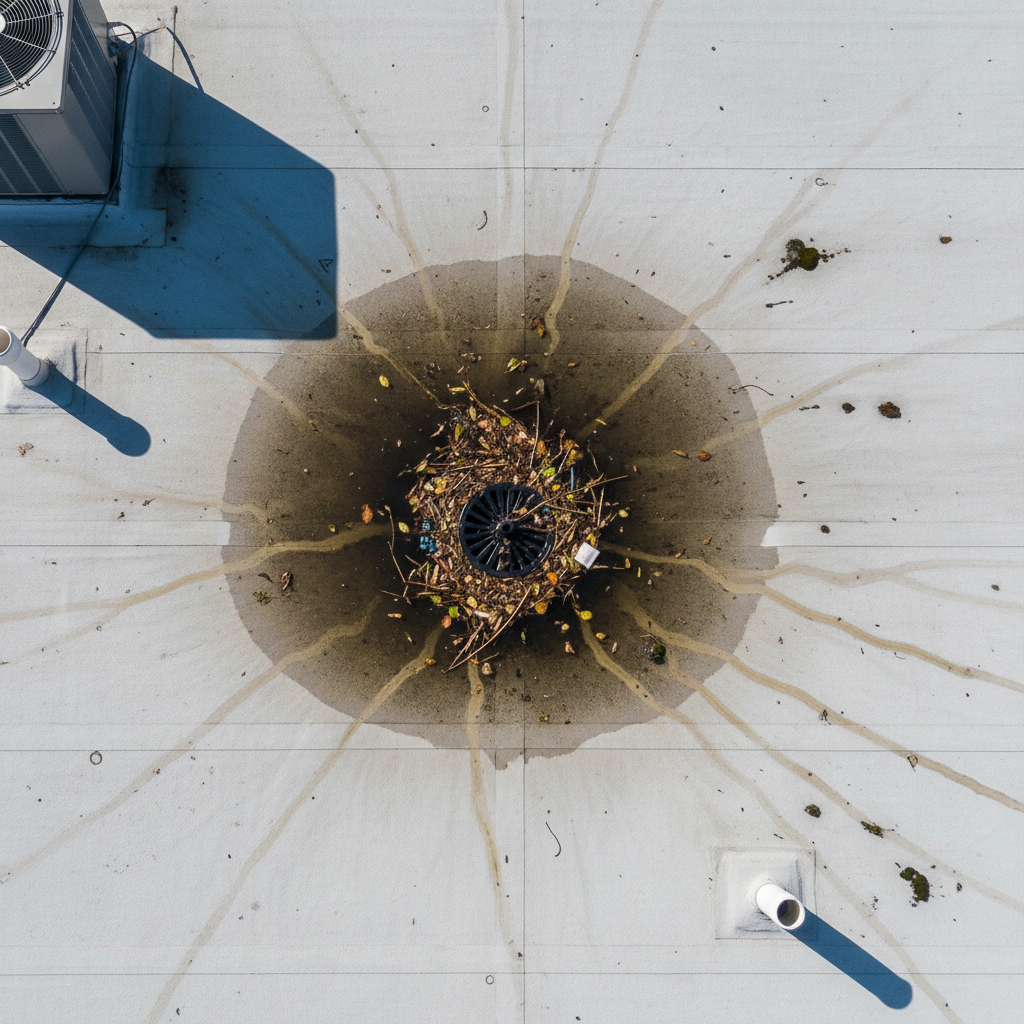
- Debris Accumulation: Leaves, branches, dirt, gravel, and even discarded trash can block roof drains, scuppers (openings in parapet walls), and gutters.
- Vegetation Growth: Algae, moss, or even small plants can grow in moist areas, further obstructing drainage pathways.
- Roofing Materials: Granules from asphalt shingles or aggregate from ballasted roofs can wash into and clog drains.
4. Membrane Issues and Degradation
The roofing membrane itself can contribute to ponding:
- Blisters and Wrinkles: These can form in the membrane due to trapped moisture, improper adhesion, or aging. They create raised areas around which water can collect.
- Thermal Movement: Expansion and contraction of the roof membrane due to temperature changes can create ripples or depressions that hinder water flow.
- Improper Flashing: Faulty or deteriorating flashing around penetrations (vents, pipes) or at parapet walls can create damming effects, trapping water.
5. HVAC and Equipment Installation Problems
Rooftop equipment, while necessary, can be a source of ponding if not properly integrated:
- Improper Support: Heavy HVAC units or solar panels can cause localized deflection of the roof deck.
- Drainage Obstruction: Equipment placed directly over drains or in critical flow paths can block water runoff.
- Condensate Leaks: HVAC units produce condensate water, which, if not properly drained into a dedicated system, can add to ponding.
6. Parapet Walls and Coping
While parapet walls add aesthetic appeal and hide rooftop equipment, they can also contribute to ponding if designed or maintained incorrectly:
- Insufficient Weep Holes: Parapet walls sometimes require weep holes at their base to allow water to exit, especially if the roof slopes towards the wall.
- Coping Issues: Damaged or improperly installed coping (the cap on the parapet wall) can allow water to penetrate the wall itself, leading to saturation and potential structural weakening that affects the roof plane.
Why Ponding Water is a Serious Problem
Ignoring ponding water is a costly mistake. The prolonged presence of water accelerates the deterioration of the roofing system and poses several significant risks to the entire building.
1. Structural Damage and Collapse Risk
Water is heavy. A single inch of water over a 100 square foot area weighs approximately 520 pounds. Ponding water can add thousands of pounds of static load to a roof structure, far exceeding its design capacity. This excessive weight can:
- Accelerate Deck Deterioration: Especially for wood or gypsum decks, constant saturation can lead to rot, weakening, and eventual collapse.
- Stress Structural Members: Beams, joists, and girders can buckle, crack, or fail under prolonged, excessive load.
- Cause Progressive Deflection: As the roof sags under the weight, deeper depressions form, collecting more water, creating a dangerous feedback loop.
2. Accelerated Membrane Degradation
Roofing membranes, even those designed for durability, are not meant for constant immersion:
- UV Exposure Amplification: Water magnifies UV rays, speeding up the breakdown of rubber, plastic, and asphalt-based membranes, leading to embrittlement, cracking, and premature failure.
- Thermal Shock: The difference in temperature between the ponded water and the surrounding dry membrane causes differential expansion and contraction, creating stress and leading to cracks or splits.
- Chemical Reactions: Impurities in the water, chemicals from airborne pollution, or even growth from algae can react with the membrane materials, accelerating their breakdown.
3. Increased Risk of Leaks and Water Intrusion
The most immediate and visible consequence of ponding water is the increased likelihood of leaks:
- Hydrostatic Pressure: The weight of the water creates pressure, forcing it into tiny cracks, seams, and punctures in the membrane that might otherwise not leak.
- Seam Failure: Constant immersion and thermal stress can weaken adhesive bonds at seams, leading to separation and water penetration.
- Flashing Compromise: Water will find its way through even minor imperfections in flashing around penetrations or at perimeter edges.
- Interior Damage: Leaks can cause ceiling stains, ruined insulation, damaged drywall, electrical hazards, and compromised indoor air quality due to mold.
4. Mold, Mildew, and Algae Growth
Stagnant water provides an ideal breeding ground for biological growth:
- Roof Surface Damage: Algae and moss can embed roots into the roofing material, lifting granules or degrading the membrane.
- Odor and Air Quality: If water penetrates the building envelope, mold and mildew can grow within walls and ceilings, leading to musty odors and potentially triggering allergies or respiratory issues for occupants.
5. Pest Infestation
Ponding water attracts various unwanted guests:
- Mosquitoes: Standing water is a prime breeding ground for mosquitoes, posing a public health risk due to potential disease transmission.
- Insects and Rodents: Water-damaged areas can attract insects and rodents seeking moisture or shelter, potentially leading to further damage inside the building.
6. Reduced Energy Efficiency
Water on the roof can impact a building’s thermal performance:
- Increased Heat Absorption: Dark, stagnant water absorbs more solar radiation than a dry roof, leading to higher roof surface temperatures and increased heat transfer into the building, especially during warmer months. This can drive up air conditioning costs.
7. Safety Hazards
Accessing a roof with ponding water can be dangerous:
- Slippery Surfaces: Algae and standing water create extremely slippery conditions, increasing the risk of falls for anyone performing maintenance or inspections.
- Hidden Hazards: Deep ponds can obscure holes, equipment, or other tripping hazards.
How to Identify Ponding Water Problems
Early detection is key to mitigating damage. Regular inspections are vital.
- Visual Inspection (48 Hours Post-Rain): The most direct way is to inspect the roof after a heavy rainfall, ensuring at least 48 hours have passed. Any visible water is a problem.
- Water Marks: Even if the water has evaporated, crescent-shaped dirt lines, mineral deposits, or algae growth at the edges of depressions indicate past ponding.
- Interior Stains: Water stains on ceilings or walls below a low-slope roof are a clear sign of a leak, often originating from a ponding area.
- Sagging Deck: Visually inspect the underside of the roof deck (if accessible) for signs of sagging, bowing, or water damage.
Solutions for Ponding Water on Low-Slope Roofs
Addressing ponding water requires a strategic approach, ranging from simple maintenance to complex structural interventions.
1. Immediate and Short-Term Fixes
- Clear Drains and Scuppers: Regularly remove leaves, debris, and sediment from all drainage components. This should be part of routine maintenance.
- Temporary Water Removal: For severe, immediate ponding that poses a structural risk, professionals can use pumps to remove water, but this is a temporary measure, not a solution.
2. Medium-Term Solutions (Requires Professional Expertise)
- Install Crickets or Saddle Systems: For localized ponding around obstructions, building small, sloped sections (crickets or saddles) with tapered insulation can divert water to existing drains.
- Add Tapered Insulation: During a re-roofing project or repair, installing tapered insulation can create the necessary slope across the entire roof surface to guide water toward drains.
- Address Membrane Issues: Repairing blisters, wrinkles, or compromised seams can sometimes alleviate localized ponding, though often these are symptoms of a larger drainage problem.
3. Long-Term and Permanent Solutions (Requires Structural and Roofing Professionals)
- Re-sloping the Roof Deck: This involves modifying the underlying structure to create a positive drainage slope. It’s a significant undertaking, often part of a major renovation or roof replacement.
- Adding Drains or Scuppers: If the existing drainage system is insufficient, installing additional roof drains, internal drains, or scuppers in low points can drastically improve water removal.
- Structural Reinforcement: A structural engineer may need to evaluate and recommend reinforcement for the roof deck or supporting beams to prevent future deflection.
- Material Selection: When replacing a roof, consider membranes specifically designed for improved resistance to ponding, such as certain TPO, PVC, or EPDM systems, combined with proper slope.
Preventing Ponding Water
Prevention is always more cost-effective than repair. Implementing these practices can extend your roof’s life and prevent future ponding issues.
- Proper Design and Installation: Ensure your low-slope roof is designed and installed by qualified professionals who adhere to building codes and best practices for positive drainage. This includes adequate slope, correctly sized and placed drains, and effective tapered insulation plans.
- Regular Roof Maintenance:
- Schedule semi-annual (spring and fall) professional roof inspections and cleanings.
- Keep all drains, scuppers, and gutters free of debris.
- Trim overhanging tree branches to reduce leaf accumulation.
- Check around rooftop equipment for blockages or localized ponding.
- Strategic Equipment Placement: When installing or replacing rooftop HVAC units, skylights, or other equipment, ensure they do not obstruct drainage pathways or create new low points. Adequate curbing and flashing are essential.
- Prompt Repairs: Address any minor roof damage, such as small cracks or membrane imperfections, immediately to prevent them from worsening and contributing to ponding.
When to Call a Professional Roofing Contractor
While some minor debris clearing can be done by a homeowner, addressing ponding water on a low-slope roof typically requires the expertise of a professional roofing contractor. They can:
- Perform a thorough roof inspection to identify the exact causes of ponding.
- Assess the structural integrity of the roof deck.
- Recommend and implement appropriate drainage solutions, from installing crickets to re-sloping the roof.
- Execute repairs or replacements of the roofing membrane correctly.
- Provide ongoing maintenance plans.
For complex issues involving structural integrity or extensive re-design, a structural engineer may also need to be consulted in conjunction with your roofing contractor. It’s crucial not to underestimate the potential dangers and complexities of roof repair. For more insights on general home maintenance, including aspects of roof care, consider resources like Better Homes & Gardens’ guide to preventative home maintenance, which often covers the importance of keeping your home’s exterior in top shape.
Frequently Asked Questions About Ponding Water
Q: How much ponding water is acceptable on a low-slope roof?
A: Technically, no ponding water is acceptable if it remains for more than 48 hours. While small, temporary puddles might occur immediately after heavy rain, any standing water after two days indicates a drainage problem that needs attention.
Q: Can ponding water cause a roof to collapse?
A: Yes, absolutely. The cumulative weight of ponding water, especially over large areas or when combined with snow or ice, can exceed the structural design limits of the roof, leading to deflection, structural fatigue, and potentially catastrophic collapse.
Q: Is my roof warranty voided by ponding water?
A: Many roofing warranties explicitly state that they are voided by ponding water. Manufacturers design their membranes and systems with the expectation of positive drainage. Check your specific warranty document for details.
Q: What’s the difference between a low-slope roof and a flat roof?
A: There’s a common misconception that “flat roofs” are truly flat. In reality, all roofs must have some degree of slope for drainage. A “low-slope” roof has a pitch of less than 3:12 (3 inches of rise over 12 inches of run), with most designed at 1/4 inch per foot to 1/2 inch per foot. A truly “flat” roof would be an engineering disaster.
Q: Can I add gravel to a ponding area to level it out?
A: No, adding gravel or other heavy materials to a ponding area is strongly discouraged. This only adds more weight to an already compromised section of the roof, exacerbating the structural deflection and potentially causing more severe damage or collapse. It does not solve the underlying drainage issue.
Q: How often should I inspect my low-slope roof?
A: It’s recommended to visually inspect your low-slope roof at least twice a year (in spring and fall) and after any significant weather events (heavy storms, strong winds, snow). Professional inspections are advised annually or bi-annually.
Conclusion
Ponding water on a low-slope roof is a clear warning sign that should never be ignored. From compromising structural integrity and accelerating membrane degradation to increasing the risk of leaks and promoting unwanted biological growth, the consequences are severe and costly. By understanding the common causes, recognizing the dangers, and committing to proactive maintenance and professional intervention when necessary, you can protect your investment, extend the life of your roof, and ensure the long-term health and safety of your building. Don’t let standing water stand in the way of a healthy roof – address it promptly and effectively.