In the pursuit of creating ideal living spaces,
home design inspiration for modern families natural light has emerged as a paramount element, transforming residences from mere structures into vibrant, healthy, and energy-efficient sanctuaries. For contemporary families, the desire to connect with the outdoors, enhance well-being, and reduce environmental impact often begins with thoughtfully integrating ample natural light into every corner of their home. This comprehensive guide will explore how to harness the power of the sun to craft bright, inviting, and functional environments that cater specifically to the dynamic needs of today’s households.
Why Natural Light is a Cornerstone for Modern Family Homes
The benefits of abundant natural light extend far beyond aesthetic appeal. For modern families, a well-lit home is synonymous with improved quality of life. Natural light influences our circadian rhythms, boosting mood, enhancing productivity, and even contributing to better sleep patterns. Here’s why integrating daylight is non-negotiable for contemporary family living:
- Enhanced Well-being and Mood: Exposure to natural light increases serotonin levels, acting as a natural mood elevator and reducing the incidence of seasonal affective disorder (SAD). For bustling families, this means a happier, more harmonious home environment.
- Improved Health: Natural light provides Vitamin D, crucial for bone health and immune function. It also helps regulate sleep cycles, leading to better rest for all family members, from toddlers to adults.
- Increased Productivity and Focus: Studies show that natural light in workspaces and learning environments can significantly improve concentration and cognitive performance. This is particularly beneficial for home offices and children’s study areas.
- Energy Efficiency: Maximizing daylight penetration reduces the reliance on artificial lighting during the day, leading to substantial savings on electricity bills and a smaller carbon footprint.
- A Sense of Space and Openness: Bright, naturally lit rooms feel larger, more inviting, and less confined. This expansive feeling is especially valuable in urban homes or those with limited square footage.
- Aesthetic Appeal: Natural light beautifully showcases interior design elements, from paint colors to textures and art, making every detail pop and feel more vibrant.
Fundamental Principles of Natural Light Integration
Achieving optimal natural light isn’t just about adding more windows; it involves a holistic design approach. Understanding a few fundamental principles can guide your choices:
Orientation and Site Planning
The sun’s path varies throughout the day and year. Designing with your home’s orientation in mind is crucial. South-facing windows (in the Northern Hemisphere) offer consistent, high-quality light throughout the day, while east-facing windows capture the gentle morning sun, and west-facing windows bring in warm afternoon light. North-facing windows provide soft, diffuse light ideal for spaces like art studios or home offices where direct glare is undesirable. Strategic site planning can also involve positioning the house to avoid obstructions like neighboring buildings or dense trees that might block precious sunlight.
Daylighting Strategy
Consider how light will enter and move through your home. This includes not only direct sunlight but also diffused light, reflected light, and borrowed light. A layered approach ensures that every area benefits from natural illumination.
Glare Control and Shading
While maximizing light is key, preventing excessive heat gain and uncomfortable glare is equally important. Integrated shading solutions, both internal and external, are vital for maintaining comfort and protecting furnishings from UV damage.
Design Strategies to Maximize Natural Light in Modern Homes
Once you understand the basics, you can implement specific design strategies to flood your home with light. These strategies are perfectly suited for the modern family aesthetic, combining functionality with contemporary style.
1. Strategic Window Placement and Types
Windows are the primary gateways for natural light. Modern architecture offers a plethora of options:
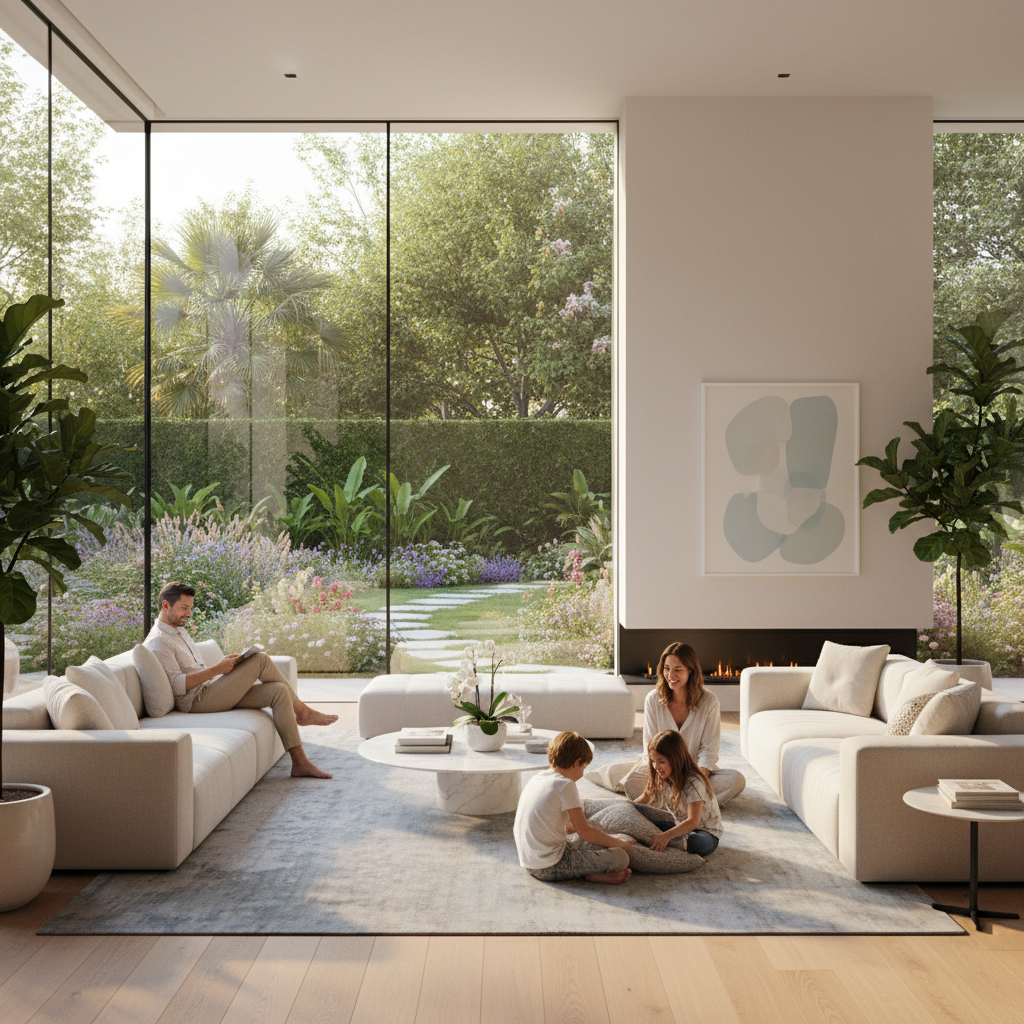
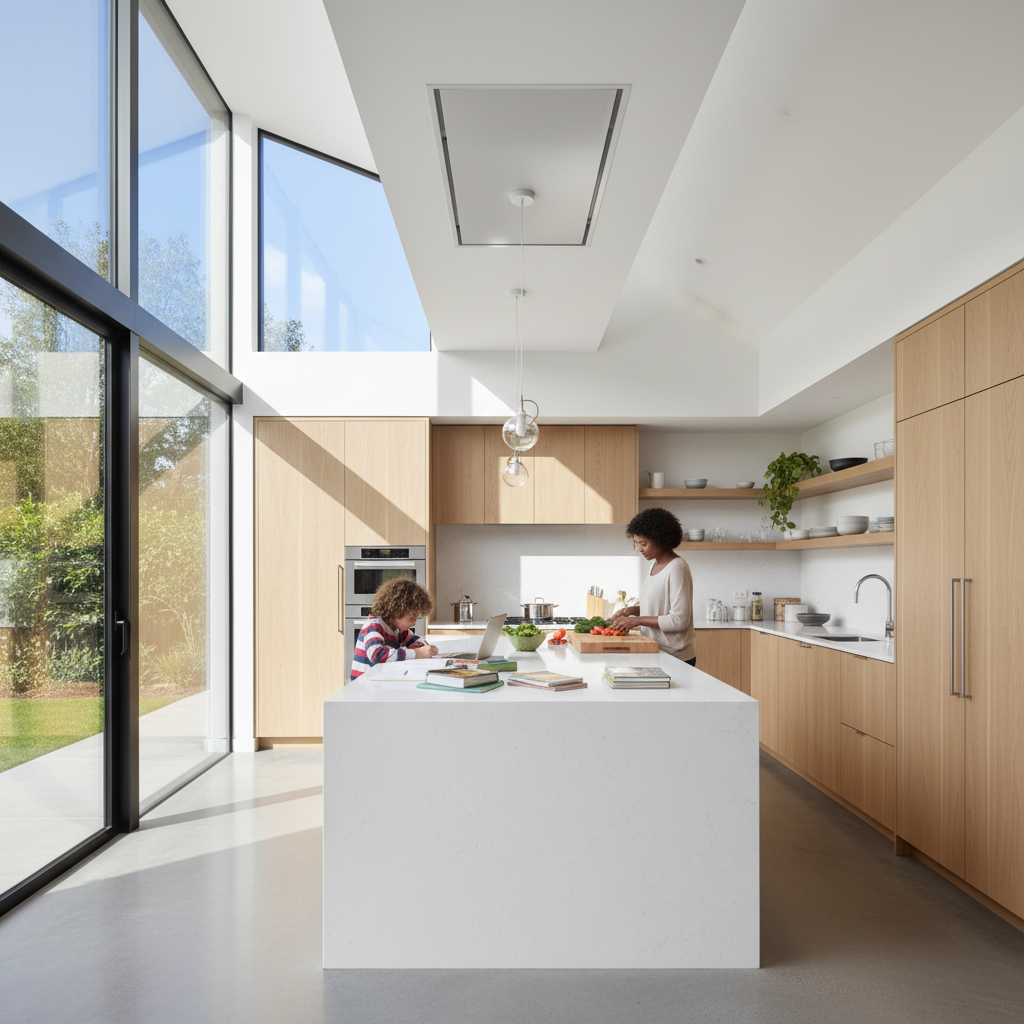
- Floor-to-Ceiling Windows and Sliding Glass Doors: These are hallmarks of modern design, offering expansive views and maximum light penetration. They seamlessly connect indoor and outdoor spaces, making rooms feel larger and more open.
- Clerestory Windows: Placed high on a wall, often above eye level, clerestory windows bring in diffuse light without sacrificing privacy or wall space for furniture. They are excellent for open-concept living areas or bathrooms.
- Skylights and Roof Windows: For interior rooms or areas lacking exterior walls, skylights are game-changers. They bathe spaces in overhead light, creating dramatic effects and brightening otherwise dark corners. Modern skylights come with integrated blinds and smart controls for convenience.
- Corner Windows: Extending around the corner of a room, these windows offer panoramic views and allow light to enter from multiple angles, truly opening up a space.
- Window Walls: A series of large windows forming an entire wall creates an immersive experience with the outdoors.
2. Embrace Open-Concept Layouts
One of the most effective ways to spread natural light is by minimizing interior walls. Open-concept living, dining, and kitchen areas allow light from one side of the house to penetrate deeper into the floor plan. This also fosters a sense of togetherness, which is ideal for modern family dynamics. For more ideas on flexible living spaces, explore our insights on modern kitchen designs.
3. Utilize Reflective Surfaces and Light-Colored Materials
Once light enters the home, you want to amplify and distribute it. This can be achieved through material selection:
- Light-Colored Walls and Ceilings: White, off-white, and light pastel hues reflect natural light, making rooms appear brighter and more spacious.
- Mirrors: Strategically placed large mirrors opposite windows can double the amount of perceived light and expand views.
- Glossy Finishes: Polished concrete floors, high-gloss cabinetry, or metallic accents can bounce light around a room.
- Glass Partitions: Instead of solid walls, consider using glass internal doors or translucent panels to divide spaces while allowing light to flow through.
4. Strategic Landscaping and Exterior Design
Your outdoor environment plays a significant role in how much light reaches your home:
- Pruning Trees: Trim branches that might block sunlight, especially on the south side of your home.
- Light Tunnels and Sun Tubes: For spaces without direct window access, these innovative systems capture sunlight from the roof and channel it down into interior rooms, providing surprisingly bright, natural illumination.
- Light-Colored Exterior Finishes: Lighter exterior colors can reflect light, reducing heat absorption and contributing to a brighter immediate environment around the house.
5. Smart Window Treatments
While windows invite light, sometimes you need to control it for privacy or to reduce glare. Modern families can opt for smart solutions:
- Sheer Curtains or Blinds: Allow light to filter through while maintaining a degree of privacy.
- Motorized Blinds and Shades: These can be programmed to open and close according to the time of day or sunlight intensity, offering effortless light control and energy savings.
- Top-Down/Bottom-Up Shades: Offer incredible flexibility, allowing you to open the top of the window for light while maintaining privacy below.
6. Architectural Features Enhancing Light
Certain architectural elements are designed to maximize light:
- Atriums and Interior Courtyards: These central open spaces bring natural light and fresh air into the heart of the home, often creating a focal point.
- Double-Height Ceilings: In spaces with tall ceilings, windows placed higher up can draw in more light, creating a grander, more open feel.
- Transom Windows: Small windows placed above doors or larger windows can add extra light without compromising wall space.
Room-Specific Natural Light Ideas for Modern Families
Each room in a family home has unique lighting requirements. Tailoring your natural light strategy to specific functions can optimize comfort and utility.
Living Areas: Bright and Inviting Hubs
For the family’s main gathering space, maximize expansive views and connect directly to the outdoors. Large sliding glass doors opening to a patio or deck, coupled with floor-to-ceiling windows, create a seamless indoor-outdoor flow. Consider a strategically placed large mirror to reflect light and outdoor scenery, visually expanding the room.
Kitchens: A Culinary Canvas
Kitchens benefit immensely from natural light for both ambiance and task lighting. Oversized windows above the sink, skylights over a kitchen island, or a wall of glass leading to a breakfast nook can make the space feel incredibly airy and enjoyable. Under-cabinet lighting can supplement natural light for precise tasks. Learn more about innovative storage solutions for modern kitchens to keep your bright spaces clutter-free.
Bedrooms: Serenity and Controlled Light
Bedrooms need a balance of ample light during the day and the ability to block it out completely for sleep. Large windows are excellent, but pair them with blackout blinds or drapes for optimal sleep quality. Consider clerestory windows or high windows to maintain privacy while letting in soft, ambient light.
Bathrooms: Spa-like Retreats
Natural light can transform a bathroom into a serene, spa-like sanctuary. Frosted glass windows, clerestory windows, or even a well-placed skylight can provide privacy while allowing light to flood the space. Avoid heavy window treatments that might trap moisture.
Home Offices: Productivity Zones
For parents and children using home offices, natural light is key for focus and reducing eye strain. Position desks to receive indirect light to avoid glare on screens. North-facing windows offer consistent, soft light, ideal for workspaces. If direct sunlight is unavoidable, invest in quality anti-glare screens and adjustable blinds. Good Housekeeping offers valuable insights into creating a productive and healthy home office environment, emphasizing the role of natural light.
Blending Indoor and Outdoor Living
One of the hallmarks of modern family homes is the dissolution of boundaries between interior and exterior spaces. Large openings like bi-fold doors, pocket doors, and extensive patios or decks extend living areas outdoors, inviting natural light and fresh air deep into the home. Creating cohesive design elements, such as continuous flooring from indoors to outdoors, further enhances this seamless transition.
Balancing Privacy and Light
While maximizing natural light is a priority, modern families also require privacy. Innovative solutions include:
- Strategic Placement: Positioning windows to face private gardens or less-trafficked areas.
- Window Films: Decorative or frosted films offer privacy without blocking light entirely.
- Automated Blinds: Smart systems allow for instant privacy at the touch of a button or through scheduled settings.
- Louvered Screens: Exterior screens can provide both shade and privacy while maintaining airflow and some light.
Sustainability and Energy Efficiency through Natural Light
Beyond comfort and aesthetics, natural light is a cornerstone of sustainable home design. By reducing the need for artificial lighting and contributing to passive heating in cooler months, it significantly lowers a home’s energy consumption. When combined with high-performance windows and proper insulation, a daylight-optimized home becomes a truly energy-efficient and environmentally responsible dwelling.
FAQs: Your Questions About Natural Light and Modern Home Design Answered
Q1: How can I add natural light to a windowless room?
A1: For windowless rooms, consider installing a skylight or sun tunnel (also known as a tubular daylighting device). These systems capture sunlight from the roof and channel it through a reflective tube into the room below. Another option is to use interior glass partitions or transom windows to borrow light from an adjacent, naturally lit space.
Q2: What are the best window types for maximizing natural light?
A2: Floor-to-ceiling windows, large sliding glass doors, and corner windows offer the most expansive views and light. Clerestory windows and skylights are excellent for bringing in overhead light without sacrificing wall space or privacy. Window walls, composed of multiple large panes, also create a dramatic effect.
Q3: How do I prevent glare and overheating from too much natural light?
A3: Implement shading strategies like exterior overhangs, pergolas, or awnings, especially on south and west-facing windows. Indoors, use sheer curtains, roller shades, or Venetian blinds. For high-tech solutions, consider smart glass that can tint automatically or electrochromic windows. Proper ventilation also helps manage heat gain.
Q4: Can natural light affect my furniture and artwork?
A4: Yes, prolonged exposure to direct UV rays from sunlight can fade fabrics, upholstery, and artwork over time. To mitigate this, use UV-filtering window films, choose window treatments that can block direct sun, and arrange furniture to avoid constant exposure to intense, direct sunlight. Investing in high-quality, UV-resistant materials for furnishings is also a good long-term strategy.
Q5: Is it expensive to design a home focused on natural light?
A5: While large windows and specialized skylights might have a higher upfront cost than standard windows, the long-term benefits often outweigh this. Reduced energy bills, improved well-being, and increased home value can make it a worthwhile investment. Many natural light strategies, like open layouts and light paint colors, are cost-effective.
Conclusion: A Brighter Future for Family Living
Integrating natural light into your home design is more than just an aesthetic choice; it’s a commitment to creating a healthier, happier, and more sustainable environment for your modern family. From strategic window placement and open-concept living to reflective surfaces and smart shading solutions, the possibilities are vast. By thoughtfully considering how daylight interacts with your living spaces, you can craft a home that not only looks stunning but also nurtures the well-being and productivity of everyone within its walls. Embrace the sun, and let your home shine.