The Mystery of the White Dust: Why Your Humidifier is Making a Mess
Many homeowners invest in humidifiers to combat dry air, alleviate allergy symptoms, or simply create a more comfortable living environment. So, when a layer of white film begins to accumulate on furniture, electronics, and even plants, it can be confusing and alarming. This “white dust” isn’t a malfunction of your device; rather, it’s a direct byproduct of how certain humidifiers operate, especially when confronted with a common household issue: hard water.
What Exactly is This White Dust?
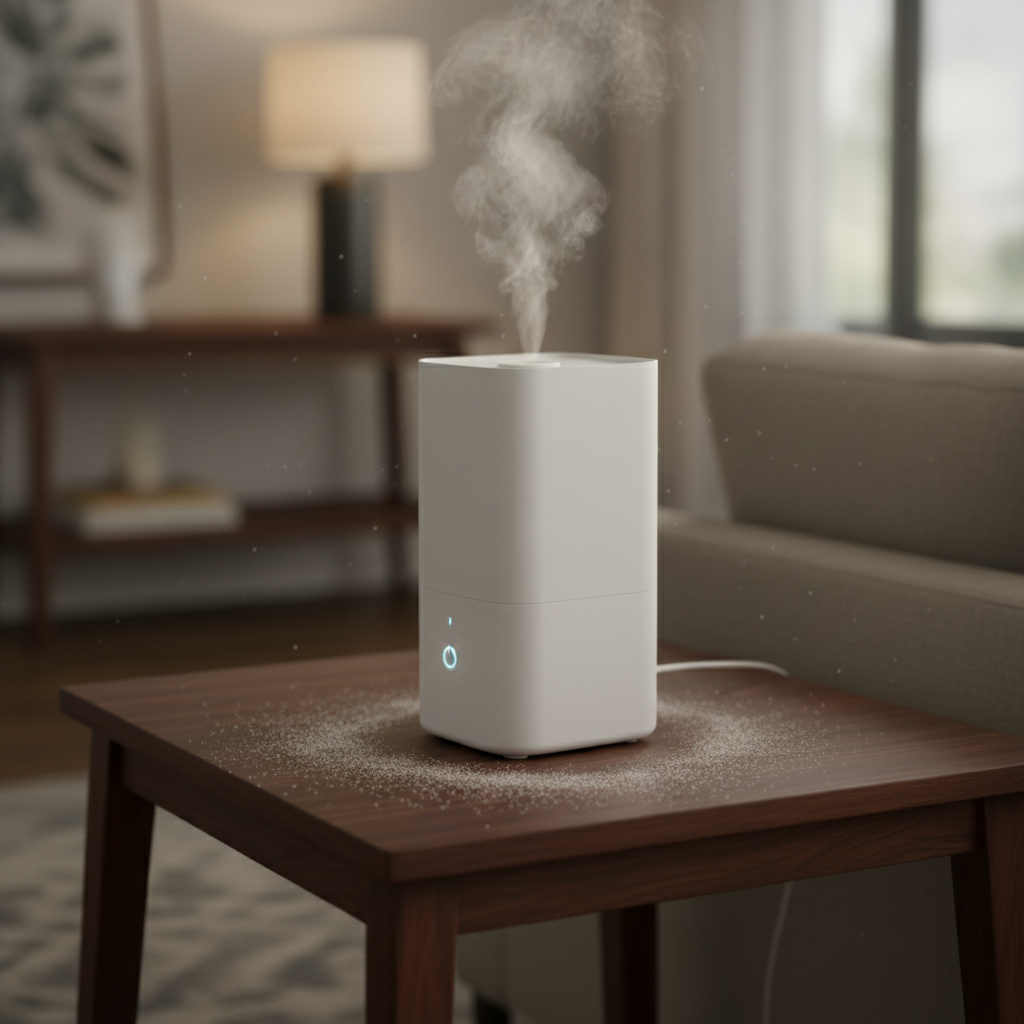
The white dust coating your home is actually a collection of mineral deposits. Tap water, particularly in many regions, contains varying levels of dissolved minerals such as calcium, magnesium, and other trace elements. This is commonly referred to as “hard water.” When this water is processed by your humidifier, these minerals don’t just disappear; they are released into the air along with the water vapor.
The Culprit: Ultrasonic Humidifiers and Hard Water
Not all humidifiers produce white dust. The primary type responsible for this issue is the ultrasonic humidifier. Understanding how these devices work is key to grasping why the dust appears.
Understanding Hard Water
Hard water is a widespread issue, affecting homes across the globe. It’s characterized by a high concentration of dissolved minerals, primarily calcium and magnesium. While generally safe for consumption, hard water is known for leaving scale deposits on fixtures, reducing soap lathering efficiency, and, in the context of humidifiers, contributing to the dreaded white dust.
How Ultrasonic Humidifiers Disperse Minerals
Ultrasonic humidifiers use a rapidly vibrating ceramic diaphragm (a tiny metal plate) to convert water into an ultrafine, cool mist. This mist is so fine that it disperses microscopic water droplets directly into the air. Unlike evaporative humidifiers, which leave minerals behind in the wick or filter, ultrasonic humidifiers aerosolize the mineral particles along with the water. As these microscopic water droplets evaporate into the air, the dissolved minerals are left behind as tiny, dry particles. These airborne mineral particles then settle on surfaces throughout your room, creating that noticeable layer of white dust.
Is White Humidifier Dust Harmful?
Beyond being an unsightly nuisance that requires constant cleaning, many people naturally wonder about the potential health implications of inhaling this white mineral dust. While generally considered benign, there are some considerations regarding air quality and potential long-term effects.
Impact on Air Quality
The primary impact of white dust is on indoor air quality. It adds particulate matter to the air, which can be measured as PM2.5 or PM10 (particulate matter less than 2.5 or 10 micrometers in diameter, respectively). While the minerals themselves (calcium, magnesium) are not typically toxic in these small quantities, elevated particulate levels in the air are not ideal for respiratory health.
Potential Health Concerns
For most healthy individuals, exposure to white humidifier dust is unlikely to cause serious health problems. The particles are generally too large to penetrate deep into the lungs. However, for sensitive individuals, such as those with asthma, allergies, or other respiratory conditions, inhaling increased particulate matter could potentially exacerbate symptoms. Babies and young children, whose respiratory systems are still developing, might also be more susceptible to airborne irritants. While definitive, widespread medical consensus on severe harm from humidifier white dust is still debated, it’s always prudent to minimize airborne particles, especially in homes with vulnerable occupants.
Effects on Surfaces and Electronics
The most immediate and visible effect of white dust is on your home’s surfaces. It coats furniture, floors, windows, and decorative items, requiring frequent dusting. More concerningly, this fine mineral dust can settle on and potentially interfere with sensitive electronics, such as computers, TVs, and stereo equipment. Over time, mineral buildup could potentially clog vents or accumulate on circuit boards, though significant damage is rare unless exposure is prolonged and extreme.
Effective Solutions: How to Stop White Humidifier Dust
The good news is that preventing white humidifier dust is entirely possible. It often involves a combination of smart water choices, regular maintenance, and sometimes, a different type of humidifier. Here are the most effective strategies:
Solution 1: Switch to Distilled or Demineralized Water
This is by far the most effective and straightforward solution. Distilled water has had all its minerals and impurities removed through a process of boiling and condensation. Demineralized water, often created through deionization or reverse osmosis, also has its mineral content significantly reduced. By using distilled or demineralized water in your ultrasonic humidifier, you eliminate the source of the minerals, thus eliminating the white dust. While it incurs an ongoing cost, many find it a worthwhile investment for cleaner air and less cleaning.
Solution 2: Use a Demineralization Cartridge or Filter
If buying distilled water isn’t practical or economical for you, a demineralization cartridge or filter can be a good alternative. Many ultrasonic humidifiers offer these as optional accessories. These cartridges typically contain ion-exchange resins that capture minerals from your tap water before it’s aerosolized. They effectively “soften” the water to reduce mineral output. Remember that these cartridges have a finite lifespan and need to be replaced regularly according to the manufacturer’s instructions to remain effective. Failing to replace them will render them useless, and the white dust will return.
Solution 3: Regular and Thorough Cleaning of Your Humidifier
Even if you use distilled water, regular cleaning of your humidifier is crucial for overall hygiene and device longevity. If you’re using tap water with a demineralization cartridge, cleaning becomes even more critical. Mineral deposits can still build up inside the tank and on the ultrasonic plate, potentially reducing efficiency and creating a breeding ground for bacteria or mold. A clean humidifier ensures it operates optimally and minimizes any potential health risks.
Solution 4: Consider an Evaporative Humidifier
If you’re tired of battling white dust, changing the type of humidifier you use can be a permanent solution. Evaporative humidifiers work differently than ultrasonic models. They use a wick or filter that absorbs water from the reservoir. A fan then blows air over the wet wick, causing the water to evaporate naturally into the air as an invisible vapor. Crucially, the minerals dissolved in the water are left behind in the wick, not dispersed into the air. This makes evaporative humidifiers inherently dust-free. The wick will eventually become saturated with minerals and need regular cleaning or replacement, but the dust stays out of your air.
Solution 5: Install a Whole-House Water Softener
For those with very hard water throughout their home and a desire for a comprehensive solution, a whole-house water softener is an option. These systems remove mineral ions (like calcium and magnesium) from your entire home’s water supply. While a significant upfront investment, it not only prevents humidifier white dust but also reduces scale buildup in pipes, appliances, and improves the effectiveness of soaps and detergents throughout your home. This is a more extensive solution that impacts all water usage, not just your humidifier.
Step-by-Step Guide to Cleaning a Humidifier to Prevent Dust
Regular maintenance is non-negotiable for any humidifier, but especially if you’re battling white dust. Cleaning prevents mineral buildup and inhibits the growth of mold and bacteria. For detailed instructions on proper humidifier cleaning, you can refer to expert guides, such as this one from Good Housekeeping.
Daily Maintenance
- Unplug the unit.
- Empty the water tank and reservoir.
- Rinse the tank and base with fresh water.
- Wipe down all surfaces that come into contact with water with a clean cloth.
- Refill with fresh water (distilled, if possible).
Weekly Deep Clean
- Unplug the unit and disassemble all removable parts.
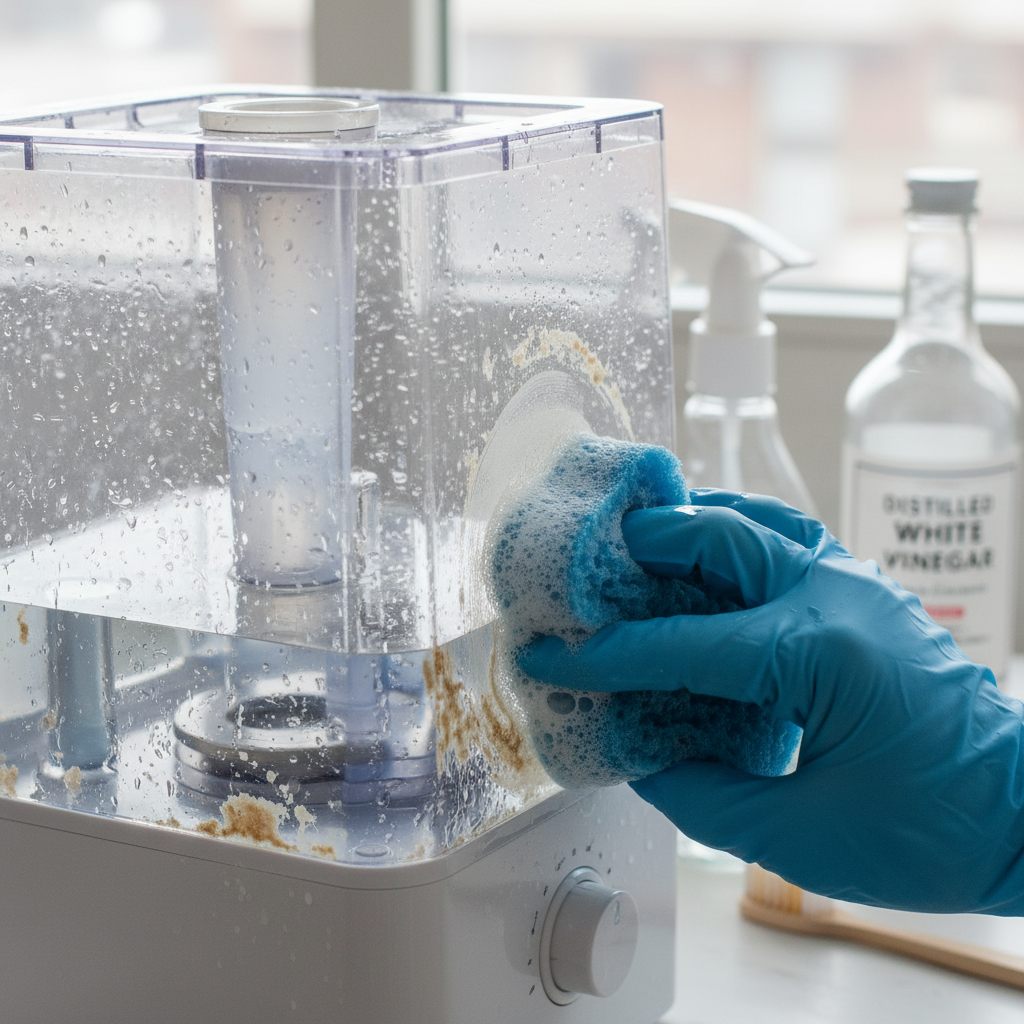
- Fill the water tank with 1-2 cups of undiluted white vinegar. Swish it around to coat the inside walls.
- Pour some vinegar into the base of the humidifier, ensuring it covers the heating element (for warm mist) or ultrasonic plate (for cool mist).
- Let the vinegar soak for at least 30 minutes to an hour to dissolve mineral buildup.
- Use a small brush (like a toothbrush) or sponge to scrub away any loosened mineral deposits or slimy film. Pay close attention to the ultrasonic plate or heating element.
- Rinse all parts thoroughly with clean water until the vinegar smell is gone.
- Allow all components to air dry completely before reassembling or storing.
Monthly Descaling
For stubborn mineral buildup, a monthly descaling might be necessary, especially if you’re using hard tap water.
- Follow the weekly deep clean steps, but consider letting the vinegar soak for a few hours or even overnight.
- For extremely tough deposits, you can mix a descaling solution specifically designed for humidifiers or small appliances (following product instructions carefully).
- Always ensure all parts are thoroughly rinsed to remove any cleaning solution residue.
Choosing the Right Humidifier: Dust-Free Options
If you’re in the market for a new humidifier and white dust is a major concern, here are the types to consider:
Evaporative Humidifiers
As mentioned, these are naturally dust-free because minerals are trapped in the wick. They also tend to be self-regulating, adding humidity until the air reaches saturation, then slowing down, making them less likely to over-humidify a room.
Warm Mist Humidifiers
These devices boil water to create a sterile, warm steam. The boiling process leaves minerals behind in the heating element (which will need regular descaling), and the steam released is mineral-free. They are quiet but consume more energy and can pose a burn risk if knocked over, making them less suitable for homes with small children or pets.
Reverse Osmosis Water Systems
While not a humidifier type, if you have a whole-house or under-sink reverse osmosis (RO) system, the water it produces is highly demineralized, making it an excellent choice for any humidifier without the need to purchase separate distilled water.
Beyond the Dust: Other Humidifier Best Practices
To maximize the benefits of your humidifier and ensure a healthy indoor environment, consider these additional tips:
Optimal Humidity Levels
Aim to maintain indoor humidity levels between 30% and 50%. Too little humidity can lead to dry skin, irritated sinuses, and static electricity. Too much humidity can foster mold growth, dust mites, and condensation on windows. A hygrometer (humidity monitor) can help you keep track.
Placement and Airflow
Place your humidifier on a flat, waterproof surface, away from walls, fabrics, and electronics. Ensure there’s good airflow around the unit to help disperse the mist evenly and prevent localized dampness.
Monitoring Humidity
Many humidifiers come with built-in humidistats, but an external hygrometer can provide more accurate readings. Adjust your humidifier’s output or run time based on these readings to avoid over-humidifying.
Frequently Asked Questions About Humidifier White Dust
Q: Can I use filtered tap water to prevent white dust?
A: Most standard water filters (like those in pitchers or refrigerator dispensers) are designed to remove contaminants like chlorine and improve taste, not necessarily dissolved minerals that cause white dust. While some filters may slightly reduce mineral content, they are generally not effective enough to eliminate white dust entirely. You’d need a more robust demineralization filter or reverse osmosis system for significant impact.
Q: How often should I clean my humidifier?
A: It’s recommended to rinse and refill your humidifier daily. A weekly deep clean with vinegar or a descaling solution is crucial to prevent mineral buildup and germ growth. If you use tap water, you might need to clean it even more frequently.
Q: Is the white dust toxic to pets?
A: While the mineral dust itself (calcium, magnesium) is generally not considered toxic, excessive inhalation of any fine particulate matter is not ideal for anyone, including pets. Animals with respiratory sensitivities might react more strongly. Minimizing white dust is a good practice for all household members, furry or otherwise.
Q: Does white dust damage furniture or electronics?
A: Over time, the white mineral dust can leave a noticeable film on furniture that requires frequent cleaning. On electronics, especially sensitive ones, consistent accumulation *could* theoretically lead to issues like clogged vents or interference. While not typically a severe or immediate threat, it’s best to keep electronics clean and free from dust buildup.
Q: Are all humidifiers prone to producing white dust?
A: No. White dust is almost exclusively a problem with ultrasonic humidifiers when using hard tap water. Evaporative humidifiers and warm mist humidifiers do not produce white mineral dust because they leave the minerals behind in the wick or on the heating element, respectively.
Conclusion: Breathing Easier, Living Cleaner
The sight of your humidifier making white dust everywhere can be disheartening, but it’s a problem with clear, effective solutions. By understanding the root cause—minerals in hard water dispersed by ultrasonic technology—you can make informed decisions. Switching to distilled water, using demineralization cartridges, or opting for an evaporative or warm mist humidifier are all viable paths to a dust-free environment. Coupled with a consistent cleaning regimen, these strategies will not only eliminate the unsightly white film but also ensure your humidifier contributes positively to your home’s air quality, allowing you to breathe easier and enjoy a cleaner living space.