Understanding Why Your Shower Curtain Attracts Mildew Smell
Before we dive into solutions, it’s crucial to understand the enemy: mildew. Mildew is a type of fungus that thrives in damp, warm, and poorly ventilated environments. Your shower curtain, constantly exposed to moisture and warmth, is the perfect breeding ground. Here’s a closer look at the factors contributing to that pervasive musty smell:
-
Persistent Moisture and Humidity
Every time you take a shower, water splashes onto the curtain, and steam fills the air, significantly raising the humidity levels. If the curtain isn’t allowed to dry completely between uses, that moisture lingers, creating an ideal habitat for mildew spores to take hold and multiply.
-
Lack of Proper Ventilation
Bathrooms are inherently damp spaces. Without adequate ventilation, such as an exhaust fan or an open window, moist air gets trapped. This stagnant, humid air encourages mildew growth on all surfaces, especially absorbent ones like fabric shower curtains or even plastic liners.
-
Soap Scum and Body Oils Accumulation
It’s not just water. Soap scum, shampoo residue, and body oils can cling to your shower curtain. These organic deposits act as a food source for mildew and bacteria, accelerating their growth and contributing to the foul odor.
-
Fabric Type and Porosity
Certain shower curtain materials are more susceptible to mildew than others. Cotton and other porous fabrics can absorb and retain moisture more readily, making them prime targets. Even plastic liners can develop a film that harbors mildew, especially in the creases.
Proactive Prevention: Stopping Mildew Before It Starts
The best defense against a shower curtain attracting mildew smell is a good offense. Implementing these proactive steps can significantly reduce the chances of mildew taking root in the first place.
Prioritize Bathroom Ventilation
Good air circulation is paramount in preventing mildew. Make it a habit to:
-
Use Your Exhaust Fan: Turn on your bathroom exhaust fan before you shower and leave it running for at least 15-30 minutes after you’re done. This helps pull moist air out of the room.
-
Open Windows and Doors: If possible, open a window a few inches while showering and keep the bathroom door ajar to allow air to circulate and humidity to escape.
-
Consider a Dehumidifier: In particularly humid climates or bathrooms without good natural ventilation, a small dehumidifier can work wonders in keeping moisture levels down.
Ensure Your Shower Curtain Dries Completely
After every shower, take a moment to:
-
Spread the Curtain Out: Extend your shower curtain fully across the rod rather than leaving it bunched up. This allows maximum air exposure for quicker drying.
-
Keep it Inside the Tub: Ensure the bottom edge of the curtain or liner is inside the tub to prevent water from dripping onto the floor and creating puddles that contribute to humidity.
Choose the Right Shower Curtain Material
The material of your shower curtain and liner plays a significant role in mildew resistance:
-
Vinyl or PEVA/EVA Liners: These plastic-based materials are water-repellent and generally easier to clean than fabric. Look for options labeled “mildew-resistant.”
-
Fabric Curtains (Polyester, Cotton Blends): While more aesthetically pleasing, fabric curtains require more diligent care. If you prefer fabric, always use a separate waterproof liner to protect it from direct water exposure. Opt for polyester blends, which tend to dry faster than pure cotton.
-
Anti-Mildew Treated Options: Some curtains and liners come with antimicrobial coatings designed to inhibit mildew growth. While not foolproof, they can offer an extra layer of protection.
Establish a Regular Cleaning Routine
Even with preventative measures, regular cleaning is essential:
-
Weekly Wipe-Downs: For plastic liners, a quick wipe-down with a damp cloth or a spray of a diluted vinegar solution can prevent soap scum and mildew from building up.
-
Monthly Deep Cleans: Depending on usage and bathroom humidity, aim to deep clean your shower curtain and liner at least once a month.
How to Clean a Mildewy Shower Curtain and Liner Effectively
If your shower curtain is already attracting mildew smell, it’s time for a thorough cleaning. The method depends on the material.
Machine Washing Fabric Shower Curtains
Most fabric shower curtains (polyester, cotton, linen) are machine washable. Always check the care label first.
-
Remove Hooks: Detach the curtain from the rings or hooks.
-
Load the Machine: Place the curtain in your washing machine. For extra scrubbing power, add a few bath towels to the load. These will gently agitate and help clean the curtain.
-
Add Cleaner:
-
Use your regular laundry detergent.
-
Add 1/2 cup of baking soda to the wash cycle for odor absorption and cleaning boost.
-
During the rinse cycle, add 1/2 cup of white vinegar. Vinegar is a natural disinfectant and mildew killer.
-
-
Wash Cycle: Use a gentle cycle with warm water. Avoid hot water, as it can cause some fabrics to shrink.
-
Air Dry: The most crucial step! Hang the curtain back on its rod or a clothesline to air dry completely. Do NOT put it in the dryer, as this can damage the fabric or plastic coating and set any remaining stains or mildew.
Hand Washing Plastic/Vinyl Shower Liners
Plastic or vinyl liners should typically not be machine washed, as they can tear or melt. Hand washing is the safest and most effective method.
-
Preparation: Remove the liner from the rod and lay it flat in your bathtub or a large basin.
-
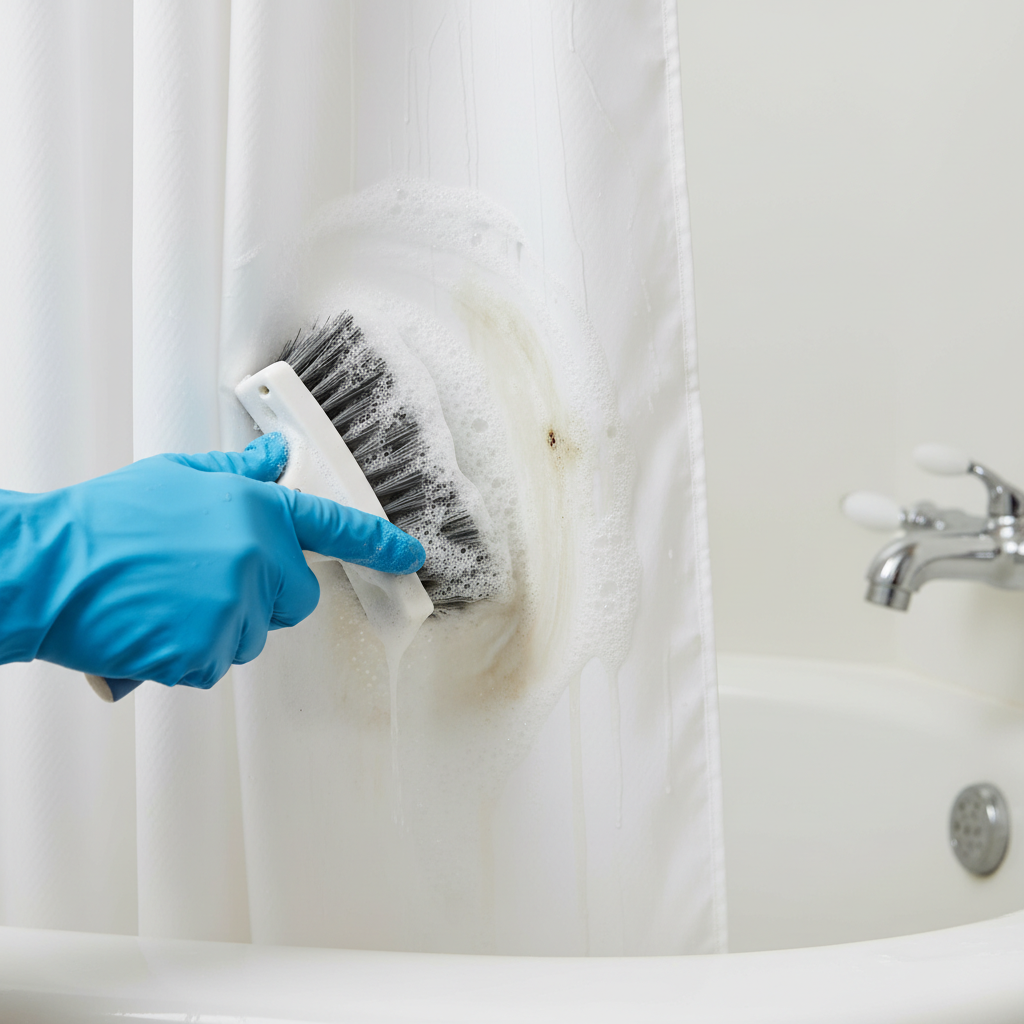
Vinegar Solution: For general cleaning and mild mildew, create a solution of equal parts white vinegar and warm water. Spray generously or use a sponge to scrub the entire liner, paying special attention to stained areas.
-
Baking Soda Paste: For more stubborn mildew spots, make a paste of baking soda and a little water. Apply it directly to the mildew, let it sit for 15-30 minutes, then scrub with a brush or sponge.
-
Bleach (Use with Caution): For severe mildew on white or light-colored plastic liners, a diluted bleach solution can be effective. Mix 1/4 cup of bleach with 1 gallon of warm water. Dip a sponge or brush into the solution and scrub the affected areas. Rinse thoroughly and ensure adequate ventilation. Never mix bleach with vinegar or other cleaners, as it can create toxic fumes. Test on an inconspicuous area first.
-
Rinse Thoroughly: Rinse the liner completely with clean water to remove all cleaning solutions and mildew residue.
-
Air Dry: Hang the liner back on its rod or a clothesline to air dry completely. Ensure it’s fully extended for optimal drying.
Spot Cleaning and Commercial Removers
-
Hydrogen Peroxide: A 3% hydrogen peroxide solution can be sprayed directly onto mildew spots, left for 10 minutes, and then wiped away. It’s less harsh than bleach and generally safe for most fabrics and plastics, but always test first.
-
Commercial Mildew Removers: Many cleaning products are specifically formulated to kill mildew. Follow the product instructions carefully, ensuring good ventilation and wearing protective gloves. For advice on effective cleaning practices, you might find valuable insights from trusted sources like Good Housekeeping’s guide to cleaning mildew.
Eliminating Lingering Bathroom Odors Beyond the Curtain
Sometimes, even after cleaning the shower curtain, a faint mildew smell can persist. This indicates that other parts of your bathroom might be harboring mildew or dampness.
-
Clean Grout and Tiles: Grout lines are notorious for collecting moisture and mildew. Use a grout cleaner or a baking soda paste and a brush to scrub them clean.
-
Wipe Down Walls and Ceilings: Steam and moisture can cling to bathroom walls and ceilings, especially near the shower. Regularly wipe them down with a diluted vinegar solution.
-
Check for Leaks: Investigate any persistent damp spots or peeling paint, which could indicate a hidden leak fostering mildew behind walls or under flooring.
-
Clean Drains: Hair, soap scum, and other debris can accumulate in drains, creating a musty odor. Use a drain cleaner or a mixture of baking soda and vinegar followed by hot water to clear them out.
-
Wash Bath Mats and Towels Regularly: Damp bath mats and towels are also prime spots for mildew. Wash them frequently and ensure they dry completely.
-
Natural Air Fresheners: Once everything is clean, place bowls of baking soda, activated charcoal, or open containers of coffee grounds in the bathroom to absorb residual odors naturally.
When to Replace Your Shower Curtain
Despite your best efforts, there comes a time when a shower curtain is beyond saving. Here are signs it’s time for a replacement:
-
Permanent Stains: If extensive mildew stains remain even after deep cleaning, it’s a good indicator that the fabric or plastic has been compromised.
-
Tears or Damage: Physical damage makes the curtain less effective at containing water and can create more areas for mildew to hide.
-
Persistent Odor: If the mildew smell returns quickly after cleaning, it means the spores have deeply embedded themselves, and replacement is the most practical solution.
-
General Wear and Tear: Over time, even the best shower curtains degrade. A fresh curtain can instantly uplift the look and feel of your bathroom.
Long-Term Strategies for a Consistently Fresh Bathroom
Maintaining a fresh-smelling bathroom is an ongoing process. Incorporate these habits into your routine for lasting results:
-
Daily Wipes: Keep a small squeegee in your shower to quickly wipe down shower walls and the inner surface of the liner after each use. This minimizes moisture and soap scum buildup.
-
Shower Door/Curtain Maintenance: If you have a glass shower door, use a daily shower spray or squeegee to prevent hard water spots and soap scum. If you have a curtain, ensure it’s always spread out to dry.
-
Check Ventilation System: Periodically clean your exhaust fan cover and ensure it’s functioning optimally. A clogged fan won’t remove humidity efficiently.
-
Declutter: Minimize items sitting on the edge of the tub or shower, as these can trap moisture underneath and around them.
Frequently Asked Questions About Shower Curtain Mildew
How often should I clean my shower curtain?
It’s generally recommended to wipe down plastic liners weekly and machine wash fabric curtains monthly. However, this can vary based on your bathroom’s humidity levels, how often the shower is used, and the type of material.
Can I use bleach on all shower curtain materials?
No. Bleach is suitable for white or light-colored plastic/vinyl liners but can damage and discolor fabric curtains. Always check the care label and test any cleaner on an inconspicuous area first. Never mix bleach with other cleaners like vinegar or ammonia.
Do anti-mildew shower curtains really work?
Anti-mildew treated shower curtains and liners can help inhibit mildew growth for a period, but they are not a permanent solution. They still require regular cleaning and good ventilation to remain effective. They provide an extra layer of protection, not immunity.
What’s the best way to dry a shower curtain quickly?
The best way is to fully extend it across the shower rod after each use, ensuring proper airflow. If your bathroom has an exhaust fan, run it for 15-30 minutes. Opening a window can also help accelerate drying.
Why does my whole bathroom smell like mildew, even after cleaning the curtain?
If the smell persists, mildew might be growing in other damp areas of your bathroom. Check grout lines, corners, under sinks, behind toilets, and in damp towels or bath mats. In rare cases, it could indicate a hidden plumbing leak behind walls.
Conclusion
A shower curtain attracting mildew smell is a common household challenge, but it’s entirely manageable with the right approach. By understanding the causes, implementing consistent preventative measures, and knowing how to effectively clean and maintain your shower curtain and bathroom, you can banish those musty odors for good. Enjoy stepping into a consistently fresh, clean, and inviting bathroom every day!