If you’ve noticed a draft coming from window frame seams, you’re not alone—air leaks around windows are one of the most common sources of heat loss, cold spots, and uncomfortable rooms. This guide explains how to find where the air is coming from, practical fixes for every budget, and longer-term solutions to keep your home comfortable and lower energy bills.
Why a draft coming from window frame matters
Drafts not only make living spaces uncomfortable, they also increase your heating and cooling costs and can bring in moisture that leads to condensation and mold. Addressing drafts from the window frame improves indoor comfort, reduces energy waste, and extends the life of your windows.

How to tell if the draft is really coming from the window frame
Before investing time or money, confirm where the air is entering. A draft that feels like it’s coming from the window pane may actually be from the frame, sash, or the surrounding wall.
- Hand test: On a windy day, slowly move your hand along the edges of the frame—top, bottom, and sides—to feel for moving air.
- Incense or candle test: Hold a lit incense stick or a thin candle near frame seams and watch the smoke or flame for movement. Avoid open flames near curtains; use caution.
- Tissue test: Tape a small strip of tissue to different frame joints; if it flickers, you’ve found a leak.
- Thermal camera or infrared thermometer: These tools show temperature variation, making it easy to spot cold air paths. Some local libraries or hardware stores offer borrowing programs.
- Visual inspection: Look for cracked or missing caulk, worn weatherstripping, gaps between the trim and wall, rotted wood, or loose glazing putty on older windows.
Common causes of drafts around window frames
Understanding the source helps pick the right solution.
- Worn or missing weatherstripping: The most frequent cause—rubber, felt, or foam strips degrade over years of use.
- Gaps between trim and wall: Settling or poor installation can leave gaps that allow air infiltration.
- Cracked or missing caulk: Exterior and interior caulk seals joints; when it fails, air (and moisture) can pass through.
- Warped or rotted frame: Moisture and age can deform frames so they no longer seal tightly.
- Loose glazing or cracked panes: In single-pane windows or older multi-pane windows, broken glazing putty or cracked glass produces drafts.
- Installation gaps: New windows improperly backfilled or insulated can still leak at the rough opening.
Quick temporary fixes (same-day solutions)
If you need immediate relief—on a cold night or before guests arrive—use these short-term options to reduce drafts quickly.
- Draft stopper / window snake: Fabric tubes filled with insulation placed at the sill reduce cold flow at the bottom of the sash.
- Plastic window film: Window shrink film applied with double-sided tape and heat-sealed with a hair dryer creates an insulating air barrier for a season.
- Rope caulk: A pliable putty-like sealant pressed into gaps is quick, inexpensive, and removable.
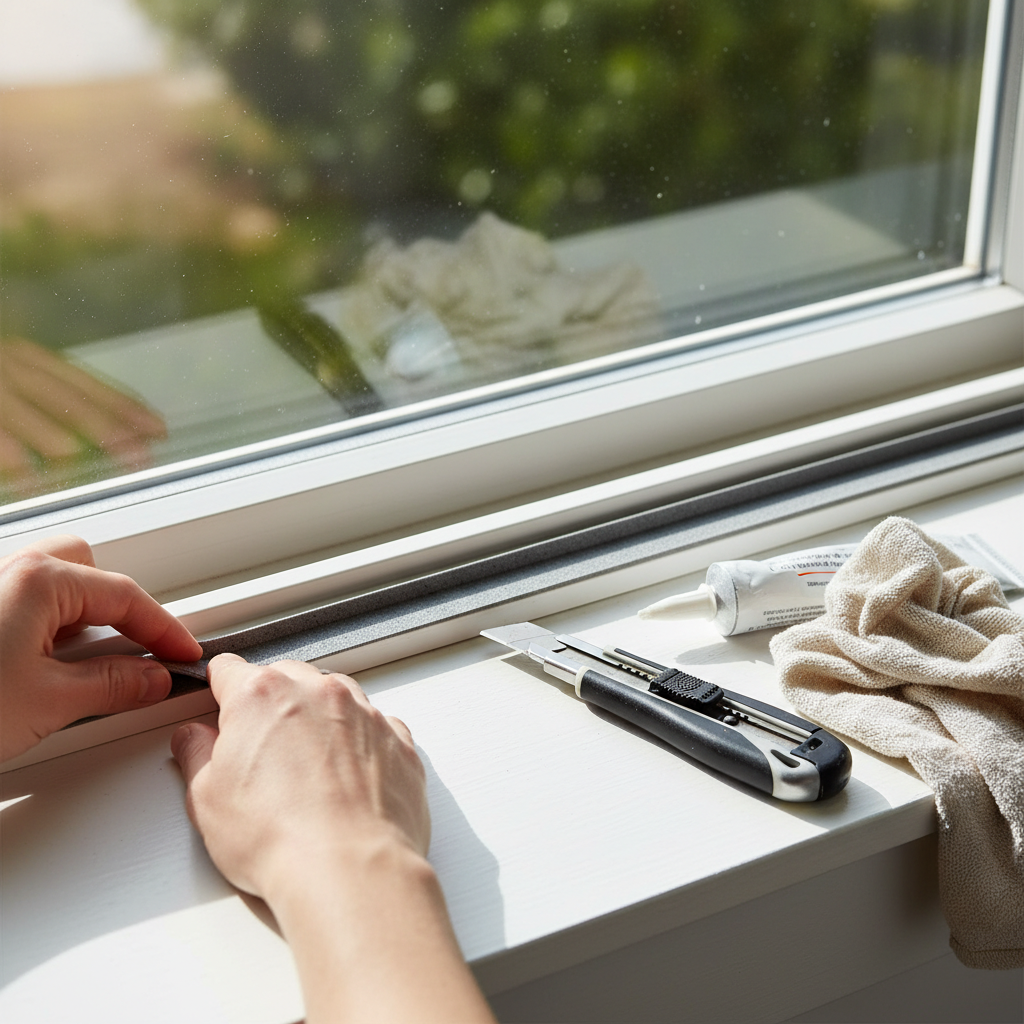
- Weatherproofing tape: Thin foam or adhesive-backed vinyl strips can close small gaps temporarily.
Permanent DIY repairs
For a longer-term solution that preserves appearance and performance, try these common DIY repairs.
Replacing weatherstripping
Most sash windows use either V-strip (tension), adhesive foam, or bulb-type weatherstripping. Materials are inexpensive and life expectancy varies—rubber or silicone strips last longest.
- Measure the existing strip and purchase the correct profile.
- Clean the track and mating surfaces; remove old adhesive.
- Cut to length and install per manufacturer instructions; some require staples or screws, others are self-adhesive.
Re-caulking joints
Exterior and interior caulking seals the seam where the frame meets siding or trim. Use exterior-grade silicone or polyurethane caulk for outdoor seams and paintable acrylic-latex caulk indoors if you plan to paint.
- Remove cracked or loose caulk with a utility knife or caulk remover tool.
- Clean and dry the area thoroughly.
- Apply a continuous bead and smooth it with a wet finger or a caulk tool.
Repair or replace glazing putty
For older single-pane windows with glazing putty, cracked putty invites drafts. Reglazing is a simple skill: remove loose putty, set the glass with glazing points, and apply new putty. Allow proper curing time before painting.
Insulate between the frame and rough opening
If the gap between the window frame and rough opening was never insulated, use low-expansion spray foam or fiberglass insulation to fill voids—avoid overfilling with expanding foam which can bow frames.
When to call a contractor or replace the window
DIY fixes work well for most small leaks, but consider professional help when:
- The frame is severely rotted, warped, or beyond repair.
- Multiple windows are leaking and repairs would be repetitive—replacement may be more cost-effective.
- There are signs of structural movement or water intrusion into the wall cavity.
- Energy savings estimates justify investing in high-performance replacement windows.
Window replacement options include retrofit replacements (which fit into the existing frame) or full-frame replacements (which remove the entire window and frame). Full replacements are more expensive but also allow you to correct framing or insulation issues.
Energy efficiency and cost considerations
Fixing drafts saves energy, but costs vary:
- Temporary fixes (film, rope caulk): $5–$30 per window.
- Weatherstripping and caulk: $10–$50 in materials per window, plus your time.
- Professional reglazing or minor repairs: $100–$300 per window depending on labor and complexity.
- Window replacement: $300–$1,200+ per window for basic models; premium windows cost more.
Consider the payback via smaller heating bills and improved comfort. In many climates, stopping drafts pays for itself over a few years.
Preventive maintenance to avoid future drafts
Small investments in maintenance avoid bigger problems later:
- Inspect and re-caulk seams annually.
- Replace weatherstripping every 5–10 years or when it shows wear.
- Keep exterior paint and trim in good condition to prevent moisture damage.
- Install storm windows or magnetic secondary glazing in older homes for an extra barrier.
Seasonal tips
Different seasons call for different approaches:
- Winter: Prioritize sealing air leaks, add insulation film, and install thermal curtains.
- Summer: Check for leaks that admit warm air; replace damaged screens and use exterior shading to reduce solar heat gain.
- Spring/Fall: Inspect and maintain caulk and weatherstripping—best time for small repairs before extreme temperatures arrive.
Safety notes
When working on windows, be mindful of safety: wear gloves and safety glasses when removing glass or old putty, avoid inhaling dust from old paint (which could contain lead in older homes), and follow manufacturer instructions for adhesives and foams. If you suspect lead paint or structural problems, consult a licensed professional.
Tools and materials checklist
Common items to have on hand when diagnosing and repairing drafts:
- Incense stick or candle (for smoke test)
- Utility knife, putty knife, caulk remover tool
- Caulk (interior paintable and exterior silicone or polyurethane)
- Weatherstripping (foam, V-strip, or bulb type)
- Rope caulk and window film kits
- Low-expansion spray foam or fiberglass insulation
- Glazing points and glazing compound (for older windows)
- Safety glasses, gloves, ladder (if needed)
When a draft could indicate a bigger problem
If a draft is accompanied by visible water stains, mold, or unusually high moisture levels near the window, the issue may be a leak in the exterior cladding or flashing rather than simply poor sealing. These situations require prompt attention to prevent structural damage.
Further reading and resources
For practical step-by-step projects and seasonal weatherproofing tips, consult trusted home-improvement resources such as this guide from Better Homes & Gardens: How to Winterize Windows. These resources provide visual guides, product recommendations, and safety advice.
Frequently Asked Questions
Can I stop a draft from the window frame myself?
Yes—many drafts are caused by worn weatherstripping or cracked caulk and can be fixed by a confident DIYer with basic tools. More complex issues such as rotted frames or structural gaps may require a professional.
How long does weatherstripping last?
Material affects life span. Foam tape may last 1–3 years; V-strip and rubber/silicone weatherstripping can last 5–10+ years depending on exposure and use.
Is window film effective?
Window film is a low-cost way to reduce heat loss and drafts for a season. It’s not as effective as replacing windows or installing storm windows but provides meaningful short-term improvement.
Will sealing window drafts reduce mold risk?
Sealing drafts reduces cold surfaces that encourage condensation, which in turn lowers the risk of mold. However, ensure proper ventilation to avoid trapping moisture indoors.
How do I know if I should replace the window instead of repairing it?
Replace if the frame is significantly damaged, the glass is single-pane and causing high energy loss, or repeated repairs are needed. Consult a specialist for an energy audit and replacement quotes to compare costs and benefits.
Fixing a draft coming from window frame can often be simple and affordable, and the comfort benefits are immediate. Start with a careful diagnosis, use temporary fixes if you need quick relief, and move to permanent repairs or replacement when appropriate.
If you’d like ideas for making your living spaces cozier and more efficient while you tackle window repairs, explore this guide to How to Design A Comfortable Modern Living Space for tips on layout, insulation, and window treatments: How to Design A Comfortable Modern Living Space