Why Your Shower Curtain Becomes a Mildew Magnet
Before we tackle the solutions, it’s essential to understand the root causes behind your shower curtain’s unfortunate attraction to mildew. It’s not just bad luck; it’s a perfect storm of environmental factors and material properties.
The Unholy Trinity: Moisture, Warmth, and Darkness
Mildew and its more aggressive cousin, mold, are fungi that require three main things to flourish: moisture, warmth, and a food source. Your shower provides all three in abundance. Every time you shower, warm water creates a humid environment, splashing onto the curtain. After your shower, water droplets cling to the curtain, and if not dried properly, this moisture lingers. The folds of the curtain, especially when pushed back, create dark, sheltered pockets – ideal conditions for spores to settle and grow. The combination of residual warmth from the shower and lack of light creates a perfect incubator for fungal growth.

Poor Ventilation: The Primary Culprit
Perhaps the single biggest contributor to a smelly shower curtain is inadequate ventilation. Without proper airflow, the humid, warm air from your shower doesn’t dissipate quickly. It hangs in the air, condensing on surfaces, including your shower curtain, and keeping them damp for extended periods. A bathroom fan that isn’t used consistently or is too small for the space, or a lack of windows, can perpetuate this cycle, inviting mildew to settle in and thrive.
Material Matters: Not All Curtains Are Created Equal
The type of material your shower curtain is made from plays a significant role in its susceptibility to mildew. Certain materials absorb and retain moisture more readily than others, creating a more hospitable environment for fungi.
- Plastic (PEVA/EVA/Vinyl): While often water-resistant, these materials can trap moisture in their folds and develop a slick film of soap scum, which serves as a food source for mildew. They are also less breathable.
- Fabric (Cotton, Polyester, Hemp): These can absorb water, and if not dried thoroughly and quickly, they can become damp and prone to mildew. However, many fabric curtains are machine washable, making them easier to clean regularly. Some come with water-repellent coatings.
- Hybrid/Treated Materials: Some modern shower curtains and liners are treated with anti-microbial agents designed to inhibit mildew growth. While not foolproof, they can offer an extra layer of protection.
Soap Scum and Body Oils: A Feast for Fungi
Beyond plain water, your shower curtain also collects soap scum, shampoo residue, conditioner, and body oils. These substances, especially when mixed with hard water minerals, create a sticky film on the curtain’s surface. This film isn’t just unsightly; it’s an organic food source that accelerates mildew growth. The fungi literally feed on the organic matter, making your curtain smell even worse.
Immediate Rescue: How to Eliminate the Mildew Smell Now
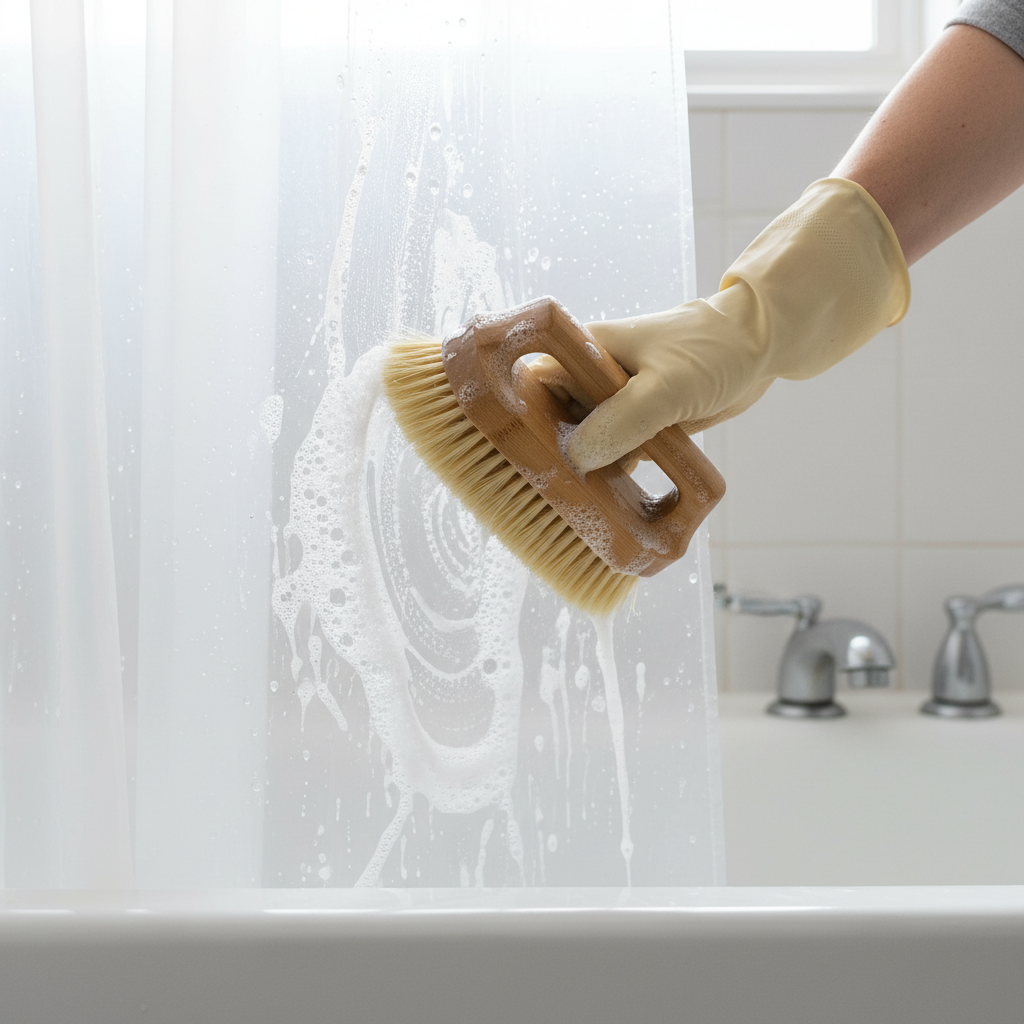
If your shower curtain is already emitting that tell-tale musty odor, immediate action is needed. Here’s how to clean different types of curtains and banish the smell.
Machine Washing Your Fabric Shower Curtain
For fabric shower curtains (polyester, cotton, linen), the washing machine is your best friend. Always check the care label first for specific instructions, but generally, this method is highly effective:
- Remove the Curtain: Take the curtain off its hooks. If you have plastic hooks, you can often leave them on. For metal rings, it’s best to remove them to prevent snagging or damage in the washer.
- Add Detergent: Place the fabric curtain in the washing machine. Add your regular laundry detergent.
- Boost Cleaning Power:
- White Vinegar: Add 1/2 to 1 cup of white vinegar to the detergent dispenser or directly into the wash cycle. Vinegar is a natural disinfectant and deodorizer, excellent at breaking down mildew.
- Baking Soda: Alternatively, add 1/2 cup of baking soda directly into the wash drum. Baking soda absorbs odors and helps lift grime.
- Bleach (for white curtains only): For stubborn mildew on white or colorfast fabric curtains, a small amount of bleach (1/2 cup) can be added to the bleach dispenser. Perform a spot test on an inconspicuous area first if you’re unsure about colorfastness.
- Add Towels (Optional but Recommended): For extra scrubbing power and to help distribute the cleaning agents, toss in a few old towels. Their abrasive action helps scrub the curtain clean.
- Wash Cycle: Use a warm or hot water cycle (again, check care label) on a gentle or regular setting. Hot water helps kill mildew spores more effectively.
- Double Rinse: Consider a double rinse cycle to ensure all soap scum and cleaning agents are thoroughly removed.
- Drying: This is crucial! Fabric curtains should be air-dried or tumble-dried on a low-heat setting. Hang the curtain back on the rod immediately, spreading it out completely to allow for maximum airflow. Ensure the bathroom is well-ventilated during drying. Avoid leaving it crumpled or bunched up, as this will only invite the mildew back.
Hand-Washing Plastic or PEVA/EVA Liners
Plastic or vinyl shower liners often can’t withstand a washing machine cycle, but they are relatively easy to clean by hand:
- Lay it Flat: Lay the liner flat in your bathtub or shower stall.
- Spray with Cleaner: Create a cleaning solution of equal parts white vinegar and warm water in a spray bottle. For tougher stains, you can add a few drops of dish soap. Spray the entire liner thoroughly, paying extra attention to the bottom and any visibly mildewed areas.
- Let it Soak: Let the solution sit for 10-15 minutes to penetrate the grime and mildew.
- Scrub: Using a soft-bristled brush, sponge, or old cloth, scrub the entire liner. You’ll likely see soap scum and mildew lift away. For persistent spots, apply a paste of baking soda and a little water, let it sit, then scrub.
- Rinse Thoroughly: Rinse the liner completely with warm water, ensuring no cleaning solution or residue remains.
- Dry Immediately: Hang the clean liner back on the shower rod, fully extended, and open a window or turn on the fan to facilitate quick drying. You can also wipe it down with a clean, dry towel to speed up the process.
Spot Treatment for Stubborn Mildew
Sometimes, only small sections of your curtain or liner are affected. For these, a targeted spot treatment can work wonders:
- Vinegar Spray: Mix equal parts white vinegar and water in a spray bottle. Spray directly onto the mildewed area, let it sit for 15-30 minutes, then scrub with a brush or sponge and rinse.
- Baking Soda Paste: For more embedded mildew, create a paste using baking soda and a small amount of water. Apply the paste directly to the mildew, let it sit for several hours (or overnight), then scrub vigorously with a brush and rinse thoroughly.
- Hydrogen Peroxide: A 3% hydrogen peroxide solution (available at pharmacies) can be sprayed onto mildewed areas. Let it sit for 10 minutes before scrubbing and rinsing. It’s a milder alternative to bleach but still effective.
The Bleach Option (Use with Caution)
Bleach is a powerful disinfectant and mold killer, but it must be used with extreme caution, especially on colored fabrics. It can cause irreversible discoloration.
- Dilution is Key: Never use undiluted bleach. Mix 1 part bleach with 10 parts water in a well-ventilated area.
- Spot Test: Always perform a spot test on an inconspicuous area of your curtain or liner first to check for colorfastness.
- Application: Apply the diluted bleach solution to the mildewed areas with a sponge or spray bottle. Let it sit for 5-10 minutes.
- Rinse Thoroughly: Rinse the curtain extensively with water to remove all traces of bleach. Bleach fumes can be irritating, so ensure good ventilation during and after use.
- Safety First: Wear gloves and eye protection. Never mix bleach with vinegar or ammonia, as this can create dangerous toxic fumes.
Long-Term Strategies: Stopping Mildew Smell Before It Starts
Cleaning your shower curtain is a temporary fix if you don’t address the underlying conditions that cause mildew. Implementing these long-term strategies will significantly reduce the chances of your shower curtain attracting mildew smell again.
Mastering Bathroom Ventilation
This is arguably the most critical step in mildew prevention. Moisture must be removed from the bathroom quickly and efficiently.
- Use Your Exhaust Fan Consistently: Turn on your bathroom exhaust fan *before* you step into the shower and let it run for at least 15-30 minutes *after* you finish. This draws humid air out of the room. Ensure your fan is adequately sized for your bathroom; if it’s struggling, consider an upgrade.
- Open Windows and Doors: If you have a window in your bathroom, open it during and after your shower. If not, crack the bathroom door slightly to allow air to circulate and excess humidity to escape.
- Cross-Ventilation: If possible, open a window in an adjacent room to create a cross-breeze that helps pull moist air out of the bathroom.
The Art of Drying Your Shower Curtain
Ensuring your shower curtain dries quickly after each use is a simple yet incredibly effective preventative measure.
- Extend the Curtain Fully: After every shower, pull your shower curtain fully extended across the rod. This allows air to circulate around both sides of the curtain, promoting faster drying and preventing moisture from getting trapped in folds.
- Wipe Down (Especially Liners): For plastic or PEVA/EVA liners, a quick wipe down with a dry towel or squeegee after each shower can remove most of the standing water, dramatically reducing drying time and minimizing the opportunity for mildew to form.
- Open Liner Away from Curtain: If you have a fabric curtain and a plastic liner, keep the liner slightly separated from the fabric curtain and extended, so both can air dry independently without transferring moisture.
Choosing the Right Shower Curtain Material
When it’s time to buy a new shower curtain or liner, make an informed choice that will resist mildew.
- Washable Fabric Curtains: Opt for fabric curtains made from polyester or treated cotton that can be easily machine washed. This allows for routine cleaning, which is key to prevention.
- PEVA/EVA Liners: While plastic liners can get mildew, PEVA (polyethylene vinyl acetate) and EVA (ethylene-vinyl acetate) are often preferred over traditional PVC vinyl because they are considered more eco-friendly, less prone to strong chemical smells, and still easy to wipe down.
- Mildew-Resistant Treatments: Look for curtains or liners that are advertised as “mildew-resistant” or “anti-microbial.” These materials are often treated with agents that inhibit fungal growth.
- Weighted Hems: Curtains with weighted hems prevent them from billowing inwards and sticking to you, which can also help with better drying and reduce water splashing outside the shower.
Establish a Regular Cleaning Routine
Even with excellent ventilation and material choices, regular cleaning is vital. How often depends on usage and bathroom conditions, but a good rule of thumb is:
- Fabric Curtains: Wash monthly, or every two weeks in high-humidity environments or if used frequently.
- Plastic/PEVA/EVA Liners: Wipe down weekly with an all-purpose bathroom cleaner or a vinegar solution. Give them a more thorough scrub every 1-2 months.
- Spot Clean: Address any visible mildew spots immediately to prevent them from spreading.
For more detailed advice on tackling bathroom grime and maintaining a hygienic space, resources like Better Homes & Gardens offer comprehensive guides on keeping your bathroom sparkling clean and mildew-free.
Don’t Forget the Liner: The Unsung Hero
Often, the mildew smell originates from the liner, which is in direct contact with water. Treat your liner as a separate entity from your decorative outer curtain. Invest in a good quality, easily washable, or wipeable liner. Some people even buy two liners and rotate them, allowing one to thoroughly dry or be cleaned while the other is in use.
Consider a Curved Shower Rod
A curved shower rod creates more space within your shower and helps the curtain hang away from the tub and walls. This increased distance allows for better airflow around the curtain, promoting quicker drying and reducing contact with wet surfaces, which can minimize mildew growth.
Humidity Control: Beyond the Shower
If your bathroom consistently feels humid, even with good ventilation, consider investing in a dehumidifier. A small, portable dehumidifier can significantly reduce overall moisture levels in the bathroom, creating an environment less hospitable to mildew and mold.
Beyond the Basics: Advanced Tips and Troubleshooting
Sometimes, despite your best efforts, mildew can be particularly persistent. Here are a few more advanced strategies.
When Is It Time to Replace Your Shower Curtain?
While cleaning can extend the life of your shower curtain, there comes a point when replacement is the most practical solution. Consider replacing your curtain or liner if:
- Stains are Permanent: Despite vigorous cleaning, unsightly dark stains or orange mineral deposits remain.
- Damage: The curtain is torn, ripped, or has significant holes.
- Persistent Smell: Even after a thorough cleaning, the musty mildew smell returns almost immediately, indicating deeply embedded spores that are difficult to eradicate.
- Worn Out: Fabric curtains become threadbare, or plastic liners become stiff, brittle, or develop a persistent slimy texture that won’t wash off.
Liners generally have a shorter lifespan than decorative fabric curtains and may need to be replaced every 6-12 months, depending on use and material.
DIY Odor-Fighting Sprays
For a quick refresh between washes or to help maintain freshness, consider a DIY spray:
- Vinegar & Essential Oil Spray: Mix 1 cup white vinegar, 1 cup water, and 10-15 drops of an antimicrobial essential oil like tea tree oil, eucalyptus, or lavender. Shake well and lightly mist your shower curtain and liner a few times a week. The vinegar helps kill spores, and the essential oils leave a fresh scent.
- Baking Soda & Water Spray: Dissolve 1 tablespoon of baking soda in 2 cups of warm water. Spray onto the curtain to absorb odors. This is particularly good for fabric curtains.
Addressing Underlying Bathroom Humidity Issues
If your shower curtain is just one symptom of a larger humidity problem, you might need to look beyond the curtain itself. Check for:
- Leaky Pipes: Hidden leaks can create persistent dampness.
- Cracked Grout or Caulk: These can allow water to seep into walls, leading to unseen mold growth that contributes to bathroom odors.
- Insufficient Insulation: Cold spots can lead to condensation.
Addressing these structural issues can significantly improve your bathroom’s overall humidity and reduce mildew problems throughout the space.
Frequently Asked Questions About Shower Curtain Mildew
Q: How often should I wash my shower curtain?
A: For fabric shower curtains, aim for a wash every 2-4 weeks. Plastic or PEVA/EVA liners can be wiped down weekly and thoroughly scrubbed every 1-2 months. If your bathroom is particularly humid or used frequently, increase the frequency.
Q: Can I put a plastic shower liner in the washing machine?
A: Generally, it’s not recommended for most plastic or vinyl liners, as they can melt or tear. However, some heavy-duty PEVA or EVA liners might tolerate a cold, gentle cycle, often with towels for cushioning. Always check the care label or manufacturer’s instructions. Hand-washing in the tub is usually the safest bet.
Q: Is the mildew smell harmful?
A: The smell itself isn’t directly harmful, but it indicates the presence of mold or mildew, which can pose health risks. For sensitive individuals, exposure to mold spores can trigger allergic reactions, asthma attacks, or respiratory issues. It’s always best to remove mildew promptly to maintain a healthy indoor environment.
Q: What’s the difference between mold and mildew?
A: Mildew is a specific type of mold, usually appearing as a flat, powdery or downy growth, often white, gray, or yellowish, found on surfaces. Mold, in general, refers to a broader category of fungi that can grow in various colors (black, green, blue) and textures (fuzzy, slimy), and can penetrate deeper into materials. Both indicate a moisture problem and should be addressed.
Q: Are “mildew-resistant” shower curtains truly effective?
A: Mildew-resistant curtains are treated with chemicals that inhibit fungal growth, offering an extra layer of protection. They can certainly help reduce the frequency of mildew formation, but they are not foolproof. They still require proper ventilation and regular cleaning to remain effective and prevent any mildew from eventually taking hold.
Embrace a Fresher Bathroom Environment
A fresh, clean bathroom contributes significantly to a more pleasant home environment. While a shower curtain attracting mildew smell can be a frustrating problem, it’s one that is entirely preventable and treatable with the right knowledge and consistent effort. By understanding why mildew grows, choosing appropriate materials, implementing proper cleaning routines, and prioritizing ventilation, you can banish that musty odor for good. Take these steps, and you’ll not only enjoy a cleaner-smelling bathroom but also contribute to a healthier living space for everyone.