Understanding Foundation Settling: What It Means for Your Home
Foundation settling refers to the downward movement of a building’s foundation over time. While some minor, uniform settling is natural and expected in new constructions as the soil compacts, problematic settling occurs when this movement is excessive, uneven, or continues indefinitely. This uneven movement puts immense stress on the entire structure, leading to a variety of visible issues.
Causes of Foundation Settling
Several factors can contribute to foundation settling, often working in combination:
- Soil Conditions: The type of soil beneath your home plays a significant role. Expansive clay soils can swell when wet and shrink when dry, leading to constant movement. Sandy or loose soils may compact over time, causing uniform or differential settlement.
- Poor Drainage and Moisture Imbalance: This is arguably the most common culprit. Excess water near the foundation, from leaky gutters, improper grading, or plumbing leaks, can saturate the soil, causing it to lose its load-bearing capacity. Conversely, prolonged drought can cause soils to dry out and shrink, leading to settlement.
- Tree Roots: Large trees planted too close to the foundation can draw significant amounts of moisture from the soil, causing it to shrink and settle. Their roots can also grow directly under the foundation, putting upward pressure on slabs.
- Poor Compaction During Construction: If the soil was not adequately compacted before the foundation was laid, it can settle unevenly over time as the weight of the house bears down on it.
- Earthquakes or Nearby Construction: Seismic activity or heavy excavation work nearby can cause vibrations that lead to soil movement and foundation settling.
- Plumbing Leaks: Persistent leaks under the slab or near the foundation can introduce excessive moisture, softening the soil and compromising its integrity.
Interior Foundation Settling Signs: What to Look for Inside
The interior of your home often provides the first clues that something is amiss with the foundation. These signs manifest in various forms, from subtle cosmetic changes to more alarming structural shifts.
Cracks in Walls and Ceilings
Wall and ceiling cracks are among the most common indicators of foundation issues. While minor hairline cracks can be benign, certain types of cracks warrant closer inspection.
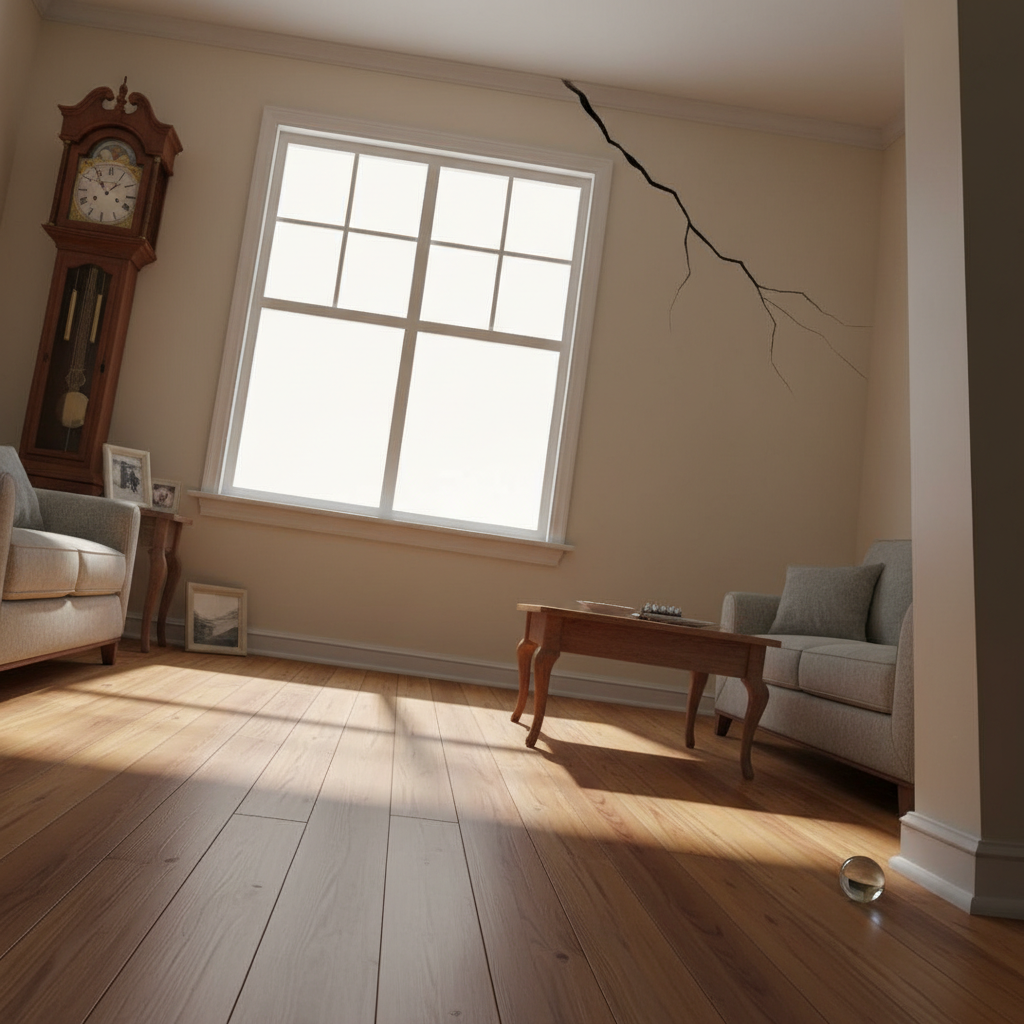
- Hairline vs. Structural Cracks: Hairline cracks, especially in plaster or drywall, can be due to normal house movement, paint shrinkage, or humidity fluctuations. However, cracks that are wider than 1/4 inch, zig-zag, or run diagonally across walls and ceilings are often symptomatic of structural stress.
- Location Matters: Cracks appearing near doorframes, window frames, or where walls meet ceilings are particularly concerning. Vertical cracks in drywall can sometimes indicate a structural issue if accompanied by other signs.
- Stair-Step Cracks: If you have plaster walls, look for cracks that follow the mortar lines in a stair-step pattern, often indicating brick or block foundation issues.
Sticking Doors and Windows
When a foundation settles unevenly, it can distort the rectangular shape of door and window frames, leading to misalignment.
- Difficulty Opening/Closing: Doors and windows that suddenly become difficult to open, close, or latch are a strong indicator. They might drag on the frame or stick in certain spots.
- Gaps Around Frames: You might notice uneven gaps between the door or window and its frame, or the frame itself might appear out of square.
- Self-Opening Doors: Doors that swing open or close on their own are often a sign that the floor is no longer level.
Uneven or Sloping Floors
A truly level floor is a cornerstone of a stable home. Foundation settlement can cause floors to become noticeably uneven.
- Visible Slopes: You might notice a visible slope or dip in certain areas of your floor, particularly in older homes.
- The Ball Test: A simple test involves placing a marble or small ball on the floor in various locations. If it consistently rolls in a specific direction, it indicates an uneven floor, potentially due to foundation movement.
- Squeaky Floors: While squeaks can be common in older homes, new or worsening squeaks in specific areas might correlate with a sagging subfloor or joists caused by foundation issues.
Cabinets and Counters Pulling Away from Walls
If your walls are shifting or settling, fixed elements like kitchen cabinets or bathroom counters can be affected.
- Visible Gaps: Look for gaps appearing between cabinets and the wall behind them, or between countertops and the adjacent walls.
- Misaligned Fixtures: If shelves or decorative items appear crooked even when placed “level,” it could be a sign of wall distortion.
Bowing Walls in Basements/Crawl Spaces
For homes with basements or crawl spaces, the foundation walls themselves are directly exposed and can show signs of stress.
- Inward Movement: Look for walls that are visibly bowing, bulging, or leaning inward. This is often caused by hydrostatic pressure from saturated soil pushing against the exterior of the foundation wall.
- Horizontal Cracks: Horizontal cracks along basement walls, particularly in the middle or upper sections, are a serious indicator of bowing or excessive pressure.
Musty Odors and Mold Growth
While not a direct sign of settling, these can be strong indicators of moisture intrusion related to foundation problems.
- Dampness: If the settling has created cracks or gaps, it can allow water to enter the basement or crawl space, leading to dampness, high humidity, musty smells, and eventually mold and mildew growth.
- Health Concerns: Besides potential structural damage, mold can pose significant health risks to residents.
Exterior Foundation Settling Signs: Inspecting Your Home’s Periphery
A thorough inspection of your home’s exterior is just as crucial as checking the interior. Many critical foundation issues manifest on the outside first.
Exterior Wall Cracks
Just like interior cracks, exterior cracks are a prime indicator, especially when they appear in the foundation itself or the brick veneer.
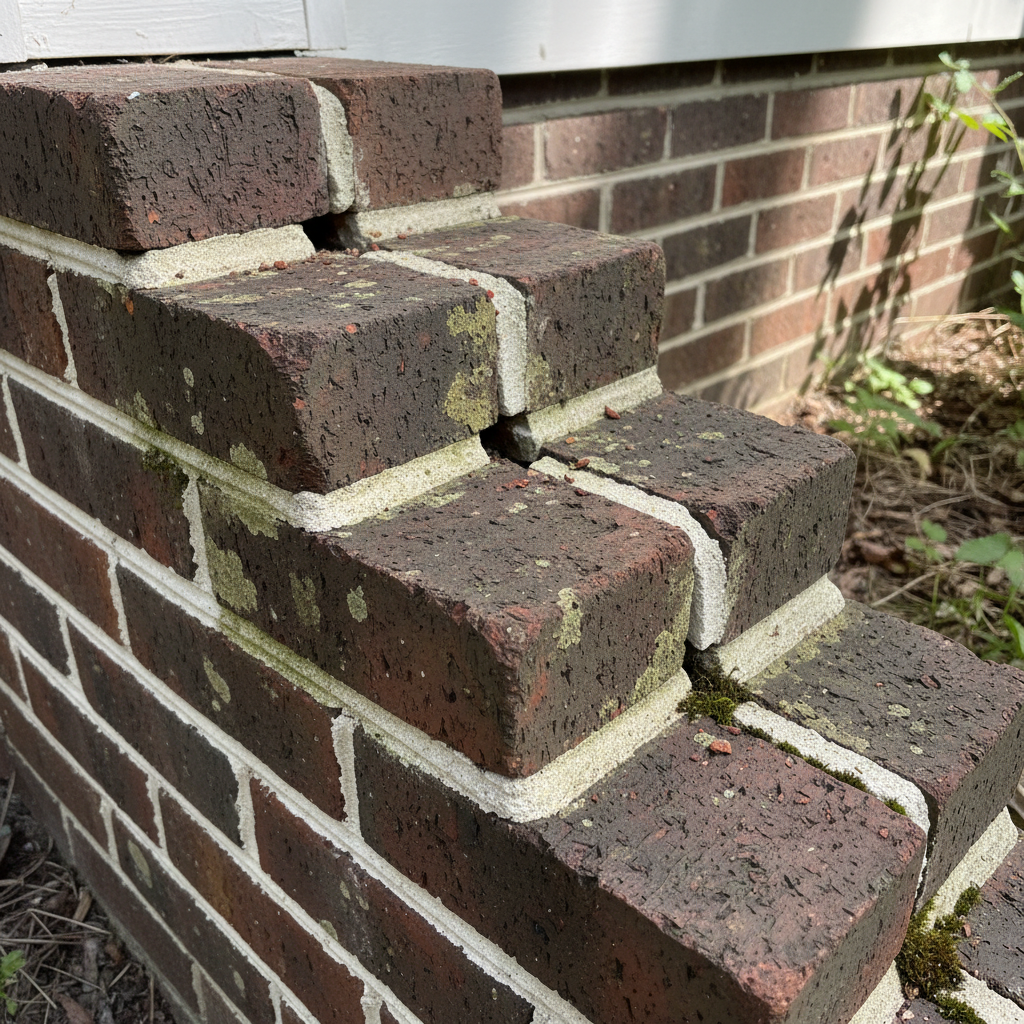
- Stair-Step Cracks: These are very common in brick or block foundations and exterior walls. They follow the mortar joints in a jagged, stair-step pattern and often widen at one end, pointing to the direction of settlement.
- Vertical Cracks: While vertical cracks can sometimes be related to brick expansion/contraction, wide, continuous vertical cracks that extend through several courses of brick or blocks are a cause for concern.
- Horizontal Cracks: Horizontal cracks in brick or block foundation walls are often indicative of extreme pressure, possibly from soil expansion, and can signal significant structural issues like bowing walls.
Chimney Tilting or Leaning
A chimney is a heavy, independent structure, often built on its own footing. If this footing settles unevenly, the chimney can visibly lean or pull away from the house.
- Gap Between Chimney and House: Look for a noticeable gap forming between the chimney structure and the adjacent wall of your home.
- Visible Tilt: Stand back from your house and observe if the chimney appears to be leaning to one side.
Porch and Patio Separation
Attached porches, patios, and even driveways can also show signs of foundation movement.
- Gaps or Cracks: Check for gaps forming where an attached porch or patio meets the main foundation of the house. Cracks in the patio slab itself can also indicate ground movement.
- Unevenness: The porch or patio might become noticeably unlevel or sag in certain areas.
Fascia and Soffit Misalignment
While often thought of as roofline issues, problems with fascia and soffit can sometimes point to broader structural shifts.
- Sagging or Bowing Roofline: An uneven foundation can cause the entire house frame to twist, resulting in a noticeably sagging or bowed roofline, which affects the fascia and soffits.
- Gaps: Look for gaps where the fascia meets the house or where soffits should be flush.
Gaps Around Window and Door Frames
Similar to interior issues, exterior window and door frames can also show signs of distortion due to foundation movement.
- Visible Gaps: Gaps between the frame and the exterior siding or brickwork.
- Misaligned Shutters: If shutters no longer hang straight or align properly with the window, it could be a subtle clue.
Water Pooling Near the Foundation
While a cause, rather than a direct sign of settling, consistent water pooling is a significant risk factor that homeowners must address to prevent future issues.
- Poor Grading: If your landscaping slopes towards your house, rainwater and snowmelt will naturally collect near the foundation.
- Clogged Gutters: Overflowing or leaking gutters can dump large volumes of water directly onto the soil adjacent to your foundation. This excessive moisture can saturate the soil, leading to expansion and contraction cycles that put immense pressure on the foundation. Properly functioning gutters and downspouts are crucial for directing water away from your home. For excellent advice on managing water around your home to protect your foundation, HGTV offers detailed tips on how to keep water away from your foundation.
Crawl Space and Basement Indicators: Digging Deeper for Clues
For homes with crawl spaces or basements, these areas provide a direct view of the foundation walls and supporting structures. A regular inspection, even a quick visual one, can reveal significant issues.
Sagging Floor Joists
In crawl spaces or unfinished basements, you can often see the floor joists supporting the subfloor above.
- Visible Sags: Look for joists that are visibly sagging or bowing between support beams or foundation walls. This can lead to uneven floors upstairs.
- Rot or Pest Damage: Excessive moisture related to foundation issues can also lead to wood rot or attract pests, further compromising structural integrity.
Cracked Basement Floors
While minor hairline cracks in a concrete basement slab are common due to curing and temperature changes, certain types of cracks are concerning.
- Wide or Uneven Cracks: Cracks that are wider than 1/4 inch, have one side higher than the other, or form a significant grid pattern could indicate upward or downward movement of the slab due to soil issues.
- Water Seepage: Cracks that show signs of water seepage are a dual problem: foundation movement creating the crack, and moisture intrusion causing further damage and health risks.
Dampness, Leaks, or Flooding
Any signs of water in your basement or crawl space should be taken seriously.
- Wet Walls or Floors: Even persistent dampness without visible puddles can indicate water infiltration.
- Puddles or Flooding: Standing water is a clear sign of a significant breach, often related to foundation cracks or compromised drainage.
Foundation Wall Movement
This is where you directly observe the foundation walls.
- Vertical or Horizontal Shifts: Look for any indication that the foundation walls are moving, such as horizontal cracks, stair-step cracks in block walls, or signs of bowing/leaning.
- Separation at Joints: In poured concrete foundations, check for separation at cold joints (where different pours meet) or significant cracks.
Why Early Detection of Foundation Settling Signs Matters
Ignoring foundation settling signs is like ignoring a small crack in a dam – the problem only grows larger and more catastrophic over time. Early detection offers numerous benefits:
- Prevents Costly Repairs: Minor foundation issues can often be addressed with less invasive and more affordable solutions. Allowing them to worsen can lead to extensive structural damage, requiring complex and expensive repairs.
- Maintains Home Value: A healthy foundation is critical to your home’s value. Undisclosed or visible foundation problems can significantly diminish market value and make your home difficult to sell.
- Ensures Safety and Structural Integrity: A compromised foundation can threaten the safety of your home and its occupants. Walls could collapse, floors could sag dangerously, and the entire structure could become unstable.
- Avoids Secondary Damage: Foundation issues often lead to secondary problems like plumbing leaks (due to shifted pipes), electrical issues (from strained wiring), and pest infestations (through new entry points).
What to Do When You Spot Foundation Settling Signs
Discovering potential foundation problems can be alarming, but it’s important to approach the situation calmly and systematically.
Don’t Panic: Assess the Situation
Before jumping to conclusions, take a moment to observe the signs carefully. Document them with photos, noting their location, size, and when you first noticed them. This information will be invaluable to professionals.
Contact a Professional Foundation Inspector
This is the most critical step. A licensed structural engineer or a reputable foundation repair specialist can provide an accurate assessment of your home’s foundation. They have the expertise and tools to diagnose the cause and extent of the settlement.
Get Multiple Opinions and Quotes
As with any major home repair, it’s wise to get at least two to three professional opinions and detailed quotes. Compare their assessments, proposed solutions, and pricing. Be wary of anyone pushing for immediate, high-pressure decisions.
Understand Repair Options
Foundation repair methods vary depending on the type of foundation, the cause of settlement, and the extent of the damage. Common solutions include:
- Piering/Piling: Installing steel or concrete piers deep into the soil or bedrock to provide stable support for the foundation.
- Slab Jacking (Mudjacking/Polyjacking): Injecting a grout mixture or polyurethane foam under a settled concrete slab to lift and level it.
- Drainage Improvements: Addressing water issues through French drains, sump pumps, downspout extensions, and re-grading around the house.
- Wall Anchors/Bracing: Used for bowing basement walls, these systems use steel anchors or carbon fiber straps to stabilize the wall and prevent further inward movement.
Preventive Measures
Once repairs are made, or even if your foundation is currently stable, implementing preventive measures is key:
- Maintain Proper Drainage: Ensure gutters are clean, downspouts extend at least 5-10 feet away from the foundation, and your landscape slopes away from your house (a minimum of a 6-inch drop over 10 feet).
- Manage Soil Moisture: Avoid planting large trees too close to the foundation. During prolonged dry spells, consider a soaker hose system to provide consistent, moderate moisture around the foundation to prevent soil shrinkage, especially with expansive clay soils.
- Repair Leaks Promptly: Address plumbing leaks, both inside and outside, immediately.
Frequently Asked Questions About Foundation Settling Signs
How serious are hairline cracks?
Hairline cracks (less than 1/16th of an inch wide) are often cosmetic and can be due to normal settling or drying of materials. However, if they widen, lengthen, or are accompanied by other signs like sticking doors or uneven floors, they warrant professional investigation. Pay close attention to their pattern and growth over time.
Can foundation settling be stopped?
Yes, foundation settling can often be effectively addressed and stopped. Once the underlying cause is identified (e.g., poor drainage, soil expansion/contraction), appropriate repair methods can stabilize the foundation and prevent further movement. However, the exact ‘stopping’ might refer to stabilizing it from further detrimental movement, rather than making it absolutely static for all time.
What’s the average cost of foundation repair?
Foundation repair costs vary widely based on the severity of the damage, the type of foundation, the method of repair required, and your geographical location. Minor repairs like crack injections might be a few hundred to a couple of thousand dollars. Extensive repairs involving piers or pilings can range from $10,000 to $50,000 or more. Getting multiple quotes is essential.
How long does foundation repair take?
The duration of foundation repair depends on the scope of work. Smaller jobs, like sealing cracks, might take a day. More complex projects, such as installing piers, could take anywhere from a few days to several weeks, especially if extensive excavation or interior work is required. Your contractor should provide an estimated timeline.
Is foundation settling covered by home insurance?
Generally, home insurance policies do not cover damage caused by natural foundation settling, earth movement (like shifting soil), or issues related to water seepage, expansive soils, or plumbing leaks (unless the leak was sudden and accidental and the damage is specified). However, if the foundation damage is caused by a sudden, accidental event like a burst pipe (not due to poor maintenance) or a named peril in your policy, some coverage might apply. Always review your specific policy and consult with your insurance provider.
Your home’s foundation is its backbone. By being vigilant and informed about the various foundation settling signs, you empower yourself to protect this crucial element, ensuring the longevity, safety, and value of your most significant investment.