The Essence of Minimalist Design for Modern Family Living
Minimalism, when applied to family homes, is not about deprivation or living without. Instead, it’s a philosophy centered on intentionality – choosing carefully what you bring into your home and ensuring everything serves a purpose or brings joy. For modern families, this translates into practical, durable, and aesthetically pleasing spaces that can adapt to evolving needs, from toddler playdates to teenage study sessions.
Decluttering as a Family Foundation
The first step in embracing minimalist design is often the most challenging yet rewarding: decluttering. For families, this means involving everyone in the process. Teach children the value of their possessions and the joy of letting go. Categorize items into “keep,” “donate,” “dispose,” and “repurpose.” Focus on items that are truly used, loved, or essential. A decluttered home is easier to clean, less stressful, and creates mental space for what truly matters.
Functionality First: Multi-Purpose Spaces
Modern family life demands flexibility. Minimalist design excels at creating multi-functional spaces. A dining table might double as a homework station, a living room sofa might feature hidden storage, and a guest room could also serve as a home office. By maximizing the utility of each area, you reduce the need for excessive furniture and belongings, aligning perfectly with a minimalist ethos.
Durability Meets Style: Kid-Friendly Choices
With children and pets, durability is paramount. Minimalist design prioritizes quality over quantity, meaning investing in well-made furniture and finishes that can withstand the rigors of family life. Think performance fabrics, solid wood, scratch-resistant surfaces, and easy-to-clean materials. These choices not only last longer but also maintain their aesthetic appeal, reducing the need for frequent replacements and upholding a sustainable mindset.
Crafting Key Spaces: Minimalist Family Home Inspiration Room by Room
Let’s explore how minimalist principles can transform key areas of a modern family home, making them more functional, beautiful, and peaceful.
Living Room: Comfort, Connection, and Calm
The living room is often the hub of family activity. A minimalist approach here emphasizes comfort and connection without unnecessary visual noise.
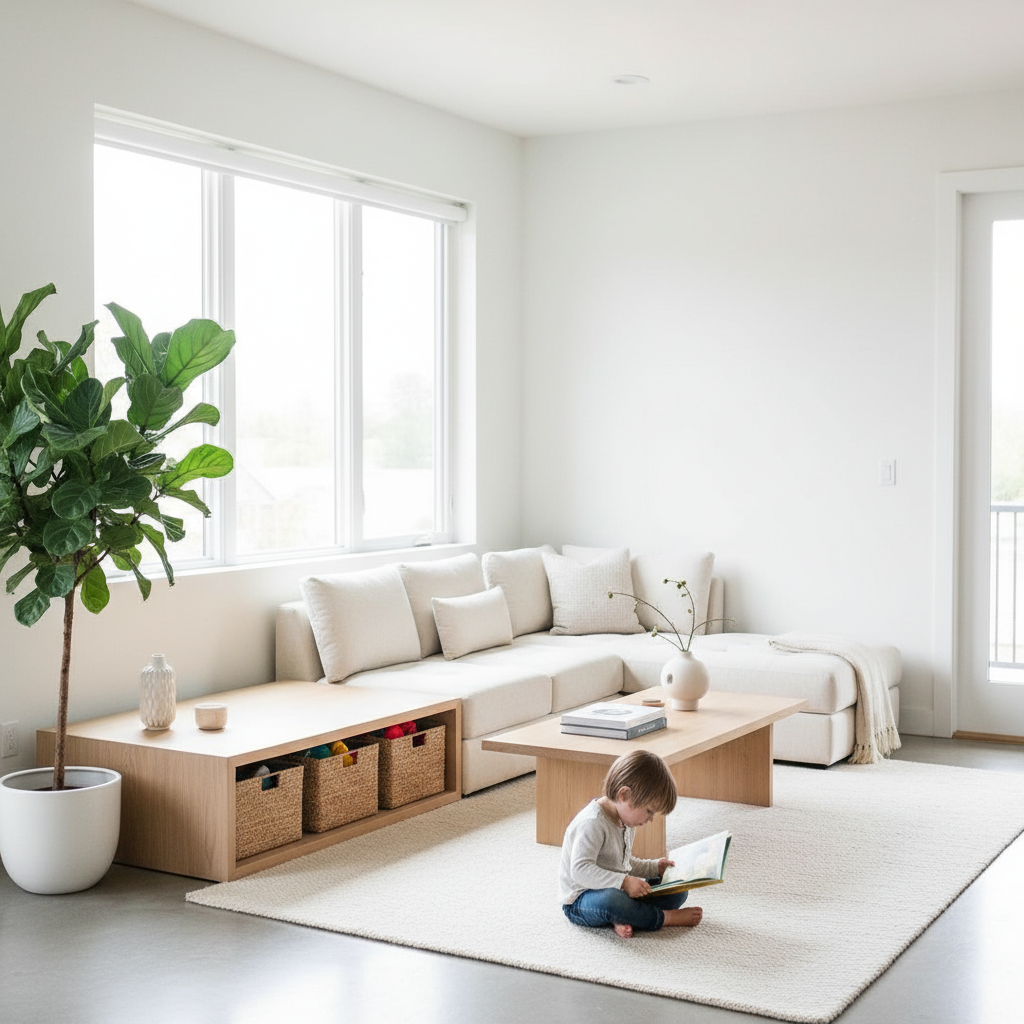
- Furniture Choices: Opt for a few key pieces that are comfortable and durable. A spacious, modular sofa with performance fabric is ideal for lounging, playing, and movie nights. Consider ottomans or poufs that can serve as extra seating or footrests.
- Smart Storage Solutions: Integrated storage is crucial. Choose media consoles with ample drawer space for electronics and remotes. Built-in shelving can house books and a few curated decorative items, keeping clutter out of sight.
- Defined Play Zones: While not “minimalist” in the traditional sense, having a designated (and easily tidied) play area within the living room can prevent toys from spreading everywhere. Use stylish bins or baskets that blend with your decor for quick clean-up.
- Subtle Decor: Focus on a few large pieces of art or a well-placed plant rather than many small knick-knacks. A warm rug can define the space and add comfort.
Kitchen & Dining: The Heart of the Home, Simplified
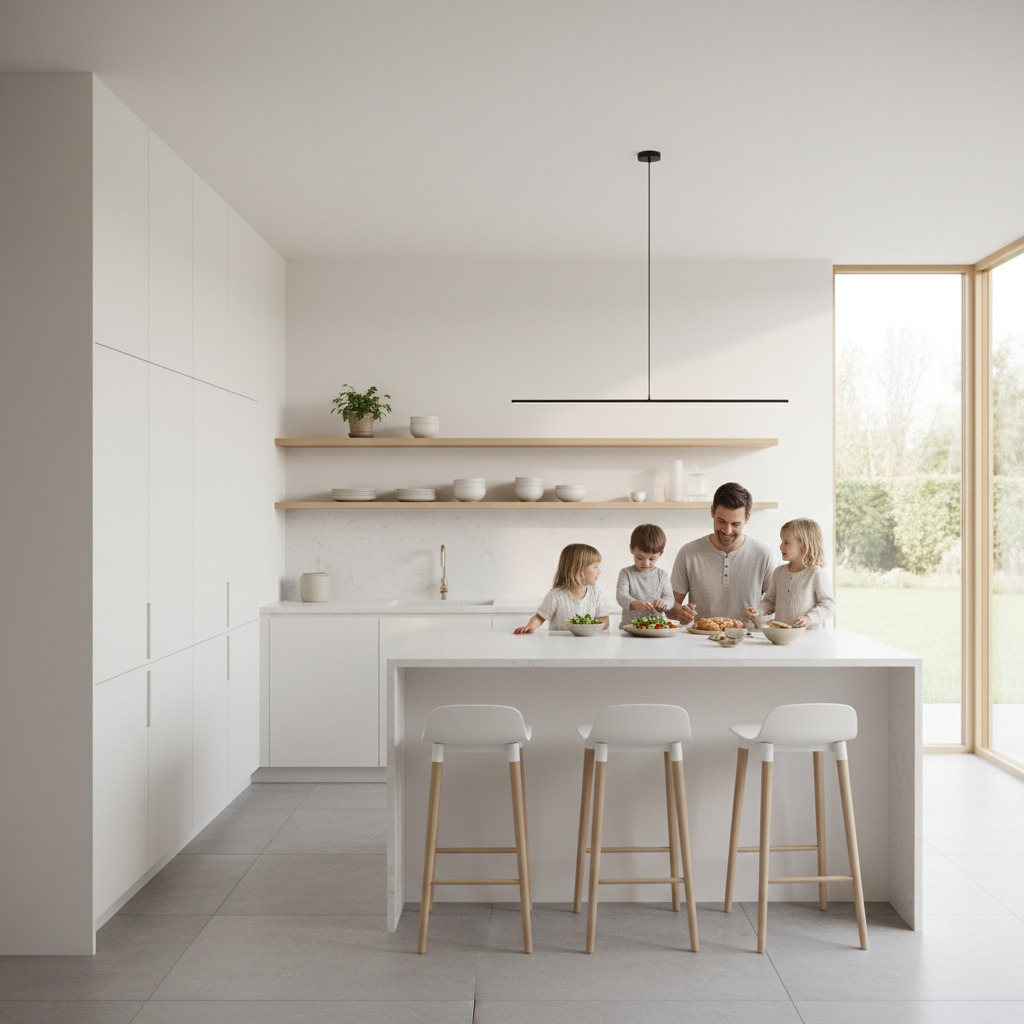
The kitchen is where families gather, cook, and share meals. A minimalist kitchen is highly efficient, easy to clean, and inviting.
- Open Concept Advantages: An open kitchen connected to the dining or living area promotes family interaction. Islands can serve as prep areas, casual dining spots, and even homework stations.
- Streamlined Storage: Maximize cabinet and pantry space with clever organizers. Consider pull-out drawers, vertical dividers for baking sheets, and designated zones for different types of items. Keep countertops as clear as possible.
- Durable Surfaces: Choose low-maintenance, robust materials like quartz, stainless steel, or natural stone for countertops and backsplashes. These materials can withstand daily wear and tear and are easy to wipe clean.
- Flexible Dining: A sturdy dining table that can expand or contract is excellent for everyday family meals and hosting guests. Simple, comfortable chairs that are easy to clean are a must.
Bedrooms: Retreats for Rest and Play
Bedrooms in a minimalist family home should offer serenity for adults and inspiring, uncluttered spaces for children.
Master Bedroom: A Serene Sanctuary
- Essential Furniture: A comfortable bed, two nightstands, and a dresser or built-in closet are often all you need. Choose pieces with clean lines and integrated storage.
- Calming Palette: Neutral colors, soft textures, and subdued lighting create a tranquil atmosphere conducive to rest.
- Mindful Decor: A few personal touches, such as a piece of art or a sentimental photo, are enough. Avoid excessive decorative items that can accumulate dust and visual clutter.
Kids’ Rooms: Encouraging Creativity with Less Clutter
- Modular & Flexible Furniture: Beds with under-bed storage, built-in desks, and wall-mounted shelving free up floor space for play.
- Intelligent Toy Storage: Labelled bins, open shelves for displaying a few favorite items, and clever drawer systems help kids learn to organize and put things away. Rotate toys to keep interest high and reduce visual overwhelm.
- Encourage Personalization (Within Limits): Allow children to display their artwork or a few cherished items, but regularly review what stays and what goes. The goal is a room that sparks creativity, not chaos.
Bathrooms: Spa-like Serenity and Practicality
Even small bathrooms can benefit immensely from a minimalist approach, becoming functional and calming spaces.
- Floating Vanities: These create a sense of spaciousness and make floor cleaning easier. Opt for vanities with integrated storage.
- Built-in Niches & Medicine Cabinets: Keep countertops clear by utilizing wall space for toiletries.
- Minimal Decor: A fresh plant, a high-quality towel set, and a simple mirror are often all that’s needed.
- Durable & Easy-Clean Surfaces: Large format tiles, solid surface countertops, and stain-resistant grout reduce cleaning time significantly.
Entryway & Mudroom: The Command Center of Calm
The entry points of your home are crucial for setting a tone of calm and organization. A minimalist mudroom or entryway prevents clutter from spreading throughout the house.
- Defined Zones: Create clear areas for shoes, coats, bags, and keys.
- Closed Storage: Lockers, cubbies with doors, or benches with lift-top storage are ideal for hiding everyday items.
- Dedicated Drop Zone: A small console table or wall-mounted shelf with a tray for keys and mail prevents items from migrating to other surfaces.
- Durable Flooring: Tile or engineered wood that can withstand dirt and moisture is a practical choice for this high-traffic area.
Essential Principles for Modern Minimalist Family Homes
Beyond specific room designs, certain overarching principles underpin successful minimalist family living.
Embrace Smart Storage Solutions
This cannot be stressed enough. Minimalism with a family doesn’t mean having nothing; it means having a place for everything, and everything in its place. Look for furniture with hidden compartments, built-in shelving, vertical storage, and custom cabinetry. Think about how to maximize every inch of space, especially in smaller homes.
Choose a Neutral Color Palette with Purpose
A foundation of neutral colors (whites, grays, beiges, muted blues, and greens) creates a serene backdrop that feels spacious and timeless. This palette allows textures and natural materials to shine and makes it easy to introduce pops of color through removable accents like throw pillows, artwork, or fresh flowers, without overwhelming the space.
Focus on Quality Over Quantity
Investing in fewer, higher-quality items is a hallmark of minimalist design. Well-made furniture, durable appliances, and timeless decor pieces will last longer, reducing waste and ultimately saving money. This principle is especially important for families, as quality items are often more robust and safer.
Integrate Technology Thoughtfully
Modern families rely on technology, but it doesn’t have to be an eyesore. Choose smart devices that blend seamlessly into your decor. Conceal cords with cable management solutions, opt for wall-mounted TVs, and utilize integrated charging stations. Consider smart home systems that simplify daily tasks without adding visual clutter.
Bring Nature Indoors: Biophilic Design
Incorporating natural elements like plants, wood, stone, and natural light adds warmth, texture, and a sense of calm to a minimalist home. Plants improve air quality and add a touch of life, while natural light reduces the need for artificial lighting and connects your home with the outdoors.
Prioritize Safety and Comfort
For families, safety is non-negotiable. Ensure furniture is anchored, sharp corners are minimized (or softened), and hazardous materials are out of reach. Choose non-toxic finishes and materials. Comfortable seating, soft rugs, and good lighting contribute to a cozy and secure environment where everyone feels at ease. For more detailed guidance on creating a safe home for children, resources like Good Housekeeping’s baby-proofing tips offer practical advice to ensure your minimalist haven is also a safe haven.
Beyond Aesthetics: The Benefits of a Minimalist Home for Modern Families
The advantages of a minimalist design extend far beyond visual appeal. For modern families, this lifestyle choice can profoundly impact well-being and daily living.
- Reduced Stress and Anxiety: A clutter-free environment leads to a clutter-free mind. Less visual noise means a more peaceful atmosphere for everyone.
- Easier Cleaning and Maintenance: With fewer items and clear surfaces, cleaning becomes a quicker, less daunting task, freeing up valuable family time.
- Financial Benefits: Investing in quality over quantity, buying only what’s needed, and reducing impulsive purchases can lead to significant savings over time.
- Fostering Creativity and Focus: Less distraction in kids’ rooms can encourage more imaginative play and better concentration for homework.
- More Quality Time: When less time is spent organizing, cleaning, and shopping, more time becomes available for connecting with family members and pursuing hobbies.
- Environmental Friendliness: A focus on durable goods, conscious consumption, and natural materials aligns with sustainable living practices.
FAQs: Your Questions About Minimalist Family Home Design Answered
Is minimalist design truly practical with kids?
Absolutely! Minimalist design for families emphasizes functionality, durability, and smart storage, all of which are highly practical with children. It’s about creating systems to manage toys, clothes, and school supplies efficiently, reducing visual clutter and making it easier to maintain a tidy home, even amidst daily chaos.
How can I start decluttering with a family?
Begin small and involve everyone. Pick one room or even one drawer to tackle. Use the “four-box method” (keep, donate, trash, relocate). Teach children to make decisions about their toys by asking: “Do you use this regularly? Do you love it? Does it make you happy?” Make it a regular family activity, perhaps seasonally, to review belongings.
What are some budget-friendly minimalist design tips?
Focus on quality over quantity. Instead of buying many cheap items, save for one well-made piece. Prioritize painting and decluttering, which are low-cost but high-impact. Look for versatile furniture, buy second-hand pieces that can be refinished, and utilize DIY storage solutions like open shelving or baskets. Natural light and plants are also budget-friendly ways to enhance a space.
How do I maintain a minimalist home with a busy family schedule?
Consistency is key. Implement a “place for everything, and everything in its place” rule. Have a daily 15-minute “power tidy” where everyone helps put things away. Teach children to clean up after themselves immediately. Utilize closed storage to quickly hide items. Regular, small decluttering sessions prevent overwhelming accumulation.
Embracing a minimalist approach to home design can be a transformative journey for modern families. It’s an invitation to create a home that is not just aesthetically pleasing, but deeply functional, calming, and truly reflective of what brings your family joy and peace. By focusing on intentional choices, smart storage, and durable designs, you can craft a sanctuary where every member thrives amidst simplicity and connection.