There’s a subtle but significant issue lurking in many homes that often goes unaddressed: a noisy bathroom exhaust affecting airflow. What might seem like a minor annoyance—a persistent hum, a grating rattle, or an irritating squeal—is often a clear indicator of a deeper problem within your bathroom’s ventilation system. A loud exhaust fan isn’t just a disruption to your peace; it’s a symptom that your fan might not be moving air as effectively as it should, compromising your home’s air quality, comfort, and even its structural integrity. Understanding the connection between a noisy fan and inefficient airflow is crucial for maintaining a healthy and pleasant living environment.
Understanding the Vital Role of Your Bathroom Exhaust Fan
Before diving into the problems, let’s reiterate why your bathroom exhaust fan is so important. Its primary function is to remove moisture, odors, and airborne pollutants from the bathroom, expelling them outside your home. Every time you take a shower, run a bath, or even flush the toilet, moisture and odors are introduced into the air. Without proper ventilation, this moisture can condense on cold surfaces like mirrors, walls, and ceilings, creating a breeding ground for mold and mildew. This can lead to unpleasant smells, damage to paint and wallpaper, and even structural issues over time. Furthermore, poor ventilation can exacerbate allergies and respiratory problems due to accumulated mold spores and stale air.
Decoding the Din: Why Your Bathroom Exhaust Fan Gets Noisy
A quiet, efficient bathroom fan should ideally be barely noticeable, emitting a gentle hum at most. When it starts to make pronounced noises, it’s signaling distress. The type of sound often provides a clue about the underlying problem:
Common Sounds and Their Meanings
- Rattling: This often points to loose components. It could be the fan grille, the motor housing, the fan blades themselves, or even loose ductwork where it connects to the fan housing. Vibrations from a poorly balanced motor can also cause rattling.
- Grinding: A grinding sound is typically indicative of a problem with the motor bearings. Over time, these bearings can wear out, lose lubrication, or accumulate debris, causing friction and a rough, grinding noise. This is a common sign of an aging or heavily used fan.
- Humming: While a low hum can be normal, a loud or excessive humming noise might suggest electrical issues, an overworked motor, or an obstruction causing the motor to strain. It could also indicate that the fan’s motor is out of balance.
- Squealing: A high-pitched squeal almost always points to dry or worn-out motor bearings. Similar to grinding, this happens when metal-on-metal friction occurs due to lack of lubrication.
- Whirring or Clicking: A pronounced whirring can signify fan blades hitting something, such as dust buildup on the housing or warped blades. Clicking might be a small piece of debris caught in the fan or a faulty electrical component like a relay.
The Critical Connection: How Noise Impacts Airflow Efficiency
The relationship between a noisy bathroom exhaust and its airflow is often directly proportional: as the noise increases, the fan’s ability to effectively move air usually decreases. Here’s why:
- Resistance and Strain: Many noises (grinding, humming, squealing) are a result of the motor working harder than it should. This extra effort is often due to resistance—perhaps from dirt clogging the fan blades, worn bearings creating friction, or a blockage in the ductwork. When the motor strains, it consumes more energy but delivers less actual air movement.
- Obstructions: A noisy fan might be struggling against an obstruction. Dust bunnies caked onto the fan blades or inside the housing reduce the blade’s aerodynamic efficiency, preventing it from grabbing and pushing air effectively. Similarly, a crimped or blocked duct reduces the path for air, forcing the fan to work harder to achieve minimal results.
- Damaged Components: Loose or broken fan blades cannot rotate optimally to create the necessary suction and push. A wobbly or unbalanced fan motor creates vibrations that dissipate energy that should be used for air movement, leading to both noise and poor performance.
- Compromised Seal: If the fan housing is loose or not properly sealed to the ceiling, air can leak around the unit instead of being pulled through the ducts and outside. This “short-cycling” of air means less humid air is actually being removed from the bathroom, even if the fan is running loudly.
In essence, a noisy fan is rarely just an auditory nuisance. It’s a warning sign that your ventilation system is underperforming, failing to protect your bathroom from moisture-related damage and health risks.
Pinpointing the Problem: Common Causes of a Noisy Exhaust Fan
Identifying the root cause of the noise is the first step towards a solution. Here are the most common culprits:
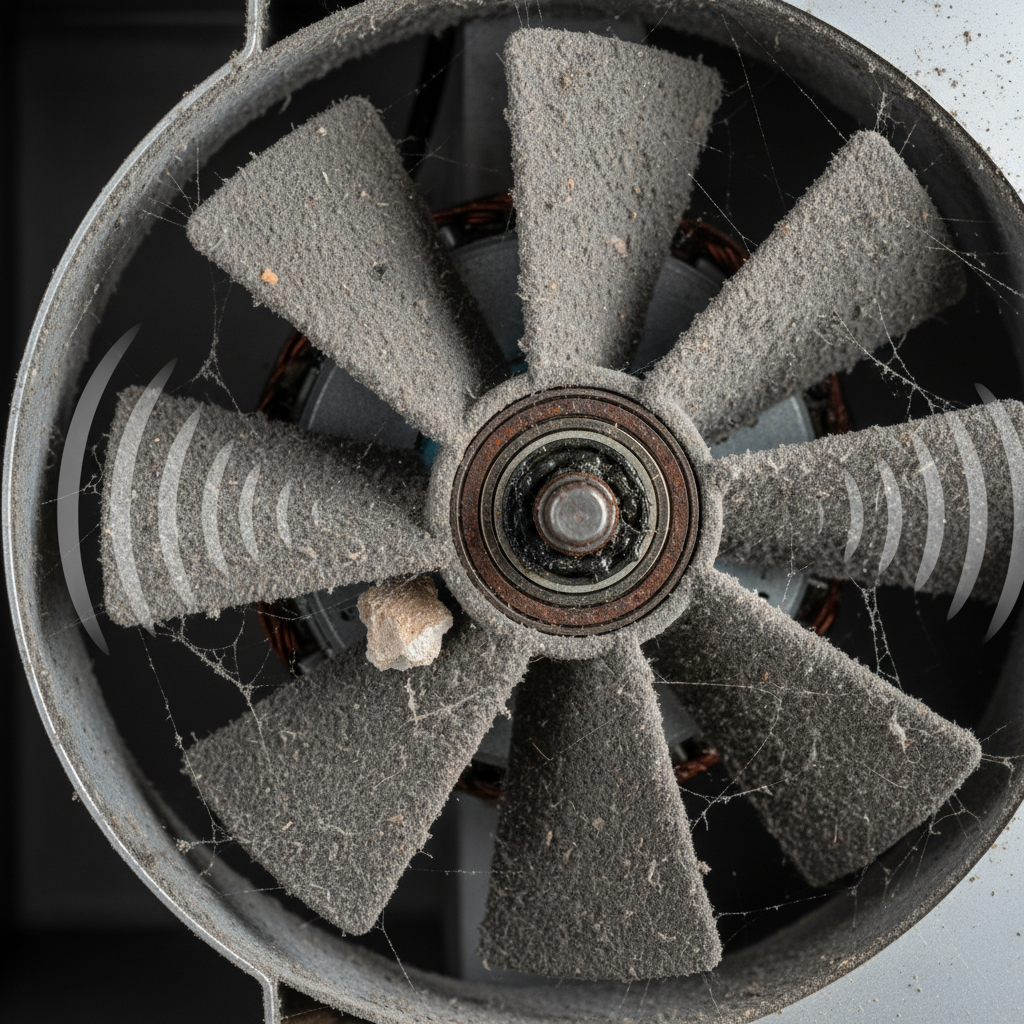
- Dust and Debris Buildup: This is by far the most frequent cause. Over time, lint, dust, hair, and other particles accumulate on the fan blades, motor housing, and grille. This buildup not only adds weight, throwing the blades off balance, but also restricts airflow and makes the motor work harder, leading to humming, rattling, or reduced performance.
- Loose Mounting or Components: Fans are subject to constant vibration when running. Screws holding the motor, housing, or grille can loosen over time. A loose fan housing against the ceiling joists, or a disconnected duct, can also cause significant rattling.
- Worn-Out Motor Bearings: As mentioned, grinding or squealing often points to bearings that have lost their lubrication or are worn down from years of use. This increases friction, heat, and noise, and eventually leads to motor failure.
- Improper Installation or Ductwork Issues: A fan that wasn’t installed correctly from the beginning can lead to noise. This includes insufficient bracing, leading to vibrations, or poorly connected ducts. Ductwork itself can be a source of noise if it’s crimped, too long, too narrow, or has sharp bends that restrict airflow and create turbulence. Blockages within the duct, such as bird nests or collapsed sections, also restrict air movement and cause the fan to strain.
- Damaged Fan Blades: Accidents can happen. A foreign object might have hit a blade, or the blades could have become warped or bent due to extreme temperatures or material fatigue. Damaged blades create imbalance and often result in a loud whirring or rattling sound.
- Aging Unit: Like all mechanical devices, exhaust fans have a lifespan. Components wear out, motors become less efficient, and materials degrade. An old fan is more prone to all the issues listed above, becoming progressively noisier and less effective.
More Than Just Annoying: The Consequences of Compromised Bathroom Airflow
When your bathroom exhaust fan isn’t effectively moving air, the repercussions extend far beyond the irritation of a loud noise. These consequences can affect your home’s health, your family’s health, and your wallet:
- Mold and Mildew Proliferation: This is perhaps the most significant and common consequence. Without proper ventilation, high humidity levels persist in the bathroom, creating an ideal environment for mold and mildew to thrive on walls, ceilings, grout, and even behind drywall. Mold not only looks unsightly and smells musty but can also cause serious health issues.
- Structural Damage: Continuous exposure to high moisture levels can cause paint to peel, wallpaper to bubble, and wooden fixtures (like door frames and vanity cabinets) to warp or rot. Over time, chronic humidity can even compromise the integrity of drywall and ceiling materials, leading to costly repairs.
- Unpleasant Odors: A well-functioning exhaust fan removes odors efficiently. When airflow is poor, bathroom odors linger, making the space less pleasant and potentially spreading to other parts of your home. The musty smell of mildew is also a strong indicator of ventilation problems.
- Health Concerns: Mold spores, when inhaled, can trigger allergies, asthma attacks, and other respiratory problems, especially in sensitive individuals, children, and the elderly. High humidity can also create an uncomfortable living environment.
- Reduced Comfort: A humid bathroom feels sticky and uncomfortable, especially after a hot shower. Mirrors remain fogged for extended periods, and towels take longer to dry, creating an overall less enjoyable bathroom experience.
DIY Troubleshooting: Quieting Your Loud Bathroom Fan
Many common noisy fan issues can be resolved with a bit of DIY effort. Always prioritize safety first!
Safety First: Power Disconnection
Before touching any part of the fan, turn off the power to the bathroom at your home’s circuit breaker. This is absolutely critical to prevent electrical shock or injury.
Step-by-Step Cleaning Guide
Most noise issues stem from dirt and dust. Here’s how to clean it:
- Remove the Grille: Most grilles are held by springs; gently pull down and pinch the springs to release. Some might have screws.
- Clean the Grille: Wash it thoroughly with warm, soapy water, rinse, and let it dry completely.
- Access the Fan Housing and Blades: Depending on your fan model, you might need to unscrew the fan assembly or motor from the housing. Take photos if you’re unsure how to reassemble.
- Clean Blades and Housing: Use a vacuum cleaner with a brush attachment to remove loose dust. For stubborn grime, use a damp cloth with a mild cleaner (avoid getting the motor wet). Ensure blades are spotless and freely moving. For a detailed guide on how to clean your bathroom exhaust fan, you can refer to expert advice from Good Housekeeping.
Tightening Loose Parts
While the fan is disassembled, inspect all screws. Tighten any that appear loose, including those securing the motor, the fan blade assembly, and the fan housing to the ceiling joists. Ensure the duct connection is secure and taped properly.
Lubricating the Motor (If Applicable)
If your fan has exposed motor bearings (not all do, especially newer sealed units), apply a few drops of a light machine oil (like 3-in-1 oil) to the bearing shafts. Spin the blades manually to help distribute the oil. Avoid over-lubricating, as this can attract more dust.
Inspecting Ductwork for Obstructions or Damage
From the attic or an access panel, inspect the ductwork connected to the fan. Look for:
- Kinks or Crimps: Straighten any bends that restrict airflow.
- Blockages: Use a flashlight to look inside the duct for nests, debris, or insulation. A flexible brush or shop vac might help clear minor blockages.
- Leaks: Check for gaps or tears in the ducting where air could be escaping. Seal with appropriate foil tape.
- Proper Venting: Ensure the duct vents directly outside, not into an attic or crawl space.
When to Call a Professional or Consider a Replacement
While DIY fixes can solve many issues, some problems require professional help or indicate that it’s time for a new unit.
Signs Your Fan is Beyond Repair
- Persistent Grinding or Squealing: If lubrication doesn’t solve bearing noise, or if the motor itself is failing, replacement is often more cost-effective than professional repair.
- Visible Motor Damage: Burnt smells, smoke, or visible damage to the motor indicate it’s time for a new fan.
- Old Age: Fans typically last 10-15 years. If yours is older and constantly noisy or ineffective, it’s probably past its prime.
- Ineffective Airflow After Cleaning: If you’ve cleaned the fan thoroughly and it’s still not clearing steam or odors, its motor might be too weak or the design outdated for your bathroom size.
Benefits of Upgrading to a New Unit
Replacing an old, noisy, or inefficient fan offers several advantages:
- Quieter Operation: Modern fans are significantly quieter, measured in “sones” (a rating of loudness). You can find models that are whisper-quiet (1.0 sone or less).
- Improved Airflow (CFM): New fans are often more powerful, measured in Cubic Feet per Minute (CFM), ensuring better removal of moisture and odors.
- Energy Efficiency: Newer models are often ENERGY STAR certified, meaning they use less electricity, saving you money on utility bills.
- Advanced Features: Many new fans come with humidity sensors (automatically turning on/off), timers, night lights, and even Bluetooth speakers.
- Enhanced Home Value: A well-ventilated, mold-free bathroom is a plus for any homeowner or potential buyer.
Making the Right Choice: Selecting a Quiet and Efficient Bathroom Fan
If you’re in the market for a new bathroom fan, keep these key factors in mind:
- Understanding Sones Ratings: This is the most crucial factor for quietness. Look for fans with a low sone rating, ideally 1.0 sone or less for a truly quiet experience. A fan with 3.0 sones is noticeably louder than one with 1.0 sone.
- Matching CFM to Room Size: The fan’s CFM (Cubic Feet per Minute) rating indicates its air-moving capacity. A general rule of thumb is to have at least 1 CFM per square foot of bathroom area. For bathrooms larger than 100 square feet, or those with high ceilings, you might need a more powerful fan (e.g., add 50 CFM for each toilet, shower, and tub).
- Energy Efficiency and Smart Features: Look for ENERGY STAR certified fans to save on electricity. Consider models with humidity sensors that automatically activate when steam builds up, or fans with timers to ensure adequate run time after a shower.
- Installation Type: Ensure the fan you choose is suitable for your ceiling depth and that your existing ductwork matches the new fan’s exhaust port size.
Longevity Through Care: Essential Maintenance Tips
Preventing noise and ensuring optimal airflow starts with regular maintenance. Incorporate these tips into your home care routine:
- Regular Cleaning Schedule: Aim to clean your bathroom exhaust fan’s grille and accessible parts every 3-6 months. A thorough cleaning, including the fan blades and motor housing, should be done annually.
- Annual Checks: Once a year, while cleaning, check for any loose screws, vibrations, or unusual sounds. Inspect the duct connection in the attic (if accessible) to ensure it’s still secure and free of blockages.
- Addressing Issues Promptly: Don’t ignore new noises. The sooner you investigate and address a rattling, grinding, or squealing sound, the less likely it is to escalate into a more serious and costly problem.
- Ensure Proper Run Time: Always run your bathroom fan for at least 15-20 minutes after a shower or bath to ensure all moisture is removed. This prevents humidity buildup and reduces the strain on the fan over time.
Frequently Asked Questions About Noisy Bathroom Exhaust Fans and Airflow
How can I tell if my bathroom fan is working effectively?
Besides noise, signs of poor effectiveness include mirrors remaining fogged for a long time after a shower, lingering odors, moisture condensation on walls or ceilings, and the presence of mold or mildew. A simple test: hold a piece of toilet paper up to the fan grille; if it’s sucked firmly against the grille, the fan is likely moving air well.
Is a noisy bathroom fan dangerous?
While a noisy fan isn’t immediately dangerous in terms of electrical hazard (unless you notice burning smells or sparks), it is dangerous in terms of your home’s health. Ineffective airflow leads to excessive humidity, promoting mold growth and potentially causing structural damage. Prolonged exposure to mold can have serious health implications.
Can I quiet a noisy fan without replacing it?
Often, yes. Cleaning away dust and debris, tightening loose components, and lubricating accessible motor bearings can significantly reduce noise. However, if the motor itself is failing or the fan is very old, replacement might be the only permanent solution.
What is the ideal Sones rating for a bathroom fan?
For most residential bathrooms, a sone rating of 1.0 or less is considered excellent and whisper-quiet. Fans between 1.1 and 2.0 sones are also relatively quiet. Anything above 3.0 sones will be noticeably noisy.
How often should ductwork for a bathroom fan be inspected?
It’s a good practice to inspect the ductwork every 3-5 years, or immediately if you suspect a blockage (e.g., from birds or pests) or significant airflow reduction. Annual checks during fan cleaning can also include a quick visual inspection of accessible duct connections.
Conclusion: Prioritizing Your Bathroom’s Ventilation for a Healthier Home
A noisy bathroom exhaust affecting airflow is more than just an irritating sound; it’s a critical warning that your home’s ventilation system is failing to perform its essential duties. Ignoring these sounds can lead to a cascade of problems, from unsightly mold and mildew to potential structural damage and compromised indoor air quality. By understanding the causes of fan noise, learning how to troubleshoot common issues, and knowing when to upgrade to a more efficient unit, you can ensure your bathroom remains a fresh, dry, and healthy space. Prioritizing the maintenance and functionality of your bathroom exhaust fan is a simple yet powerful step towards protecting your home and the well-being of its inhabitants.