We’ll delve into what makes artificial grass truly non-toxic, the specific materials to look for (and avoid), and how to choose and install a system that prioritizes both fun and safety. From lead-free blades to inert infill materials, understanding these details is key to making an informed decision for your family’s backyard oasis.
Why Artificial Grass for Children’s Play Areas?
Artificial grass has surged in popularity for residential and commercial landscaping, and its benefits are particularly appealing for children’s play areas:
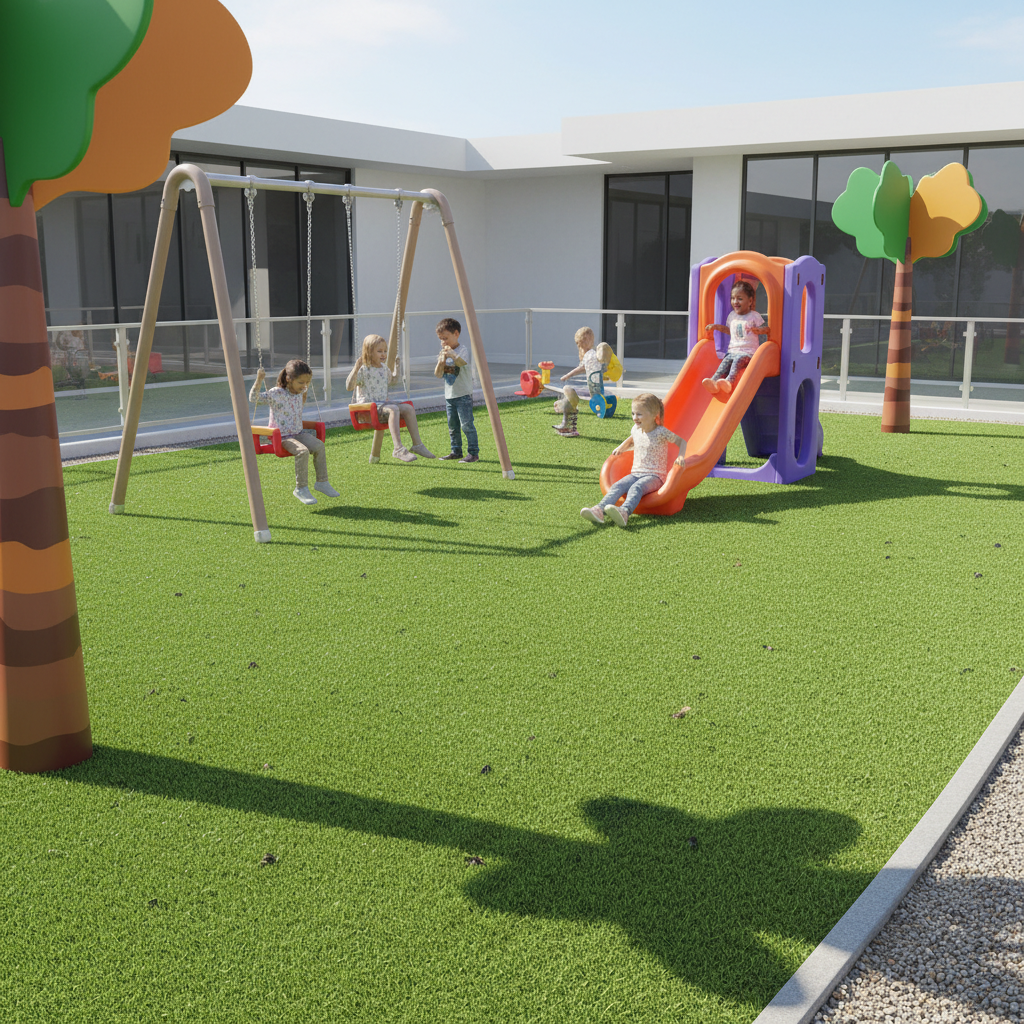
- Low Maintenance: No more mowing, fertilizing, or watering, freeing up time for family activities.
- Evergreen Appeal: A consistently lush, green lawn year-round, regardless of climate or season.
- Durability: Designed to withstand heavy foot traffic and active play without developing bald spots or muddy patches.
- Allergy Reduction: Eliminates pollen and other allergens associated with natural grass, offering relief for sensitive children.
- Cleanliness: Reduces the transfer of mud and dirt into the house, keeping indoor spaces tidier.
- Water Conservation: Significantly reduces water usage compared to traditional lawns.
While these advantages are compelling, the underlying concern for parents remains: is it truly safe for my child?
Understanding the “Toxic” Concern: What to Look Out For
Historically, some artificial grass products raised health concerns due to certain materials used in their manufacturing. It’s essential to be aware of these potential hazards to ensure you choose a genuinely non-toxic product:
1. Heavy Metals and Lead
Older generations of artificial turf, particularly those manufactured before stringent regulations, sometimes contained lead and other heavy metals in the pigments used to color the grass blades. Lead exposure, even at low levels, can have serious health implications for children, affecting neurological development and overall health. Modern, reputable manufacturers now adhere to strict lead-free standards, making this less of a concern with newer products, but it’s always crucial to verify.
2. Crumb Rubber Infill
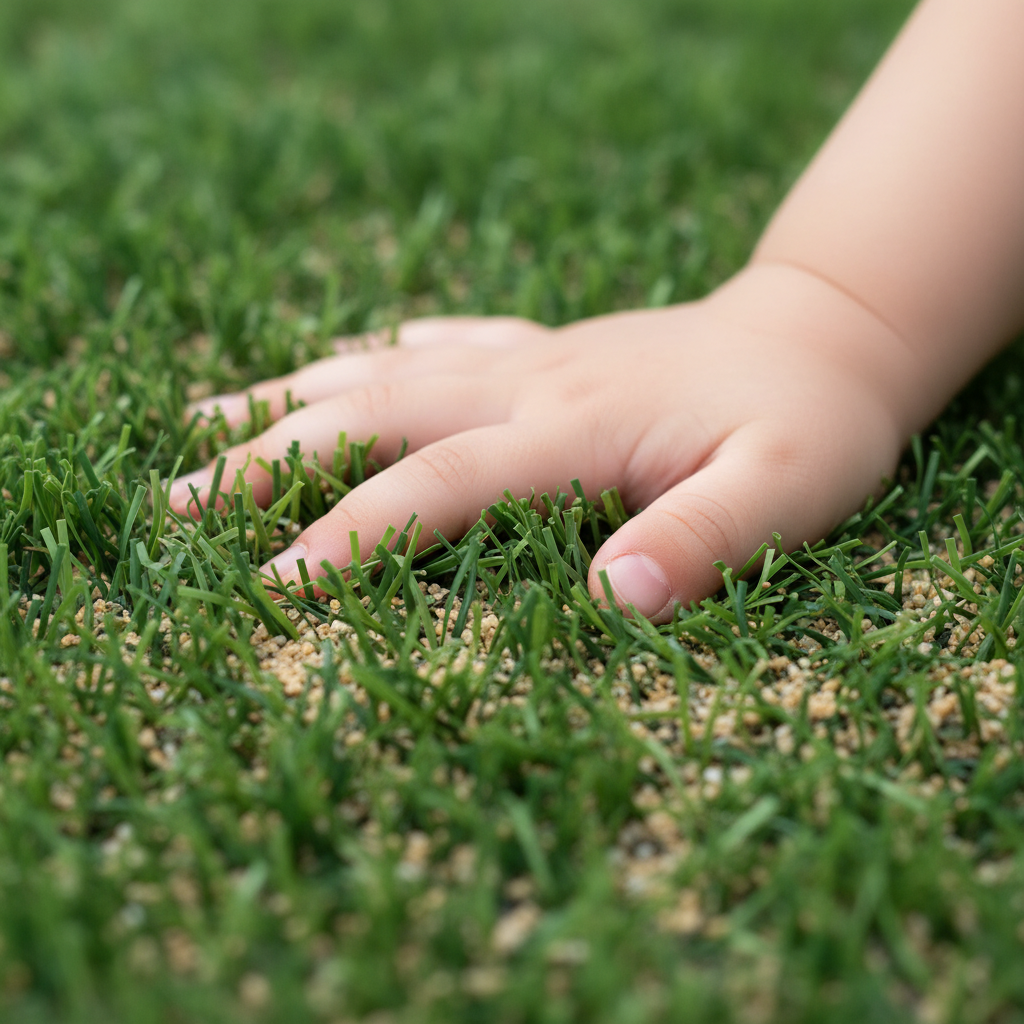
Perhaps the most widely debated component has been crumb rubber infill, typically made from recycled tires. While it provides excellent shock absorption and helps the blades stand upright, concerns have been raised about potential exposure to volatile organic compounds (VOCs), heavy metals, and other chemicals that could leach from the rubber, especially in hot conditions. For children’s play areas, many parents and experts now recommend avoiding crumb rubber infill altogether and opting for safer alternatives.
3. VOCs (Volatile Organic Compounds)
VOCs are gases emitted from certain solids or liquids and can include a variety of chemicals, some of which may have short- and long-term adverse health effects. These can sometimes be found in adhesives, backing materials, or the synthetic fibers themselves. Low-VOC or VOC-free products are paramount for a safe play environment.
What Makes Artificial Grass Non-Toxic and Child-Safe?
A truly non-toxic artificial grass system for children’s play areas focuses on three main components: the grass blades, the backing material, and the infill. Each must meet high safety standards.
1. Non-Toxic Grass Blades (Fibers)
The synthetic fibers that mimic natural grass are usually made from polyethylene, polypropylene, or nylon. For child-safe options, look for:
- Lead-Free and Heavy Metal-Free: This is non-negotiable. Reputable manufacturers will provide certifications confirming their products are free from lead and other heavy metals.
- UV Stabilized: While not directly related to toxicity, UV stabilization prevents the material from breaking down prematurely under sunlight, which could lead to the release of microplastics or chemical degradation over time.
- Hypoallergenic: Good quality artificial grass can be a blessing for children with grass allergies, as it doesn’t produce pollen.
- Softness and Durability: Beyond toxicity, consider the tactile experience. Softer fibers are more comfortable for children to fall on or play on for extended periods.
Polyethylene is often preferred for play areas due to its softer texture and natural look, while polypropylene can be more robust and nylon the most durable but also the stiffest.
2. Safe Backing Materials
The backing holds the grass blades in place and provides structural integrity. Common materials include polyurethane and latex. For a non-toxic option:
- Polyurethane Backing: Generally considered a safer option than latex, as it’s more durable, less likely to break down, and typically free from allergens associated with natural rubber latex. It also offers superior drainage.
- Non-Toxic Adhesives: Ensure any adhesives used in the manufacturing process or during installation are low-VOC or VOC-free.
3. Inert and Safe Infill Options
The infill material is placed between the grass blades to help them stand upright, provide cushioning, and add weight to the turf. This is where the biggest safety distinctions lie for children’s play areas. Avoid crumb rubber and opt for one of these child-safe alternatives:
- Silica Sand: This is the most common and often the most economical non-toxic infill. It’s natural, inert, non-abrasive, and doesn’t retain heat significantly. It provides ballast and helps blades stand up. Ensure it’s clean, washed, and dried silica sand.
- ZeoFill (Zeolite): Made from natural volcanic minerals, ZeoFill is an excellent choice, especially if you have pets. It’s non-toxic, absorbs pet odors, helps cool the turf, and provides good stability. It’s slightly more expensive than silica sand.
- Acrylic-Coated Sand: This infill uses silica sand coated with a durable acrylic layer. The coating prevents dust, enhances antimicrobial properties, and can offer a more consistent feel. It’s often colored to blend with the turf.
- Organic Infill Options: Some newer, innovative products use organic materials like coconut fibers, cork, or walnut shells. These are environmentally friendly and naturally safe, often offering good cooling properties. However, their long-term durability and maintenance requirements might differ from mineral infills.
- No Infill (Short Pile): For very short-pile turf designs, some products are designed to stand without infill. While seemingly simple, ensure such products still offer adequate cushioning for play, perhaps with an underlying shock pad.
For more insights into creating safe outdoor spaces for children, you might find valuable tips on organizations like Better Homes & Gardens, which often cover outdoor living and play area design.
Key Features of Safe Artificial Grass for Kids’ Play Areas
Beyond the materials, several other features contribute to a truly safe and enjoyable play environment:
- Critical Fall Height Rating: This is paramount for play areas with equipment like swings or slides. ASTM F1292 certification indicates the maximum fall height from which a child can safely land on the surface without serious injury. Many non-toxic artificial grass systems can be installed over specialized shock pads to achieve various fall height ratings, sometimes up to 12 feet.
- Superior Drainage: Efficient drainage is essential to prevent standing water, which can lead to mold, mildew, or slippery surfaces. Look for grass with a permeable backing that allows water to drain quickly.
- Heat Resistance/Cooling Technology: Artificial turf can get hot in direct sunlight. Some non-toxic products incorporate cooling technologies, such as lighter fiber colors, specialized infills (like ZeoFill), or innovative blade designs that reduce heat retention.
- Antimicrobial Properties: Some infills or turf treatments include antimicrobial agents to inhibit the growth of bacteria and fungi, contributing to a cleaner play surface.
- Softness and Comfort: While not a safety feature in the toxicological sense, a soft, pleasant texture enhances the play experience and reduces minor scrapes and abrasions.
Top Non-Toxic Artificial Grass Options and System Components
When selecting a non-toxic system, you’re essentially building a complete play surface:
1. High-Quality Polyethylene or Polypropylene Turf
Choose turf made from virgin (not recycled, which can be less regulated) polyethylene or polypropylene fibers. These are known for their durability and softness. Always ask for certifications confirming lead-free and heavy metal-free status. Look for products that meet or exceed consumer product safety standards (e.g., California’s Prop 65 for lead content).
2. Polyurethane Backing
This provides a stable, durable, and highly permeable base for the turf, ensuring excellent drainage and longevity without the potential allergen concerns of latex.
3. Performance Infill (Silica Sand, ZeoFill, or Coated Sand)
- Silica Sand: The most common and cost-effective choice. Ensure it’s rounded, not angular, to prevent abrasion, and that it’s clean and thoroughly washed.
- ZeoFill: A premium choice, especially for pet owners, due to its odor-absorbing and cooling properties.
- Acrylic-Coated Sand: Offers enhanced performance with a clean, dust-free finish and often antimicrobial benefits.
4. Shock Pad Underlayment
For any play area with swings, slides, or climbing structures, a shock pad is non-negotiable. These specialized foam or rubber pads are installed beneath the artificial grass to absorb impact and achieve the necessary critical fall height rating. They are essential for protecting children from serious injuries during falls.
Installation Considerations for a Safe Play Area
Proper installation is just as critical as choosing the right materials to ensure the safety and longevity of your non-toxic artificial grass system:
- Ground Preparation: The sub-base must be properly excavated, compacted, and leveled. A permeable base (like crushed aggregate) is essential for drainage.
- Weed Barrier: Install a high-quality weed barrier fabric to prevent weeds from growing through the drainage holes of the turf.
- Shock Pad Installation: If using a shock pad, ensure it’s laid evenly and securely, providing a consistent cushioning layer across the entire play zone.
- Turf Laying and Seaming: The artificial grass rolls must be laid out, cut precisely, and seamed together using specialized non-toxic adhesives and seaming tape. Proper seaming prevents trip hazards.
- Infill Application: The infill is spread evenly over the turf using a power broom or spreader. It’s crucial to use the recommended amount and brush it deep into the fibers to ensure proper cushioning and blade support.
- Edging: Secure the edges of the turf to prevent lifting, which can create a tripping hazard. This can be done with nails, stakes, or by tucking the turf into an edging material.
- Professional Installation: For children’s play areas, especially those requiring critical fall height ratings, professional installation is highly recommended. Experienced installers understand the nuances of creating a safe and compliant surface.
Maintenance of Non-Toxic Artificial Grass in Play Areas
Even non-toxic artificial grass requires some basic maintenance to keep it clean, safe, and looking its best:
- Regular Brushing: Periodically brush the turf with a stiff-bristled broom or power broom to help the blades stand upright and redistribute the infill.
- Leaf and Debris Removal: Use a leaf blower, rake, or broom to remove leaves, dirt, and other debris that can accumulate on the surface.
- Spot Cleaning: Clean spills promptly with water and a mild, non-toxic detergent. For stubborn stains, specialized turf cleaners are available.
- Odor Control: If pets use the play area, rinse the turf regularly with water to dilute urine. For persistent odors, specific turf deodorizers (often enzyme-based and non-toxic) can be used, particularly effective with ZeoFill.
- Inspect for Damage: Periodically check for any loose seams, tears, or areas where the infill has become uneven. Address these issues promptly to prevent trip hazards or further damage.
Pros and Cons of Non-Toxic Artificial Grass for Children
Pros:
- Enhanced Safety: Eliminates exposure to lead, heavy metals, and harmful infills. Can be installed with shock pads for critical fall height protection.
- Reduced Allergens: No pollen from grass, beneficial for children with allergies.
- Consistent Play Surface: Always green, no mud, dirt, or bare spots.
- Low Maintenance: Saves time and resources compared to natural grass.
- Water Conservation: Environmentally friendly in terms of water usage.
- Pest Control: Does not harbor insects like ticks and fleas as natural grass can.
Cons:
- Initial Cost: Can be a significant upfront investment compared to seeding a natural lawn.
- Heat Retention: While non-toxic options can mitigate this, artificial turf can still get warmer than natural grass in direct sunlight, though this is less of an issue with proper infill choices and cooling technologies.
- Not a “Natural” Feel: Lacks the unique scent and biological activity of real soil and grass.
- Drainage Issues (if not installed correctly): Poor installation can lead to standing water.
- Microplastics (Potential): While higher quality, non-toxic blades are more durable, all synthetic materials eventually degrade, potentially contributing to microplastics over a very long lifespan.
Cost of Non-Toxic Artificial Grass for Play Areas
The cost of installing non-toxic artificial grass can vary widely based on several factors:
- Type of Turf: Higher quality, softer, and more natural-looking turfs with advanced features (like cooling technology) will be more expensive.
- Infill Material: Silica sand is typically the most affordable, while ZeoFill and coated sands are premium options.
- Shock Pad Thickness: The thicker the shock pad required for a specific critical fall height, the higher the cost.
- Area Size: Larger areas will naturally incur higher material and labor costs.
- Site Preparation: Extensive grading, excavation, or removal of existing landscaping will add to the overall price.
- Installation Complexity: Intricate shapes, slopes, or obstacles can increase labor costs.
- Geographic Location: Prices for materials and labor vary by region.
While the initial investment for a high-quality, non-toxic system might seem substantial, it’s important to consider the long-term savings on water, fertilizer, mowing, and pest control, along with the invaluable peace of mind regarding your children’s safety.
Choosing the Right Supplier and Installer
Selecting a reputable supplier and installer is crucial for ensuring you get a truly non-toxic and safely installed play area:
- Ask for Certifications: Reputable companies will readily provide certifications for their products, confirming they are lead-free, heavy metal-free, and meet relevant safety standards (e.g., ASTM, Prop 65).
- Inquire About Materials: Be specific about the type of fibers, backing, and infill they use. Ask about VOC content in adhesives.
- Check for Experience: Choose an installer with specific experience in creating child-safe play areas, especially those familiar with critical fall height requirements and shock pad installation.
- Read Reviews and Ask for References: Look for testimonials and case studies from other parents or organizations that have used their services for play areas.
- Warranty: A good warranty on both the product and the installation offers peace of mind.
- Get Multiple Quotes: Compare proposals from several companies, but remember that the lowest price isn’t always the best value when it comes to safety.
Frequently Asked Questions About Non-Toxic Artificial Grass
Q1: Is all artificial grass safe for children?
No, not all artificial grass is safe for children, primarily due to concerns with certain infill materials (like crumb rubber from recycled tires) and older turf products that may have contained lead or heavy metals. It’s crucial to specifically choose “non-toxic” or “child-safe” certified products with appropriate infills and backing materials.
Q2: What is the safest infill for artificial grass in a play area?
The safest infill options for children’s play areas include washed, rounded silica sand, natural ZeoFill (zeolite), or acrylic-coated sand. These materials are inert, non-toxic, and do not pose the same concerns as crumb rubber.
Q3: Does non-toxic artificial grass get hot?
All artificial grass can get warmer than natural grass in direct sunlight. However, non-toxic options can mitigate this with certain infills (like ZeoFill which absorbs moisture and cools through evaporation) and turf technologies designed to reflect heat. Regular rinsing with water can also temporarily cool the surface.
Q4: How long does non-toxic artificial grass last?
High-quality non-toxic artificial grass, properly installed and maintained, can last between 15 to 25 years or even longer. Factors like sun exposure, foot traffic, and maintenance practices will influence its lifespan.
Q5: Can artificial grass cause allergies?
No, quite the opposite. One of the benefits of artificial grass is that it’s hypoallergenic. It doesn’t produce pollen or harbor common allergens found in natural grass, making it an excellent choice for children and adults who suffer from seasonal allergies.
Conclusion
Creating a vibrant and safe play area for your children doesn’t have to mean sacrificing convenience or aesthetics. By understanding the critical components of truly non-toxic artificial grass options for children’s play areas, you can make an informed choice that provides a beautiful, low-maintenance, and most importantly, healthy environment for endless hours of outdoor fun. Prioritize products with certified lead-free blades, safe infills like silica sand or ZeoFill, and consider shock pads for added fall protection. With the right materials and professional installation, your family can enjoy a worry-free, green oasis for years to come.